Africa CDC says workforce growth remains too slow to meet healthcare needs, despite adding more than 1.4 million personnel since 2018.
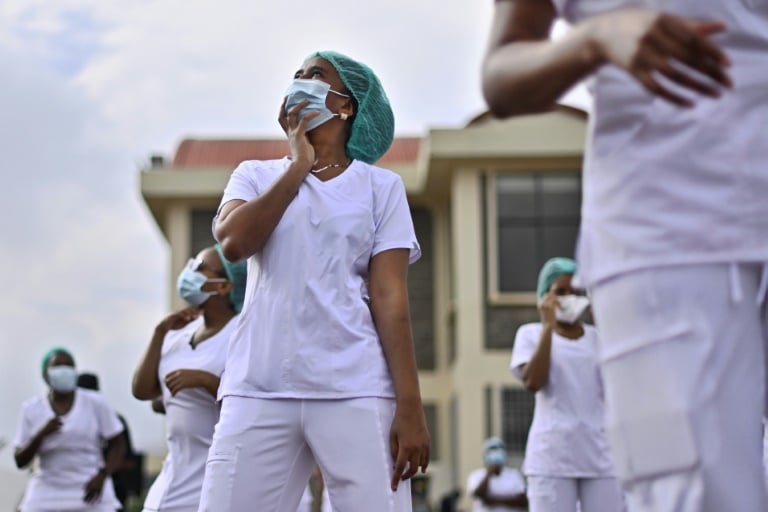
Africa’s health worker shortfall stands at 5.85 million, despite its workforce reaching 5.72 million in 2024, Africa CDC says. The agency warns that recruitment gains remain insufficient to meet Universal Health Coverage targets by 2030.
The continent had about 4.3 million health workers in 2018. Since then, it has added more than 1.4 million nurses, doctors, midwives and other health personnel.
However, Africa CDC says the current workforce still represents less than half the number the continent needs. Progress towards closing that gap remains too slow, leaving millions at risk of inadequate access to essential services.
Health worker shortfall narrows but needs remain high
The workforce deficit has fallen from 6.1 million to 5.85 million, signalling some progress. Even so, the remaining shortage highlights the scale of recruitment needed across African health systems.

Africa CDC urged countries to accelerate training and strengthen recognition, regulation, pay and support for health workers. It also called for these efforts to reach a much larger scale.
The challenge extends beyond increasing staff numbers. Countries must also ensure that trained workers receive adequate support and compensation to deliver reliable healthcare.
Community health workers provide a vital link
Meanwhile, community health workers account for about 1.06 million of Africa’s health workforce. They play a critical role in delivering care, particularly in rural and underserved communities.
For many rural families, these workers provide the first contact with healthcare, Africa CDC said. In some cases, they also offer the only link to care.
Training and retention need greater investment
Closing the gap will require countries to invest more in health worker training and strengthen professional regulation. Better pay and working conditions are also necessary to support recruitment and retention.
Africa CDC, an autonomous African Union public health agency, works with member states to strengthen health systems. Its work also covers disease surveillance, laboratory capacity and preparedness for public health emergencies.
In addition, the agency helps countries exchange knowledge and coordinate responses to shared health challenges.