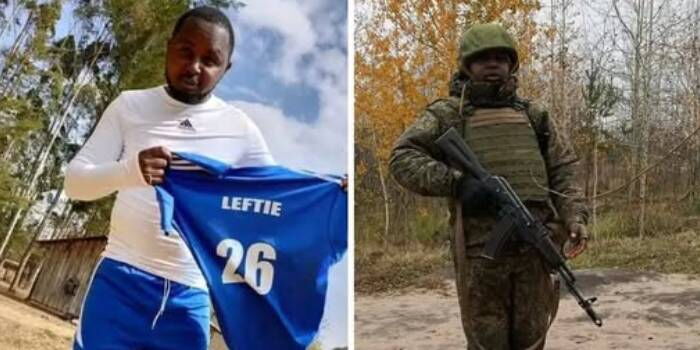

Ukraine Recovers Bodies of Two Kenyans

Ukraine’s Defence Intelligence says it recovered the bodies of two Kenyans killed while fighting for Russia. The remains were discovered near Lyman in Ukraine’s Donetsk region.
Officials identified the men as Ombwori Denis Bagaka and Wahome Simon Gititu. Investigators also found another Kenyan fighter, Clinton Nyapara Mogesa, in the same area.
According to Ukrainian intelligence, the three men were recruited while working in Qatar. They reportedly worked for private security firms promising stable and high incomes.
Bagaka and Mogesa arrived at a Russian recruitment center in September 2025. Later, Gititu joined them in October and signed a military contract. After brief training, Russian forces deployed them to the Donbas front line. They joined an assault operation targeting the city of Lyman.
Fatal Assault Near Lyman
However, Ukrainian forces described the battlefield as an active kill zone. Consequently, Ukrainian troops engaged the advancing unit and killed the three men.
Officials said Russian commanders failed to support or evacuate the mercenaries. Investigators confirmed their identities using passports recovered at the scene.
An image of two Kenyans who were discovered working with Russian forces in Ukraine. Photo/ DIU
Meanwhile, reports indicate Russian forces left Mogesa’s body behind for days. His family has not received official communication from Russian authorities.
Growing Concern for Kenyan Families
The deaths highlight growing risks facing foreign recruits in the Ukraine war. Several Kenyan families now struggle to recover remains from active combat zones.
Notably, another Kenyan family recently held a memorial without a body. Charles Wangari died fighting in the conflict on Christmas Day. His relatives gathered in Nyeri County to honor him in absentia. They could not retrieve his remains from the battlefield.
A Pattern of Desperation and Risk
Many recruits reportedly left Kenya seeking better economic opportunities abroad. Instead, some entered high-risk contracts tied to the ongoing conflict. Consequently, human rights observers warn about exploitation of foreign workers. They urge governments to monitor recruitment networks more closely.
Ultimately, the discovery near Lyman underscores the war’s global human cost. Families thousands of kilometers away now carry the burden of distant battles.