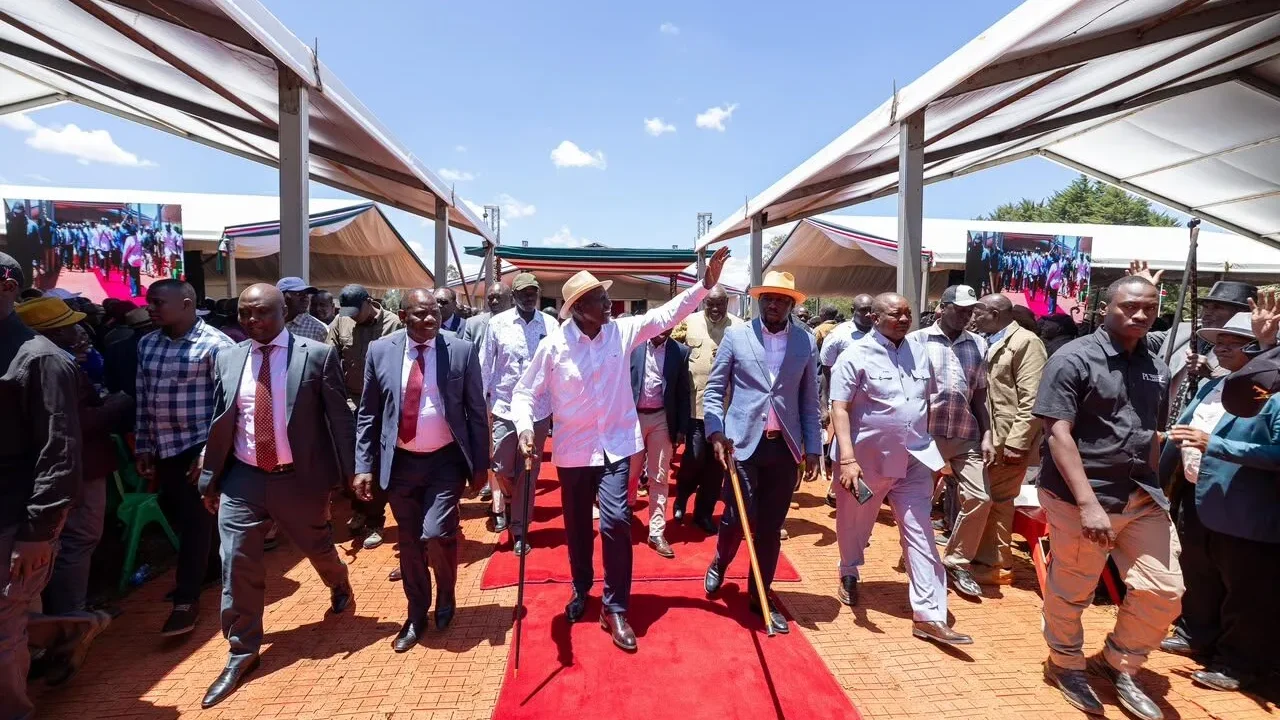
President William Ruto addressed Kalenjin elders at Eldoret State Lodge on agriculture and household incomes.
President William Ruto says increased farm production will help Kenya tackle drought, lower food prices and improve household incomes.
President William Ruto says his government is prioritising food security through increased agricultural production and lower farming costs. He said supporting farmers would help tackle drought, improve food supplies and ease living costs.
Ruto spoke on Monday during a meeting with more than 5,000 Kalenjin elders at Eldoret State Lodge. The gathering in Uasin Gishu County also brought together Cabinet officials, governors and Members of Parliament.
Lower farming costs central to food security
The President said making food more affordable starts with reducing the costs farmers face during production. He pledged continued government support to help farmers raise both their output and earnings.

Ruto also argued that stronger agricultural incomes would support economic activity beyond farms, benefiting the wider economy. He said agriculture offered a way to increase the money available to Kenyan households.
Meanwhile, he cited tea and sugarcane among sectors where farmers were receiving better earnings. He attributed those gains to government efforts to remove brokers from agricultural value chains.
The President presented higher production as a response to drought and pressure on household budgets. In his assessment, more food would improve affordability while strengthening Kenya’s ability to withstand drought.
Ruto cites housing, digital and overseas jobs
Beyond agriculture, Ruto defended his administration’s economic policies as efforts to narrow the gap between rich and poor. He said the government was expanding employment and other income-generating opportunities.
He highlighted affordable housing, digital work and overseas job placements as avenues for improving household earnings. According to the President, 1.1 million Kenyans work in the housing sector, while 300,000 earn from digital jobs.
He also said 700,000 Kenyans had secured employment abroad. Ruto added that two million people who were unemployed in 2022 had since found jobs.
The President said these initiatives sought to extend economic opportunities to people on the lowest incomes. He also urged better-off Kenyans to support others in improving their livelihoods.
Healthcare, education and regional development
On healthcare, Ruto said the Social Health Authority was improving access to medical services and easing household financial pressures. He presented the programme as another part of the government’s effort to improve living standards.
In education, he highlighted the recruitment of 100,000 additional teachers and the construction of 23,000 classrooms. He also pointed to changes in the higher education funding model.
Ruto said those measures aimed to expand access to education while reducing the financial burden on parents. Together, he argued, the agriculture, employment, health and education interventions would support broader economic inclusion.
The President also reaffirmed his commitment to national unity and fair development across the country. He assured North and South Rift residents that their regions would receive a fair share of national resources.
The elders affirmed their support for Ruto and his Usawa ni Sawa rallying call. Those attending included Interior Cabinet Secretary Kipchumba Murkomen and Head of Public Service Felix Koskei.
Governors Jonathan Bii Chelilim of Uasin Gishu, Stephen Sang of Nandi and Wesley Rotich of Elgeyo Marakwet also attended. Principal Secretaries, MPs and other leaders joined the gathering.