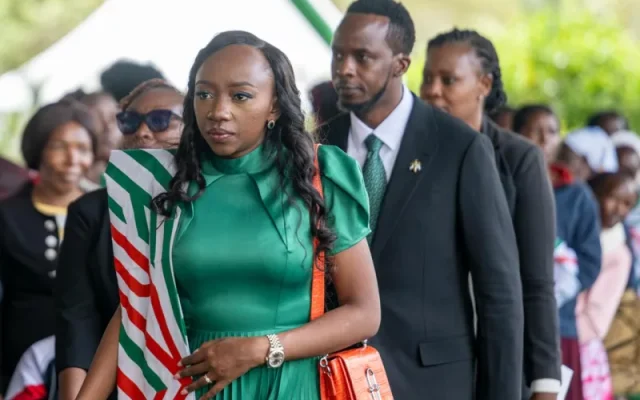




NAIROBI, Kenya — Kenyan media personality and dance instructor Chiki Kuruka has reignited debate over African representation at the Grammy Awards following the exclusion of Congolese music superstar Fally Ipupa from the 2027 nominations.
Kuruka questioned the Recording Academy’s recognition of African music, highlighting the absence of an artist whose influence stretches across the continent and international music markets.
Her concerns have resonated with fans who believe the Grammys should recognise Africa’s diverse musical traditions rather than concentrate on a narrow selection of popular sounds.
Ipupa, who celebrated 20 years as a solo artist in 2026, remains one of the most influential figures in Francophone African music.
Despite his international performances, commercial success and extensive catalogue, the Congolese singer did not secure a nomination in the Best African Music Performance category.

Fally Ipupa Missing From 2027 Grammy Nominees
The Recording Academy announced the 2027 Grammy nominations on November 16, revealing five contenders for Best African Music Performance.
The nominees are Asake for Gratitude, Angélique Kidjo and Ayra Starr for Aye Kan (Are You Coming Back?), and King Ayisoba featuring Rocky Dawuni for No Tradition, No Africa.
Tems received recognition for Big Daddy, while Wizkid and Asake secured a nomination for Jogodo. However, Ipupa’s absence has disappointed supporters who expected the Academy to recognise more Francophone African artists.
Debate Over Grammys’ Definition of African Music
The controversy has also revived questions about how international award institutions represent Africa’s musical diversity.
Although Afrobeats has achieved tremendous international success, the continent’s music industry extends far beyond Nigerian and Ghanaian pop.
Genres such as Congolese rumba, soukous, Bongo Flava, gengetone and traditional African music have developed substantial audiences.
Critics argue that greater representation of these sounds would give the category a broader continental identity. The Recording Academy introduced Best African Music Performance at the 2024 Grammy Awards.
The category recognises vocal and instrumental performances featuring strong elements of African cultural significance.
Language and Representation Under Scrutiny
Ipupa’s music primarily draws from Lingala and French, reflecting his Congolese roots and the Francophone music market.
His absence has consequently raised questions about whether language and international industry networks influence African artists’ visibility.
Grammy nominations, however, follow a formal submission, screening and voting process.
The Recording Academy says its voting membership consists of music creators across different genres and professional disciplines.
Its nearly 16,000 voting members determine nominations and winners through the Academy’s established voting procedures.
There is no publicly established evidence that Ipupa’s language or Francophone background directly caused his exclusion.
African Music Deserves Broader Recognition
For supporters of Ipupa, his absence does not diminish his influence or achievements. The singer has built a substantial international following through his music, collaborations and live performances.
His career also highlights the influence of Congolese music on contemporary African entertainment. Kuruka’s reported criticism has therefore added momentum to conversations about cultural representation and recognition within international music institutions.
As African music continues expanding globally, the debate raises an important question: can one Grammy category adequately represent the continent’s enormous musical diversity?