Health authorities have intensified Ebola screening at Jomo Kenyatta International Airport (JKIA) following reports that Kenya’s first confirmed case involved a traveller from the Democratic Republic of Congo (DRC).
The development has raised concerns about cross-border disease surveillance and the risk of infectious diseases spreading through regional travel networks.
Authorities are now working to establish the patient’s movements before arriving in Nairobi. The investigation also seeks to identify passengers and other individuals who may have come into contact with the traveller.
Patient’s Journey From DRC to Nairobi
Preliminary reports indicate that the patient allegedly left an Ebola treatment facility in the Democratic Republic of Congo.
The individual reportedly travelled through Ituri province before crossing into Uganda. The journey eventually ended in Nairobi after the traveller boarded a flight to Kenya.

The reported movement has raised questions about how the individual passed through regional border controls. Health officials are also examining whether the traveller encountered screening teams during the journey.
The investigation is expected to establish the patient’s movements and identify possible exposure points along the route.
JKIA Screening Measures Intensified
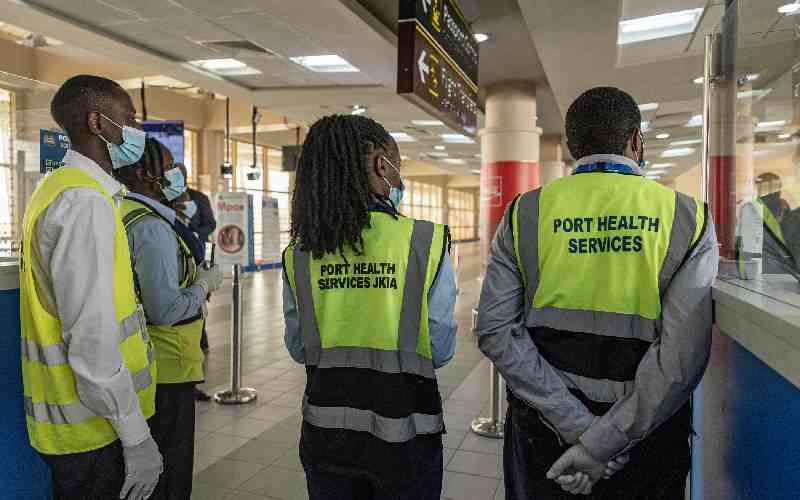
At JKIA, Ministry of Health port health teams have strengthened surveillance at international arrival points.
Health officers are conducting temperature checks and reviewing passenger health declarations. They are also monitoring travellers who display symptoms associated with Ebola.
Additionally, authorities are working with airlines to establish passenger details and identify potential contacts from the affected journey.
These measures aim to support early detection and prevent possible local transmission.
Regional Contact Tracing Underway
Kenyan health officials are coordinating with their counterparts in Uganda and the DRC to establish the traveller’s movements.
Contact tracing remains a key priority as investigators seek to identify passengers, transit contacts and other individuals who may have been exposed.
Nairobi’s position as a major regional aviation hub makes the response particularly important. Effective information sharing between neighbouring countries will also be essential in containing potential transmission.
What Happens Next?
Attention now turns to the findings of ongoing investigations and contact-tracing operations.
Health authorities are expected to provide further updates as they establish the patient’s travel history and assess possible exposure risks.
Meanwhile, strengthened screening at JKIA remains part of Kenya’s efforts to protect public health amid the reported Ebola threat.