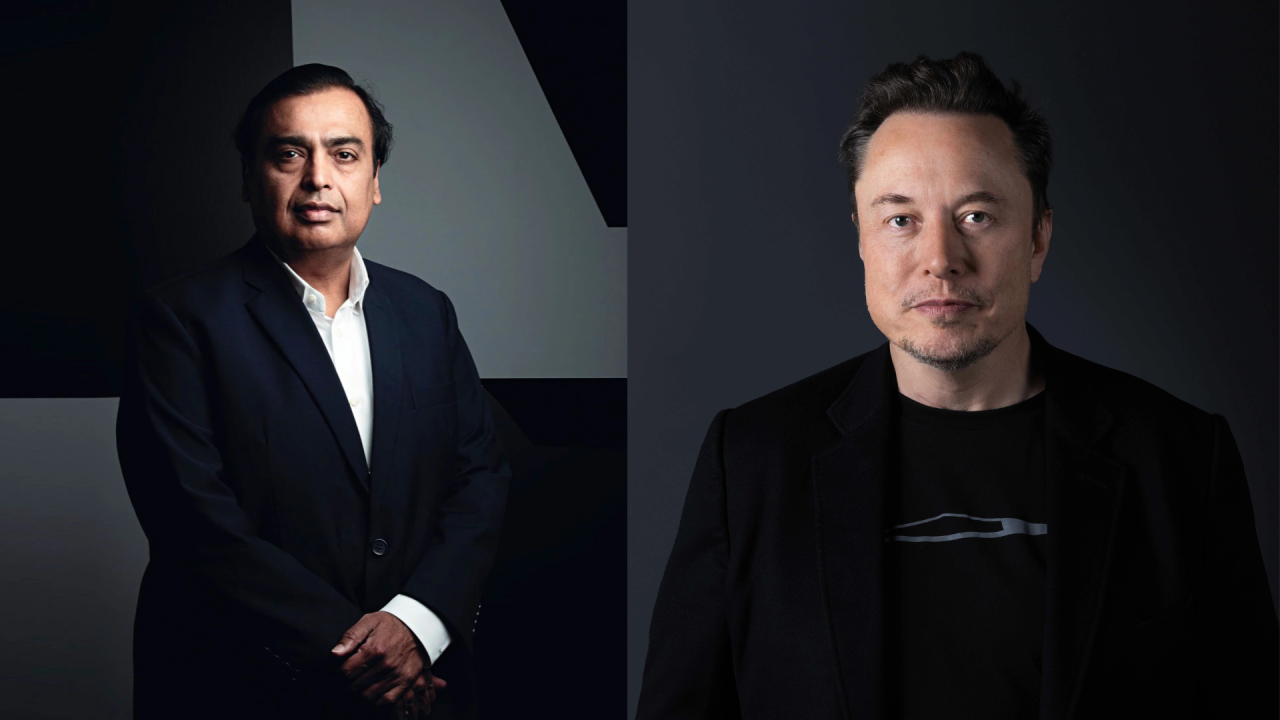
Elon Musk has intensified his public dispute with Indian billionaire Mukesh Ambani as Starlink seeks to enter India’s satellite internet market.

The SpaceX-owned internet provider is competing for a market dominated by established telecom companies, including Ambani’s Reliance Jio. The dispute centres on regulatory approvals, spectrum allocation, and the future of affordable internet access.
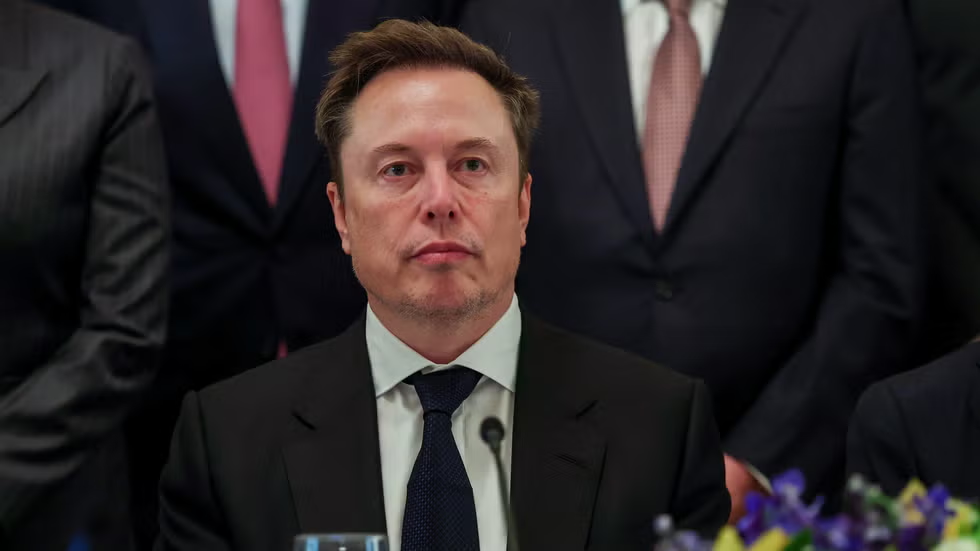
On October 11, 2026, Musk pledged to make Starlink’s service affordable for Indian consumers. He also escalated his criticism of Ambani, sarcastically calling him “Prime Minister Ambani” and questioning his influence over Starlink’s entry into India. Reuters reported the remarks, which Musk posted on X.
Musk Accuses Powerful Interests of Blocking Starlink
The dispute intensified after Musk accused unnamed business interests of obstructing Starlink’s launch to protect their market dominance.
He described the alleged situation as a “monopolistic chokehold” on Indian consumers. However, Musk did not provide publicly established evidence proving that Ambani had personally blocked Starlink’s entry.
India’s government rejected allegations that its approval process favours domestic telecom companies.
The Ministry of Communications said the regulatory framework was fair and non-discriminatory. Authorities also indicated that Starlink and competing satellite ventures remained subject to security reviews and other requirements.
Reliance had not publicly responded to Musk’s latest allegations in the reports reviewed.
Starlink and Jio Take Different Approaches
Starlink delivers internet connectivity through a constellation of low-Earth-orbit satellites. This technology can reach remote locations where traditional broadband infrastructure is difficult or expensive to build.
Reliance Jio, meanwhile, serves customers through its established mobile and broadband networks. Its business has grown by offering relatively inexpensive mobile data across India.
The companies are also exploring satellite connectivity, bringing them into closer competition beyond conventional telecom services.
According to India Today, Jio proposed a satellite network of approximately 1,600 low-Earth-orbit satellites and 23 ground stations. The proposal was presented at India Mobile Congress 2026. The plan represents a proposed expansion, not an already operational satellite constellation.
India’s Spectrum Rules Remain Central
Another major point of contention is how India assigns spectrum for satellite broadband services. Some traditional telecom operators have advocated auctions, arguing that the process should protect fair competition. Satellite companies have supported administrative allocation under India’s regulatory framework.
India adopted administrative assignment for satellite spectrum under its Telecommunications Act, 2023. However, spectrum policy is only one part of the approval process.
Satellite operators must also satisfy applicable security and regulatory requirements before launching commercial services.
As of the latest reports, Starlink was still awaiting outstanding clearances to begin commercial operations in India. Jio’s satellite venture was also awaiting final security clearance.
Affordable Internet Is the Bigger Prize
Musk has promised affordable Starlink pricing but has not announced a confirmed Indian subscription price. That distinction matters in a country where low-cost mobile data has helped Jio build a vast customer base. Satellite internet must compete on price while accounting for equipment, installation, and service costs.
Starlink could offer an alternative for rural and remote communities that lack reliable terrestrial connections. However, its reach will depend on pricing, regulatory approval, and the service’s practical performance.
Jio, in turn, brings an established network and distribution infrastructure to the competition.
The outcome will depend not only on the public feud between the billionaires, but also on regulatory decisions and the services each company can deliver.
For Indian consumers, the central question is whether greater competition will expand internet access and provide more affordable choices.