


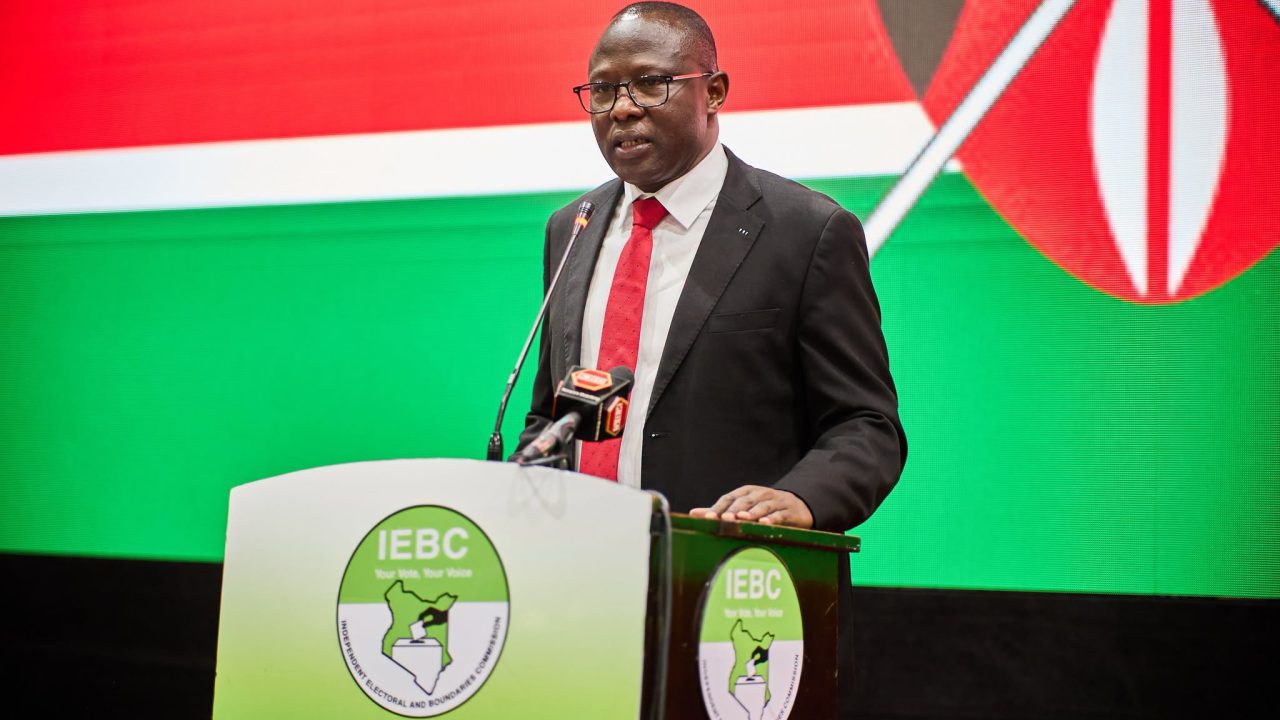
The Independent Electoral and Boundaries Commission (IEBC) has warned that livestreaming election results could significantly increase the cost of the August 2027 General Election.
The commission says nationwide coverage would require substantial investment in equipment, personnel and logistical preparations.
Speaking during a meeting with political reporters in Nairobi on Tuesday, November 24, IEBC Chairperson Erastus Ethekon said the proposal was possible but presented practical challenges.
He explained that the commission would need to procure cameras and install the necessary equipment across approximately 50,000 polling stations.
Additionally, IEBC would have to recruit, train and deploy technical personnel to operate the livestreaming system. The preparations would also require sufficient time to complete procurement, installation and staff training before election day.

Livestreaming Debate Continues
Ethekon’s remarks come amid renewed debate over transparency and public access to election results.
Section 39(1G) of the Elections Act provides for a mechanism to livestream results announced at polling stations.
However, the provision has faced legal challenges. Both the High Court and Court of Appeal have previously declared parts of the section unconstitutional.
The National Assembly retained the livestreaming provision in its October amendments to the Elections (Amendment) Bill, 2024.
The Senate has since raised objections, arguing that the amendments do not adequately address previous court decisions. The disagreement could send the Bill to mediation between the two Houses.
Consequently, the legal framework surrounding livestreaming remains part of ongoing parliamentary discussions.
IEBC Faces Funding Shortfall
The financial concerns emerge as IEBC prepares for the 2027 elections under significant budgetary pressure. On Monday, November 23, the commission presented its funding requirements to the National Assembly’s Justice and Legal Affairs Committee.
The latest figures reported by the Daily Nation placed IEBC’s funding shortfall at approximately KSh11.02 billion. The deficit covers election activities and the commission’s routine operations. It could affect voter registration, transport, temporary election officials and electoral reforms.
IEBC has also identified the acquisition of new Kenya Integrated Election Management System (KIEMS) kits as a major funding requirement.
As preparations continue, the commission faces the challenge of balancing election transparency, operational requirements and available public funding.