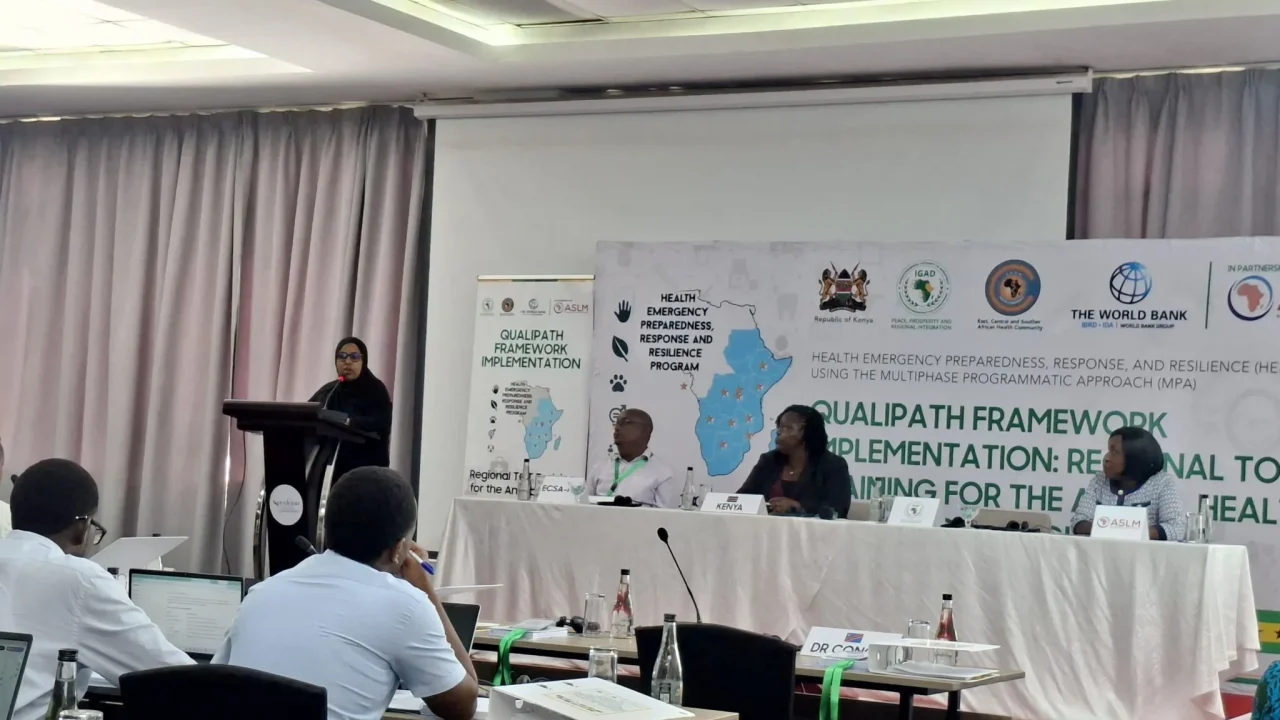
The regional training aims to strengthen animal health laboratory auditing across nine countries.
IGAD and its partners aim to build local auditing expertise across nine countries and improve animal health laboratory standards.
IGAD and its partners launched a five-day regional laboratory auditor training programme on Monday to address shortages in animal health expertise. The initiative aims to strengthen laboratory quality systems and help countries detect disease threats before they spread across borders.
The Intergovernmental Authority on Development is working with the East, Central and Southern Africa Health Community (ECSA-HC). The African Society for Laboratory Medicine is also a partner in the programme.
Together, they aim to build a pool of auditors and trainers who can assess laboratories and guide improvements. The programme will also help facilities work towards international accreditation.

Laboratory auditor training targets local skills gap
Kenya’s Deputy Director of Veterinary Services, Dr Romona Ndanyi, said countries lack enough certified, highly trained animal health laboratory auditors. As a result, they depend on external expertise, which can increase costs and delay assessments.
Speaking on behalf of the Director of Veterinary Services, Ndanyi said this reliance also threatens the sustainability of laboratory quality systems. The workshop will teach participants how to conduct baseline assessments, identify gaps and mentor laboratory personnel.
After the training, participants should lead assessments and train colleagues in their home countries. They will also support ongoing improvements in laboratory quality management.
The workshop brings together participants from Kenya, Mozambique, Zambia, Rwanda, the Democratic Republic of the Congo and São Tomé and Príncipe. Malawi, Ethiopia and Burundi complete the nine-country group.
Stronger laboratories support regional preparedness
IGAD Head of Mission to Kenya Ambassador Fatuma Adan described the training as an investment in regional health security. She said preparedness must begin before outbreaks, through capable staff, strong systems and laboratories that produce reliable results.
Adan also stressed that no country can manage health threats alone. Regional preparedness therefore requires cooperation, information-sharing and common standards.
The training falls under the Health Emergency Preparedness, Response and Resilience Programme, known as HEPRR-MPA. That programme seeks to strengthen preparedness, detection and response across Eastern and Southern Africa.
Animal health laboratories help detect and monitor diseases that can spread between animals and humans. Reliable results also support livestock production, food safety, public health and regional trade.
Meanwhile, concerns over Ebola, Marburg virus disease, Mpox, cholera and Rift Valley fever highlight the need for stronger surveillance. The One Health approach brings human, animal and environmental health authorities together to identify and respond to shared threats.
Quality framework guides progress towards accreditation
ECSA-HC representative Dr Linus Odawo said the initiative would complement work to strengthen human health laboratories. IGAD, meanwhile, will focus on animal health facilities.
Odawo urged participants to share their new skills and promote consistent standards at home. He also called for continued review of the QualiPATH framework to keep it effective.
QualiPATH offers laboratories a step-by-step route to stronger quality management, guided by ISO/IEC 17025 principles. Rather than a pass-or-fail test, it uses tiers to recognise improvements in quality and competence.
However, completing an assessment does not automatically grant international accreditation. Laboratories must still address identified gaps and meet formal accreditation requirements.
Organisers expect the new auditor network to encourage peer learning and cross-country collaboration. Through that cooperation, participating countries aim to improve their ability to detect and respond to disease threats.