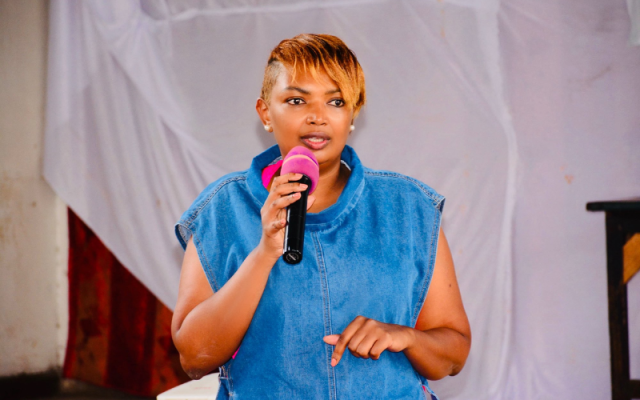



Karen Nyamu addressed an endometriosis awareness gathering at KICC in Nairobi.
The nominated senator says heckling at a Nairobi awareness event will not deter her efforts to secure better care for women living with endometriosis.
Nominated Senator Karen Nyamu has dismissed the Wantam chants that interrupted her address at an endometriosis awareness event in Nairobi, saying she remains focused on pushing for better treatment and government support through Parliament.
Nyamu was speaking at Natalie Githinji’s Endometriosis Warriors (N.E.W) gathering at the Kenyatta International Convention Centre on September 27 when sections of the audience began chanting. She told those present that her attendance was not about politics and that the interruptions would not distract her from the health issue.
Speaking after the gathering, the senator said she had ignored the heckling rather than attempted to confront those involved.
Nyamu says she expected criticism
Nyamu said she had anticipated a hostile reception because of comedian and political activist Eric Omondi’s involvement in the event. She linked that expectation to his outspoken criticism of the government.
However, she said avoiding the gathering would have meant missing an opportunity to engage with women living with endometriosis. Her intention, she explained, was to listen, deliver her message and continue pursuing the matter in the Senate regardless of the political chants.
The senator also argued that public criticism should not prevent her from taking up an issue she believes needs government attention. She maintained that a cause does not have to receive universal backing for her to pursue it.
Push for specialised treatment and insurance
Nyamu said she had given notice in the Senate on September 10 of her intention to introduce a motion on endometriosis following conversations with women affected by the condition.
She credited Githinji’s advocacy with helping bring the matter before the Senate, saying the public attention generated by her work had been instrumental in the proposed motion.
The proposal seeks increased government support for women with endometriosis, including specialised treatment centres across Kenya and better insurance coverage for care.
Nyamu also questioned whether the healthcare system has enough specialists to manage complex cases. She said Kenya has about 700 registered gynaecologists, but identified only five as trained to perform complex endometriosis operations.
She further raised concerns about what she described as a lack of official national data on the number of women living with the condition. Without that information, she argued, the government would struggle to plan services, allocate funding and determine where specialised centres are needed.
Advocacy shaped by personal experience
The N.E.W gathering brought together women living with endometriosis and members of the public for awareness activities and discussions about the condition.
Githinji has shared her experience of a 17-year struggle with endometriosis, including a diagnosis of severe Stage 4 disease and treatment after a serious flare-up. Nyamu pointed to her public platform as an important avenue for drawing attention to reproductive health challenges.
Githinji’s advocacy has also drawn comparisons with the work of the late reggae DJ Mary Njambi Jahmby Koikai, who campaigned for greater awareness after developing a rare form of endometriosis that affected her lungs.
Koikai died in June 2024 at the age of 38. Having undergone numerous operations, she repeatedly highlighted the difficulties women in Kenya face in obtaining a diagnosis and accessing specialised treatment.