Oversight reports and recent cases highlight the challenge of turning constitutional safeguards into accountability that protects complainants.
Kenya police reforms face a continuing test: whether oversight institutions can secure accountability and protect people who report misconduct. Complaint figures and recent cases show the demands on that system, but offer no definitive measure of progress.
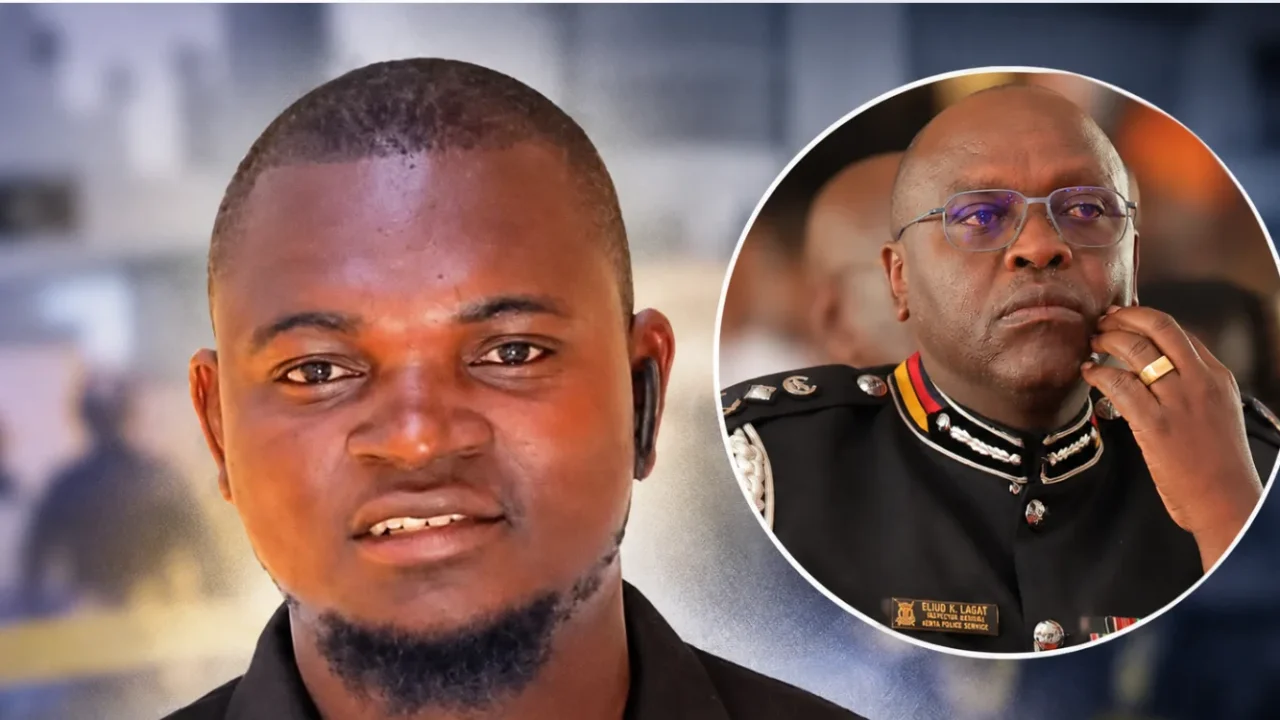
For Nairobi resident Barack Ngumba, fear of retaliation makes reporting officers difficult. Fellow resident Paul Neko argues that police authority must not shield extortion or other criminal conduct.
Their concerns are individual accounts, not a representative survey of public confidence. However, they highlight a central question: can citizens seek redress without exposing themselves to further harm?
Kenya police reforms and constitutional safeguards
Article 244 of the Constitution requires the National Police Service to uphold professionalism, discipline and human rights. It also requires the service to prevent corruption and promote transparency and accountability.

The Independent Policing Oversight Authority Act, 2011, established IPOA to investigate police conduct and recommend appropriate action. However, the existence of an oversight body does not establish whether complainants consistently obtain justice.
The June 2025 death of teacher and social media influencer Albert Ojwang in police custody tested those safeguards. Police initially said he had died after hitting his head against a wall.
Inspector-General Douglas Kanja later apologised to senators, acknowledging that IPOA reports contradicted the initial police account. Meanwhile, IPOA Vice Chairperson Ann Wanjiku said investigators had established interference with CCTV footage at the station.
The case highlighted the importance of preserving evidence and independently examining official accounts. Still, one incident cannot establish the overall effectiveness of police reform.
What complaint figures establish
IPOA recorded 2,360 complaints against police between July and December 2025, according to its performance report. During that period, it also completed 763 investigations and sent 63 files to the Office of the Director of Public Prosecutions.
These figures describe different stages of the oversight process, rather than a direct success rate. A completed investigation does not necessarily establish misconduct, while a referral does not guarantee charges or conviction.
Separately, the Kenya National Commission on Human Rights documented 57 right-to-life violations between December 2024 and December 2025. These included Ojwang’s case.
The commission also recorded 661 complaints concerning freedom and security of the person, including 15 abduction cases. Other complaints concerned arbitrary detention, torture and enforced disappearances.
However, those totals do not establish that police officers were responsible for every reported violation. Nor do they show that investigators substantiated every allegation.
Transfers and prosecutions carry different weight
In February 2026, the Police Reforms Working Group criticised transfers of officers linked to an alleged Nandi Hills assault. The group said CCTV footage appeared to show officers assaulting young men at premises where they were playing pool.
IPOA opened an investigation, while Kanja directed the Internal Affairs Unit to conduct an inquiry. The working group argued that transferring officers undermined public confidence.
A transfer changes an officer’s posting, but does not resolve allegations or determine whether disciplinary or criminal action is appropriate.
Also in February 2026, Police Constable Peter Wamiti Mwangi faced charges following an IPOA recommendation. The case concerned the fatal shooting of George Matheri in Karatina, Nyeri County.
That prosecution marked a further step in the accountability process. However, a charge is not a finding of guilt.
Public confidence depends on visible outcomes
Lawyer Willis Otieno argues that policing still carries a legacy of top-down command and limited public influence. In his assessment, constitutional change requires deeper institutional reform, not simply new names or oversight structures.
A fuller assessment therefore needs comparable information on prosecutions, disciplinary decisions, case timelines and remedies for victims. It also needs evidence that complainants and witnesses can participate without intimidation.
Without those outcomes, complaint totals alone cannot show how much citizens’ experiences have changed. The practical test remains whether institutions respond credibly when police officers allegedly violate rights.