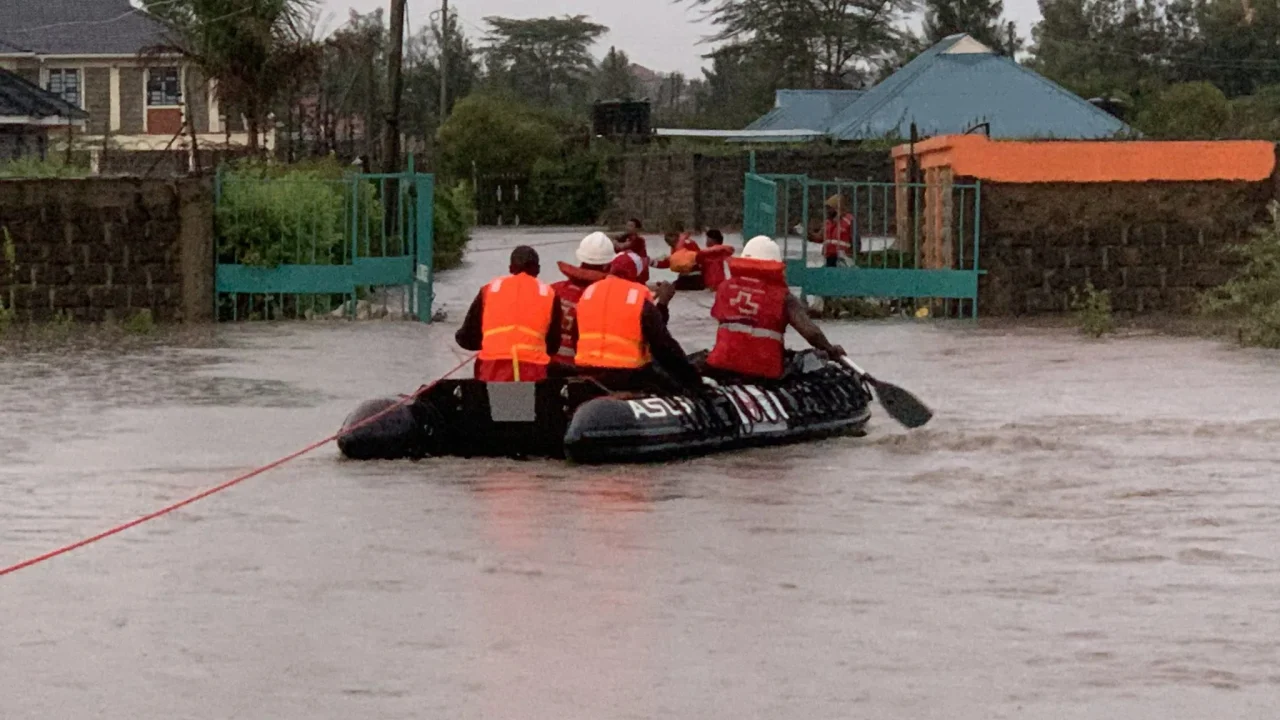
The Met Department forecasts rainfall in parts of 44 counties from October 20 to 26.
The Met Department forecasts rain from October 20 to 26, while officials warn of uneven rainfall, isolated storms and potential flooding.
The Kenya rainfall forecast for October 20 to 26 indicates showers in parts of 44 counties. The Kenya Meteorological Department also warns of isolated storms as the country prepares for potentially wetter seasonal conditions.
However, the department cautions that rainfall will vary across counties, with some areas receiving substantially more than others. The weekly outlook comes alongside expectations of enhanced October–December rains linked to El Niño and Indian Ocean conditions.
Kenya rainfall forecast covers 44 counties
The forecast names Meru, Embu, Baringo, Bomet, Bungoma, Busia, Elgeyo Marakwet, Garissa, Homa Bay, Kakamega, Kericho and Kiambu. It also includes Kilifi, Kirinyaga, Kisii, Kisumu, Kitui, Kwale, Laikipia, Lamu, Machakos and Makueni.

Other counties are Mandera, Marsabit, Migori, Mombasa, Murang’a, Nairobi, Nakuru, Nandi, Narok, Nyamira, Nyandarua and Nyeri. Siaya, Taita Taveta, Tana River, Tharaka-Nithi, Trans Nzoia, Turkana, Uasin Gishu, Vihiga, Wajir and West Pokot complete the list.
Separately, isolated storms could affect Kitui, Makueni, Kajiado, Machakos, Laikipia, Samburu, Mandera, Wajir and Marsabit. These storms raise concerns about localised downpours in places vulnerable to flash floods.
Meanwhile, average daytime maximum temperatures could exceed 35°C in parts of Garissa, Wajir, Tana River and Isiolo. Kilifi, Marsabit, Samburu and Turkana could also experience those temperatures.
In contrast, average night-time minimum temperatures could fall below 10°C in parts of Meru, Tharaka-Nithi, Nyeri and Kirinyaga. The forecast indicates similar cold conditions in some areas of Murang’a, Nakuru and Kajiado.
Ocean conditions shape seasonal outlook
The Intergovernmental Authority on Development’s Climate Prediction and Applications Centre issued its regional outlook on August 18. It projected wetter-than-normal October–December conditions across the Greater Horn of Africa.
The centre linked that outlook to a developing Pacific Ocean El Niño event, which it expected to strengthen. An anticipated positive Indian Ocean Dipole would also influence rainfall across the region.
Central Kenya and the Lake Victoria Basin showed a high likelihood of seasonal rainfall exceeding 400 millimetres. However, the centre stressed that rainfall timing and distribution would differ across the region.
Kenyan meteorological officials also caution that El Niño’s strength alone cannot determine the amount of rain.
During a preparedness meeting in Narok, county meteorological director Stanley Kinyua highlighted the Indian Ocean Dipole’s importance. He said its strength would play a major role in determining the season’s outcome.
The dipole describes differences in sea-surface temperatures across the Indian Ocean. Depending on its phase and strength, it can increase or reduce El Niño’s rainfall effects.
Flood risks prompt health preparations
The anticipated rains raise concerns about floods, landslides, infrastructure damage and displacement in vulnerable communities. Poor drainage, inadequate sanitation and weak housing can worsen the effects of heavy rain.
Settlements along riverbanks and floodplains also face risks, authorities warn. Meanwhile, the Ministry of Health has activated preparedness measures ahead of the expected rains.
The ministry warns that flooding can contaminate water sources, increasing the risk of cholera and typhoid. Flood conditions can also favour mosquito-borne illnesses.
Farmers advised to monitor local updates
The rains could replenish reservoirs, improve soil moisture and support crop production and pasture recovery. These benefits would be particularly important in areas that have experienced dry conditions.
However, prolonged wet weather could cause waterlogging, erosion and crop losses, while downpours could disrupt transport. The department therefore advises residents and farmers to follow its regular updates rather than expect uniform rainfall.
The seven-day forecast offers a near-term guide to local weather conditions. By comparison, the seasonal outlook describes the broader rainfall pattern anticipated through December, not continuous heavy rain everywhere.