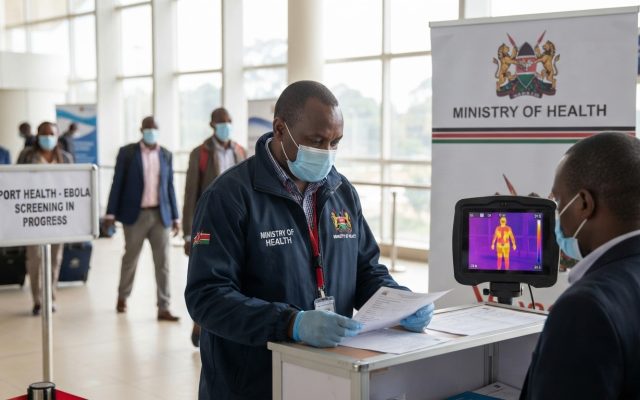


A Kenyan healthcare worker inspects medical supplies as the nation heightens Ebola readiness following its first confirmed case.

Kenyan clinical officer Stephen Mureithi Mugo has urged authorities to strengthen healthcare training and provide quality protective equipment following Kenya’s first imported Ebola case.
Mugo, who served during West Africa’s 2014–2015 Ebola outbreak, warned that frontline workers need proper protection and practical training to prevent infections.
His call comes as Kenya responds to an imported case of Ebola Bundibugyo virus disease. Health officials must now strengthen surveillance, trace contacts and prevent local transmission.
Lessons From Liberia’s Ebola Crisis
Mugo was among 15 Kenyan medical professionals who travelled to Liberia on January 9, 2015. Then Health Cabinet Secretary James Macharia had called on them to support the international response.
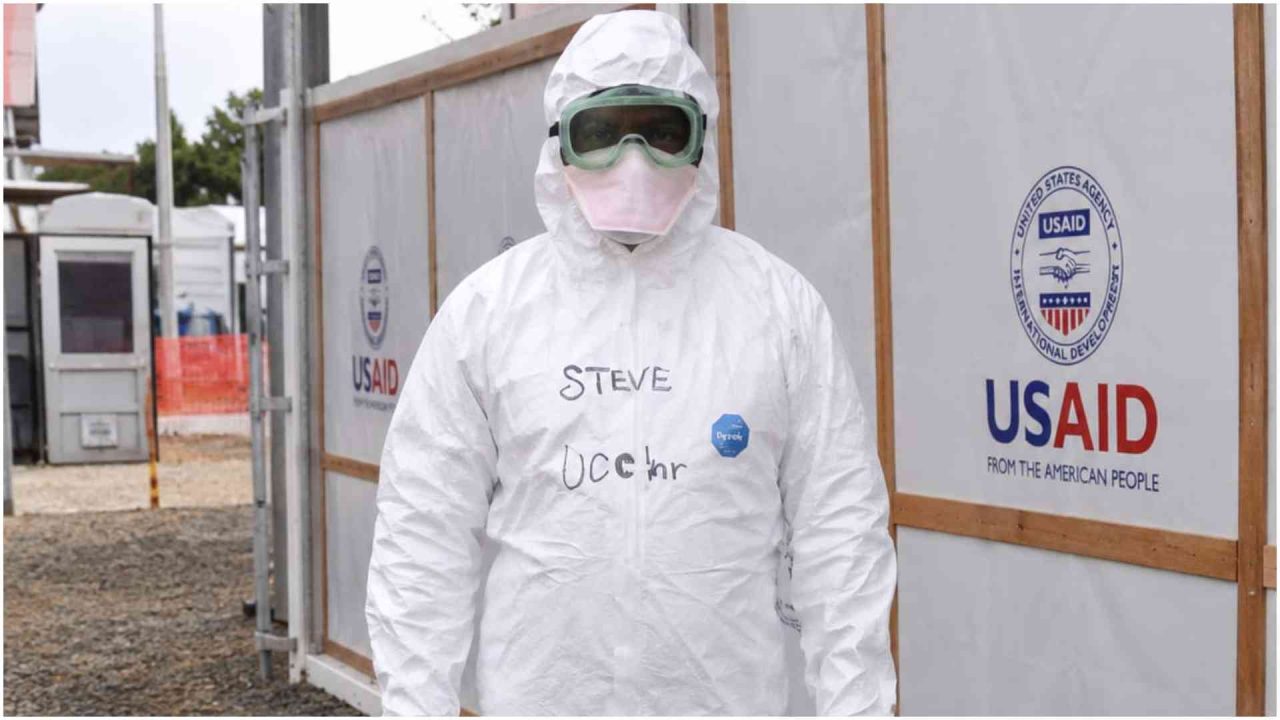
After two weeks of intensive infection prevention training, Mugo joined a 100-bed Ebola Treatment Unit at the Samuel K Doe Sports Complex in Monrovia.
He recalled witnessing the devastating impact of the outbreak on patients and healthcare workers.
“The worst day, the ward was full and after a four-hour shift, I went home. The next day, 68 patients were dead, and new patients admitted,” Mugo said.
He estimated that seven in every ten patients admitted to the treatment centre died. Medical teams relied on supportive care, including intravenous fluids, blood transfusions and symptom management.
Protective Equipment and Public Awareness
Mugo said effective containment depends on community trust, contact tracing and strict infection prevention measures in healthcare facilities.
He noted that misinformation, fear and initial resistance can complicate outbreak responses. Trusted community leaders therefore play a crucial role in delivering accurate public health information.
“One of the biggest ways of fighting Ebola is sharing information. Information must be spread without inducing panic, and be very factual,” he said.
Mugo also stressed that healthcare workers must follow proper procedures when wearing and removing personal protective equipment (PPE).
“A healthcare provider cannot handle a patient without PPEs. Everything you do must be under PPEs. This is what protects you from being infected,” he added.
What Kenya Needs to Strengthen
Mugo’s experience highlights the need for adequate PPE supplies, rigorous infection prevention training and consistent protocols across healthcare facilities. Authorities must also strengthen contact tracing and ensure communities receive timely, accurate information.
Safe burial procedures remain essential in reducing the risk of further infections. Healthcare workers must also receive clear guidance on patient isolation, triage and supportive care.
Supporting Kenya’s Ebola Preparedness
Mugo and his colleagues received state honours after returning from their mission in West Africa. They were also received by then President Uhuru Kenyatta.
As Kenya manages the imported case, Mugo has expressed willingness to support national response teams with his experience.
His warning underscores the importance of preparing healthcare workers before infections spread. Adequate equipment, practical training and public cooperation remain critical to containing Ebola and protecting frontline personnel.