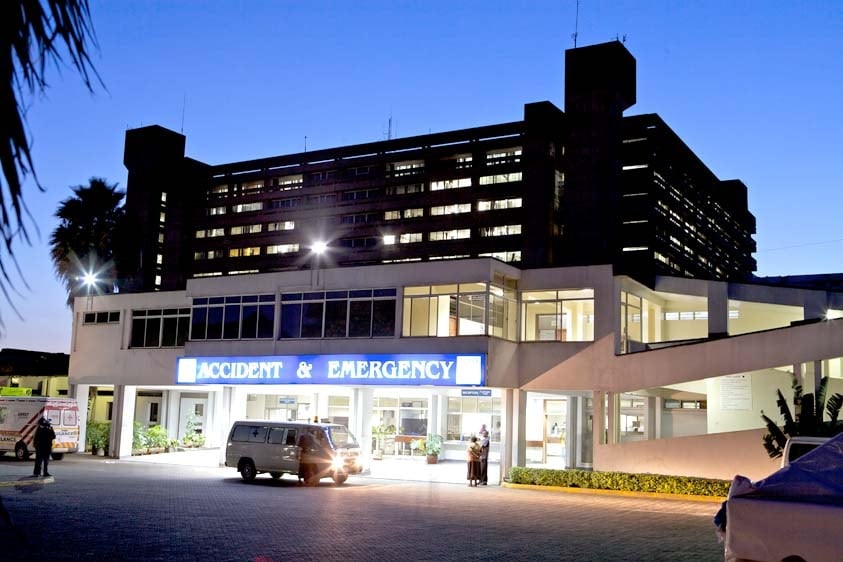
KNH reports a successful windpipe reconstruction for Dennis Omondi after years of breathing difficulties.
KNH surgeons repaired 26-year-old Dennis Omondi’s windpipe in a five-hour operation, helping him breathe more easily after nearly two decades of difficulty.
Kenyatta National Hospital (KNH) says it has performed Africa’s first tubeless tracheal reconstruction, repairing a young man’s windpipe. The five-hour operation took place on September 24 at the hospital’s Prime Care Centre.
The patient, 26-year-old Dennis Omondi, had struggled with breathing difficulties for nearly 20 years. Following surgery, he reported easier breathing, an improved voice and a return to his daily activities.
Dr Joseph Mutie, a consultant cardiothoracic and vascular surgeon, led the operation. He worked alongside ear, nose and throat specialist Dr Ruel Maina and consultant anaesthesiologist and intensivist Dr Caroline Abuya.

How tubeless tracheal reconstruction helped
The team repaired Omondi’s windpipe without a conventional breathing tube obstructing the surgical area. Instead, the technique allowed him to breathe naturally throughout the procedure, giving surgeons clearer access.
Surgeons also used a bronchoscope, a small camera inserted into the airway, to locate the affected section. This helped them target the diseased tissue while preserving healthy parts of the windpipe.
The team removed the narrowed sections and closed an abnormal opening between the windpipe and his neck’s skin. They then joined the healthy ends of the windpipe to restore a clear breathing passage.
However, the technique requires careful planning and close coordination between surgeons and anaesthesia specialists. The teams must maintain adequate oxygen levels throughout the operation to protect the patient.
KNH says the approach can reduce injury to the windpipe’s delicate lining and support faster healing. The hospital also lists a simpler surgical process and shorter operating time among its advantages.
Dr Mutie said the clearer view helps surgeons work more precisely on complex airway conditions. He also described the procedure as an important advance for treatment in Kenya.
Years of breathing difficulties
Doctors diagnosed Omondi with a benign adenoma, a non-cancerous growth in his windpipe, in 2008. Later investigations also identified narrowing that restricted airflow and the abnormal opening, known as a fistula.
These conditions affected his breathing, voice and everyday activities for years. After the operation, however, Omondi said he could climb a flight of stairs with greater ease.
He has also returned to running his retail shop in Kisumu. KNH has discharged him, but he will continue attending follow-up appointments at the Prime Care Centre.
KNH highlights local specialist care
Prime Care Centre Senior Director Dr John Ngigi said the achievement reflected its commitment to specialised, patient-centred care. Meanwhile, Clinical Services Senior Director Dr Joel Lessan highlighted the role of modern technology, innovation and teamwork.
KNH Chief Executive Officer Dr Richard Lesiyampe said the procedure demonstrated Kenyan medical professionals’ ability to deliver advanced treatment locally. He also said wider access to suitable specialist services could reduce the need for treatment abroad.
Theatre sterile assistants Griffin Khamisi and Monica Manore supported the surgical team. Mary Nyakangi led the nursing team, with assistance from Branice Juma, Merline Akinyi, Annita Jemeneli, Winnie Nyatende and Ann Keeru.