

Samia Slashes Presidential Motorcade to Four Cars due to Fuel Hike

On April 8, 2026, Samia Suluhu Hassan introduced strict austerity measures. The directive aims to reduce government fuel consumption amid rising costs.
Consequently, public institutions must immediately comply with the new rules.
Major Cost-Cutting Measures Introduced
First, the President significantly reduced her official motorcade. Previously, it had over 30 vehicles. Now, only three or four essential vehicles remain in use.
Moreover, the convoy includes a lead vehicle, security escort, and backup car. This change cuts fuel expenses and promotes efficiency.
In addition, senior government officials must now share transportation. Instead of separate luxury SUVs, they travel together in one bus. This rule applies during all official presidential tours.
Furthermore, the government has restricted unnecessary travel. All ministries must reduce vehicle use and limit non-essential trips. As a result, agencies must prioritize critical operations only.
Fuel Price Spike Triggers Action
These measures follow a sharp rise in fuel prices nationwide. Between March and April 2026, prices increased by nearly one-third.
Petrol prices rose from TSh 2,864 to TSh 3,820. Similarly, diesel increased from TSh 2,858 to TSh 3,806. Kerosene prices also climbed significantly within the same period. Therefore, the government acted quickly to manage expenditure pressures.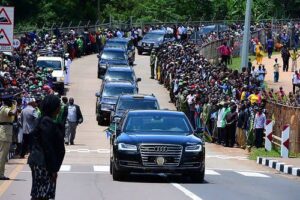
READ ALSO: Tanzania Marks Independence Day Amid Protests, Heavy Security
Global and Local Factors Behind the Crisis
The surge links to global supply disruptions. Ongoing tensions involving the United States, Israel, and Iran affected oil routes. Specifically, instability around the Strait of Hormuz disrupted supply chains. Consequently, global fuel prices increased, impacting Tanzania directly.
Locally, regulatory actions also sparked concern. Following the price hikes, President Samia dismissed EWURA head James Mwainyekule. She cited the need for accountability and better oversight.
Impact and Public Response
These austerity measures signal a shift toward fiscal discipline. They also demonstrate leadership by example from the presidency.
Meanwhile, citizens continue to feel the impact of higher fuel costs. Transport and commodity prices have already started rising. However, the government believes these steps will stabilize spending. In the long term, the policy aims to protect the national economy.
Ultimately, Tanzania’s austerity measures reflect urgent economic realities. By cutting fuel use, the government seeks to manage rising costs effectively. As global pressures persist, such strategies may remain essential.