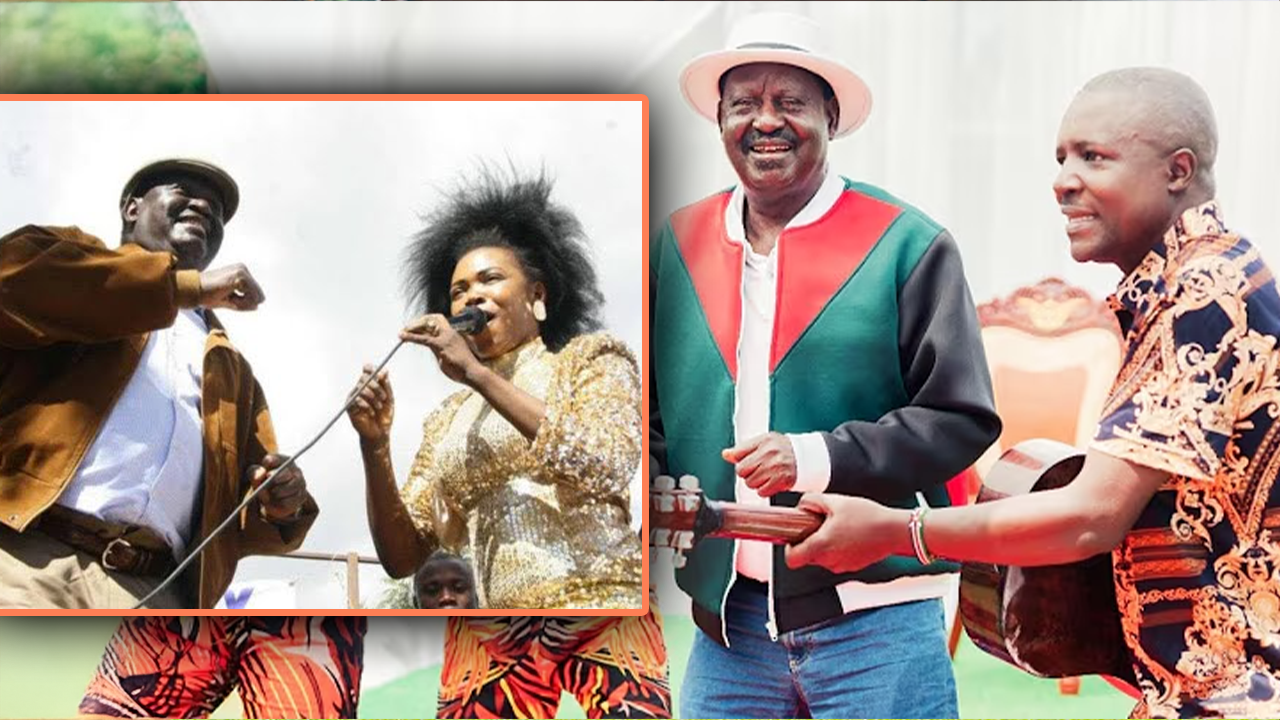
From Unbwogable to NASA Tibim, musicians and rally chants helped Raila Odinga connect politics with Kenya’s entertainment culture.
Raila campaign songs brought political messages into popular culture, turning rallies into occasions for music, dance and participation. Across successive elections, artists gave his supporters melodies and chants that travelled beyond campaign venues.
Former Prime Minister Raila Odinga died in India on October 15, 2025, aged 80. However, the music associated with his public life offers another way to trace his decades-long political journey.
How Raila campaign songs grew from coalition anthems
In 2002, Gidi Gidi Maji Maji’s Unbwogable became an anthem for the National Rainbow Coalition, or NARC. Raila helped lead the coalition and supported Mwai Kibaki’s successful presidential bid.
Joseph Ogidi and Julius Owino did not originally create the hit for a political campaign. Nevertheless, its message of being unstoppable or impossible to intimidate matched supporters’ demands for change.

By 2007, the songs had become more directly focused on Raila and the Orange Democratic Movement. Ohangla musician Onyi Papa Jey, whose real name is Bernard Onyango Ranginya, released Raila ODM.
The track combined Luo and Swahili lyrics with a call-and-response format that invited crowd participation. Its question, Mnataka nani?, prompted the answer Chungwa!, referring to ODM’s orange symbol.
NASA chants and a recording with Musindi
During the 2017 election campaign, Onyi Jalamo’s NASA Tibim became a signature song for the National Super Alliance. Supporters embraced its Tibim and Tialala chants, which also entered everyday conversation.
Meanwhile, gospel musician Hellenah Ken’s Mambo Yabadilika, meaning “Things Are Changing”, echoed NASA’s message of political change. Together, these songs helped give the coalition a recognisable musical identity.
Raila then took a direct performing role during his final presidential campaign in 2022. He joined Benga musician Emmanuel Musindi for Lelo ni Lelo, a campaign rendition of Musindi’s original hit.
The February 2022 release accompanied Raila’s presidential bid under the Azimio la Umoja coalition. Its title means “Today is the day”, matching the campaign’s call to action.
Raila opened with his familiar haya haya phrase and repeated Inawezekana, meaning “It is possible”. He also used Kenya mpya inawezekana, expressing the possibility of a new Kenya.
Alongside those campaign phrases, he sang lines from Kenya’s national anthem about justice and brotherhood. The accompanying video featured him with musicians and dancers, extending the performance beyond the rally stage.
The songs beyond the campaign trail
Outside electoral politics, Harry Belafonte’s Jamaica Farewell held a personal place in Raila’s musical life. He performed verses during a 2014 appearance on The Churchill Show, drawing cheers from the audience.
In a 2017 television interview with Betty Kyallo, Raila explained its connection to his family. He and his wife, Ida, had wanted a Jamaican honeymoon but could not afford it.
Ida’s interest in the Caribbean and Raila’s love of Belafonte inspired that plan. Eventually, the couple visited Jamaica with their children after they had grown up.
His tastes also included Lucky Dube’s Nobody Can Stop Reggae and Ken Wa Maria’s Fundamentals. In addition, he praised the melody and message of Jaguar’s Kigeugeu.
From protest refrains to songs of remembrance
Other songs expressed the determination of Raila’s supporters during political struggles. Bado Mapambano, meaning “the struggle continues”, became a familiar refrain at rallies and opposition gatherings.
Similarly, Sitarudi Nyuma, meaning “I will not retreat”, offered a shared declaration of resolve. Raila and supporters sang it during the March 2023 opposition protests, amid police restrictions and tear gas.
After his death, some familiar recordings acquired a different emotional meaning. Lady Maureen’s 2014 song Raila Duogie Dala, meaning “Raila, come home”, was one such tribute.
Originally, it marked his return from a three-month stay in the United States after the 2013 election. Its appeal later resonated with mourners, while Jamaica Farewell also featured in reflections on his life.