

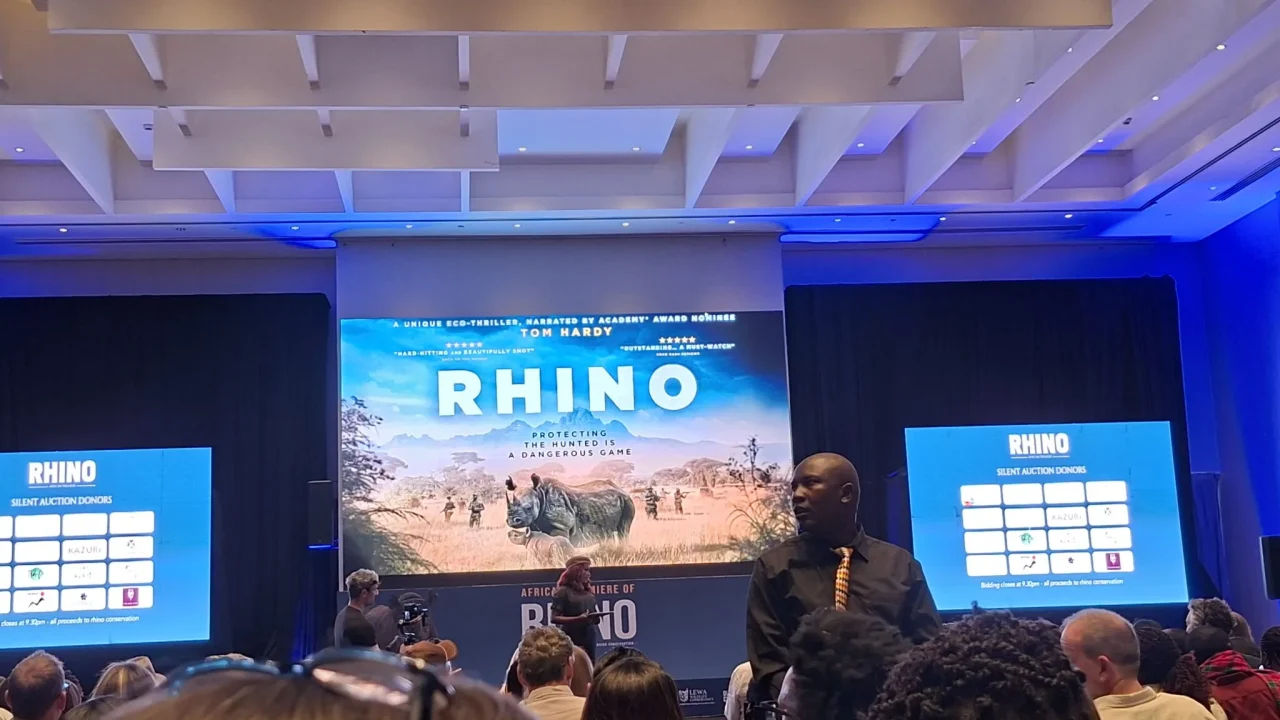
The African premiere of RHINO in Nairobi brought together rangers, conservation experts and diplomats.
Directed by Tom Martienssen and narrated by Tom Hardy, the film follows five years of work to protect black rhinos and rebuild their populations in Kenya.
Kenyan rangers and conservation teams take centre stage in RHINO, a documentary that held its African premiere at Nairobi’s Trademark Hotel on Saturday, September 27, following an earlier premiere in London.
Directed by Tom Martienssen and narrated by actor Tom Hardy, the film follows five years of efforts to protect black rhinos and rebuild populations of one of Africa’s most threatened species. It focuses on the people carrying out that work, the risks they face and the relationships behind Kenya’s conservation progress.
The Nairobi screening brought together rangers, conservationists, veterinary experts, diplomats and other stakeholders. Among those attending were US Charge d’Affaires Susan Burns and UK High Commissioner Matt Baugh.
A different conservation story
Martienssen said his first visit to Kenya eight years ago challenged the story he had expected to find. He arrived anticipating an account of the rhino crisis but instead encountered conservation achievements that changed the direction of the project.
He later returned and spent five years documenting rangers and conservation teams as they protected the animals. That extended period allowed him to follow both their daily work and the risks involved in safeguarding rhinos.
At the premiere, Martienssen thanked the rangers and conservation partners who had opened up their work to him. He said their access and trust made it possible to document the people behind the country’s conservation achievements.
The director described the film as a way to bring those experiences to a wider audience, with an emphasis on dedication and cooperation rather than wildlife alone.
Loisaba relocation features prominently
A major part of the documentary covers the 2024 relocation of 21 black rhinos to Loisaba Conservancy. The operation aimed to establish a new population in an area where the species had been absent for decades.
The translocation involved several conservation organisations and followed years of planning. Its inclusion gives the film a specific account of the coordinated work involved in rebuilding rhino populations.
Loisaba Board Chair Sophie Kinyua said the documentary highlights a dimension of conservation that can receive less attention: the people responsible for making it happen. She pointed to the commitment, sacrifices and hopes of rangers working on the frontline.
For Kinyua, the film presents conservation as a human undertaking, grounded in the efforts of those who protect the animals, rather than as an abstract goal.
A call for Kenyan-led storytelling
A panel discussion after the screening brought together Martienssen, rangers, conservation leaders and veterinary experts. They explored how rhino conservation in Kenya is changing and the contributions of communities, conservancies, rangers and international partners.
Martienssen also urged greater investment in Kenya’s ability to tell its own conservation stories. He said future productions should increasingly be led by Kenyan storytellers with close knowledge of the communities involved.
That call reflected the documentary’s wider focus on people. Beyond the protection and movement of rhinos, Martienssen said the project seeks to show the commitment and trust supporting Kenya’s conservation gains, and to give those stories a broader reach.