

Expanding secure habitat is becoming a priority as Kenya’s black rhino population recovers.
KWS says habitat expansion is increasingly urgent as black rhino numbers recover, with territorial fights causing deaths in some sanctuaries.
Kenya’s recovery of its black rhino population is bringing a new conservation priority into focus: securing enough land for the animals to thrive without dangerous competition for territory.
Kenya Wildlife Service (KWS) Director General Professor Erustus Kanga said the population stood at 1,147 at the end of 2025, marking a major recovery from about 350 animals in the late 1980s.
Speaking at the African premiere of the documentary RHINO at Trademark Hotel in Nairobi, Kanga said conservation efforts were increasingly focused on expanding habitat while maintaining the protection that had made the recovery possible.
He warned that territorial clashes had caused deaths in some sanctuaries, underscoring the need for more space as populations grow.
Habitat expansion becomes a priority
Kenya’s black rhinos suffered steep declines during the 1970s and 1980s as poaching and illegal international wildlife trade devastated their numbers. Secure sanctuaries and stronger protection subsequently became central to the country’s recovery efforts.
Kanga credited the turnaround to sustained work by rangers, scientists, veterinarians, communities and conservation organisations. But protecting animals within existing sanctuaries is no longer sufficient on its own, he said.
He called for continued investment and partnerships to increase the land available for rhino conservation. Among the measures he highlighted was the expansion of Tsavo West Rhino Sanctuary to 3,200 square kilometres.
Kanga said Kenya was preparing a new black rhino recovery and action plan, expected to be launched by December. He said the preceding plan was on course to achieve its target of 1,200 black rhinos, with a longer-term goal of reaching 2,000 by 2037.
Loisaba offers an example of recovery
The return of black rhinos to Loisaba Conservancy illustrates how new habitat can support the growing population.
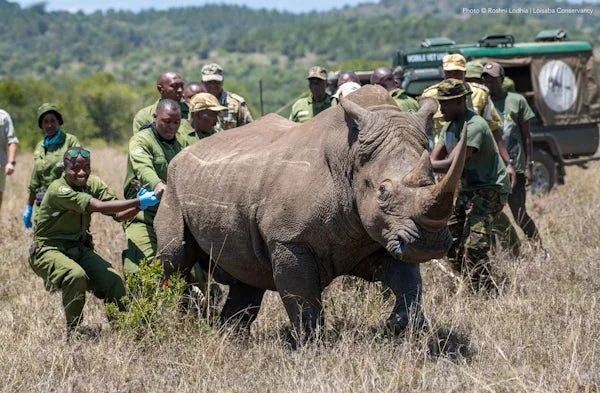
In January 2024, 21 black rhinos were relocated to Loisaba from Ol Pejeta, Lewa and Nairobi National Park. The operation followed years of planning involving KWS, conservancies and international conservation partners, restoring the species to Loisaba after roughly half a century.
Kanga said nine calves had since been born over two years, increasing the conservancy’s population to 30.
Loisaba Board Chair Sophie Kinyua said the relocation demonstrated the value of partnerships in Kenya’s conservation approach. She described the growing need for space as a sign that conservation priorities were moving beyond preventing losses towards enabling populations to expand.
Security and genetic diversity remain essential
Despite the shift towards habitat expansion, Kanga stressed that investment in security remained necessary. He said Kenya recorded no rhino poaching in 2025 and had maintained that record into 2026 at the time of his address.
He attributed the achievement to collaboration between KWS, conservancies, communities and other partners.
Kenya is also considering the genetic diversity needed to sustain healthy populations over the long term. Kanga said partnerships with countries such as South Africa and Zambia would be important in supporting rhino movements and maintaining that diversity.
He urged conservation partners to ensure that communities living alongside wildlife benefit through jobs, tourism and private enterprise, alongside investment in land and protection.
Documentary highlights rangers’ work
Directed by Tom Martienssen and narrated by Tom Hardy, RHINO follows Kenyan rangers and conservation teams over five years, documenting their work and the risks involved in protecting black rhinos.
Martienssen said he arrived in Kenya expecting to document a rhino crisis but instead found a conservation recovery story. He also called for stronger investment in local storytelling so that people living and working in Kenya can increasingly tell its conservation stories.
The screening brought together conservation leaders, rangers and veterinary experts, as well as US Charge d’Affaires Susan Burns and UK High Commissioner Matt Baugh. A panel discussion followed, examining the work behind the recovery and the challenges ahead.