

DUP MP Carla Lockhart and loyalist activist Jamie Bryson address the media after the final court ruling on the Drumcree parade.
An early-morning High Court ruling allows a restricted Orange Order march through a nationalist area of Portadown, despite residents’ objections.
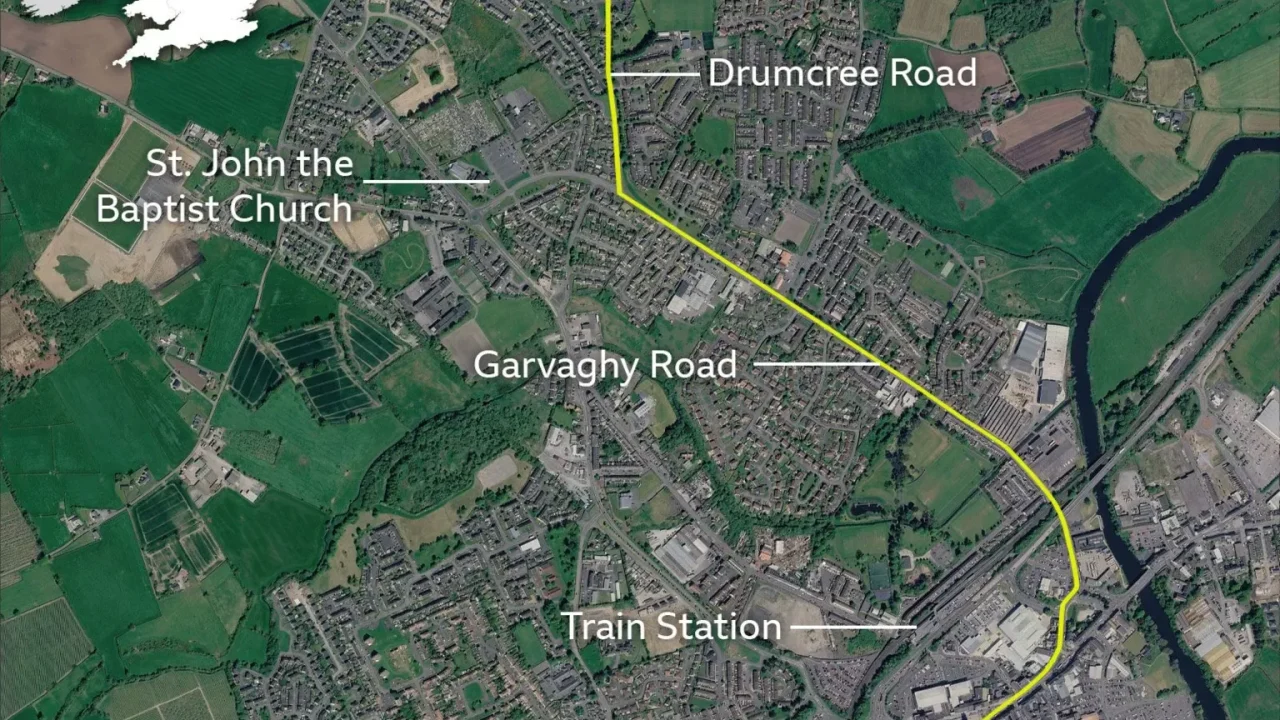
The controversial Orange Order parade is set to return to Garvaghy Road in Portadown, Northern Ireland, nearly 30 years after the last march.
A High Court ruling early Sunday upheld permission for the Drumcree parade to proceed.
Justice Michael Humphreys dismissed a final legal challenge by the Garvaghy Road Residents Coalition.
The hearing ended at about 2.15am BST, only hours before the planned parade.
The ruling followed several legal challenges over the procession and its route.
Parade Faces Strict Restrictions
The Parades Commission approved the march on Friday under strict conditions.
Only 35 Orange Order members can take part, instead of the requested 60.
The parade must leave Drumcree Parish Church by 8am BST.
Bands and supporters will not be allowed to accompany the march.
The commission has also ordered participants to disperse from Carleton Street Orange Hall before 9.30am.
Justice Humphreys said the court could not simply replace the commission’s judgment with its own.
He also recognised the exceptional circumstances surrounding the late-night challenge.
Residents Challenge Parade Approval
The Garvaghy Road Residents Coalition had initially secured a High Court injunction blocking the parade.
However, an Orange Order member successfully challenged that decision at the Court of Appeal.
The residents’ coalition then obtained permission for another High Court challenge.
Their lawyers questioned the Police Service of Northern Ireland’s risk assessment.
They argued that the assessment focused on historical risks without adequately considering future dangers.
The High Court ultimately rejected the latest challenge.
Protests Gather on Garvaghy Road
Residents gathered on Garvaghy Road after the Court of Appeal overturned the earlier injunction.
The protests were largely peaceful, although groups blocked sections of the road.
Political leaders also visited the area and urged restraint.
Sinn Féin leader Mary Lou McDonald and First Minister Michelle O’Neill spoke with protesters and expressed support for residents.
DUP politicians, meanwhile, welcomed the court decision and urged respect for the legal process.
Alliance and SDLP leaders also called for calm amid concerns about renewed tensions.
Drumcree’s Troubled History
The Drumcree dispute became one of Northern Ireland’s most contentious parading conflicts during the 1990s.
Clashes over the route triggered major protests, security operations and serious violence.
The Parades Commission has blocked the Orange Order from marching along Garvaghy Road since 1998.
The commission was established partly in response to the wider disputes surrounding contentious parades.
Sunday’s procession therefore marks a significant return to a route that has remained at the centre of the dispute for decades.
Local Catholic clergy have also raised concerns about possible disruption to Sunday worship.
Meanwhile, police are preparing for a major security operation as authorities seek to keep the parade and protests peaceful.