Education grievances have fuelled student protests in India and France.
An exam scandal in India and deteriorating schools in France fuel student anger over fairness and opportunities to advance.
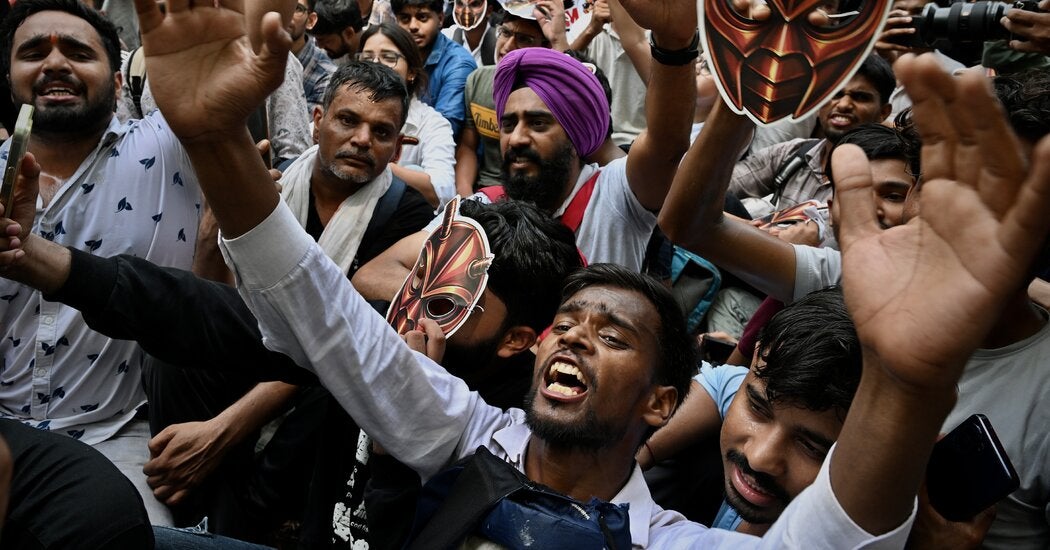
Student protests in India and France have exposed anger over education systems that promise opportunity but frustrate young people’s ambitions. An admissions exam scandal triggered demonstrations in India, while poor school conditions and university admissions grievances drove unrest in France.
Despite their countries’ differences, students share a concern: whether hard work and educational achievement still offer a fair route to a better life.
What sparked student protests in India and France
In India, the government abruptly cancelled medical-school admissions exam results after test questions leaked online. Aspiring doctors then had to retake the examination, renewing pressure on candidates competing for coveted places.

Many had spent years preparing, studying for up to 12 hours a day. For these candidates, medical school offered both professional training and a chance to improve their economic standing. Young people across India therefore saw the scandal as a sign of a broken education system.
Meanwhile, students in poor suburbs outside Paris began demonstrating over deteriorating school buildings, absent teachers and an unclear university admissions system. Protests subsequently spread across France, with demonstrations turning into riots in some cities.
French education had long promised to help young people rise in society. However, students’ grievances reflected anger at a system that had fallen into disrepair.
A shared challenge to education’s promise
The unrest centres on a broader expectation: that a fair society rewards ability and effort. Under that bargain, education offers people valuable skills and a route to social and economic advancement.
Educational achievement also helps justify differences in wealth and status. The underlying argument treats qualifications as evidence of merit because everyone should have access to learning.
However, competition inevitably creates both winners and losers. Nicholas Kuipers, a Princeton University professor who studies the politics of meritocracy, argues that every selection system excludes some people. The central question, he says, concerns who succeeds and who loses.
Students have long joined movements against war, climate change and racial inequality. In these demonstrations, however, education itself has become the focus of their anger, with frustration continuing in both countries.