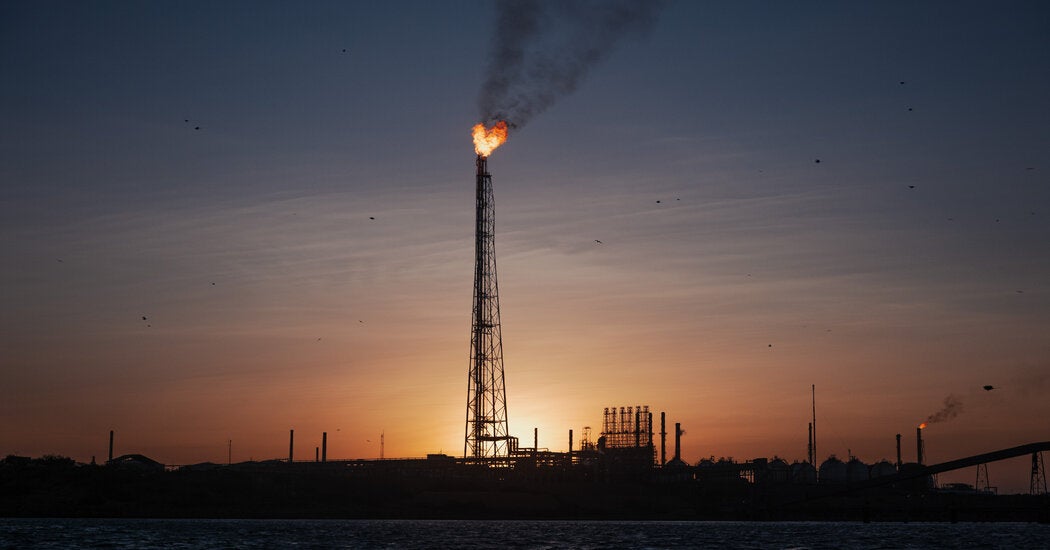
Sunrise over the Cardón Refinery in Punta Cardón, Venezuela.
Economic hardship and falling production reshape Venezuelans’ views of oil as the US government takes control of a large share.
Venezuela’s oil sovereignty faces a test as the US government takes control of a large share of its oil. Economic hardship is also weakening longstanding beliefs that national control of the resource is essential.
For more than a century, petroleum has helped define Venezuela’s identity and social fabric. Generations grew up viewing the country’s vast underground wealth as their inheritance, with almost free petrol a birthright.
However, upheaval over the past decade has changed that relationship. Mismanagement, political purges, corruption and sanctions have driven a steep decline in oil production.

Oil sovereignty meets a generational divide
Leonardo Silva, 38, sees the shift within his own family. He works at a Caracas foundation that helps people with disabilities and grew up associating oil with national prosperity.
For his generation, Silva said, petroleum underpinned Venezuela’s identity and its once-privileged position in the global economy. His children, however, place far less importance on it.
They do not share the idea that they belong to a wealthy country, he said. Instead, their outlook centres on the need to work to meet everyday needs.
That difference reflects a broader reassessment of Venezuela’s dependence on petroleum. Oil has long held cultural importance alongside baseball, beauty pageants and reverence for liberation hero Simón Bolívar.
Yet economic pressures now complicate the belief that sovereign control must come first. As the US claims a greater role, Venezuelans are reconsidering what their oil wealth means.