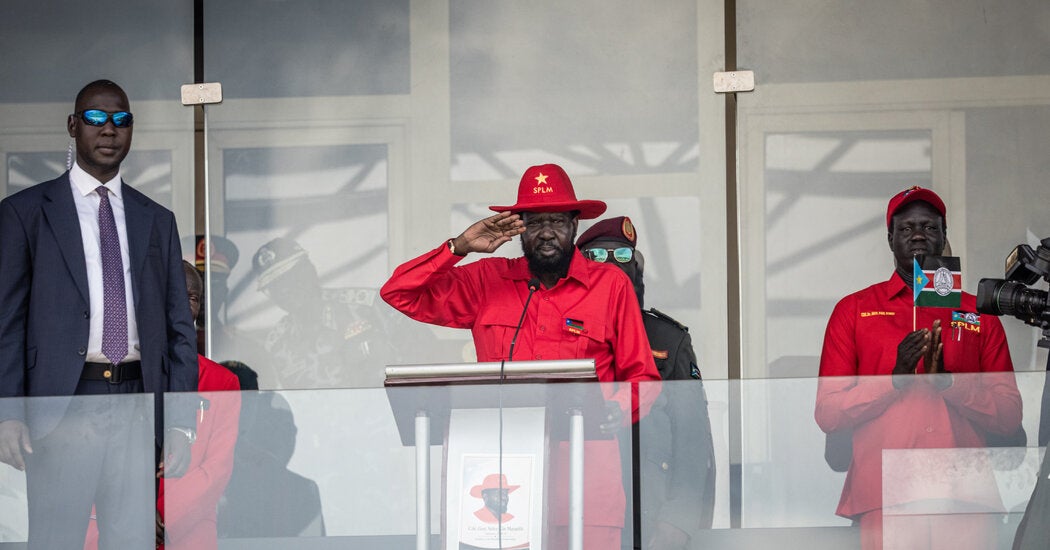
South Sudan has rescheduled its first national election for February 11.
Officials say the delay will allow more voter registration and education, while analysts warn that insecurity and political tensions threaten credible polls.
Officials announced on Saturday that the first South Sudan election will move from December 22 to February 11. The National Elections Commission confirmed the revised date for both presidential and legislative polls.
Information Minister Ateny Wek Ateny said the delay would give officials more time to register and educate voters. However, the decision comes amid warnings that political tensions and insecurity threaten the vote’s credibility.
South Sudan has never held a national election since gaining independence from Sudan in 2011. President Salva Kiir has led the country throughout that period, following decades of war before independence.

South Sudan election faces political strain
The planned vote was meant to reinforce the 2018 peace agreement that ended the country’s civil war. That conflict began in 2013 between government forces and fighters loyal to opposition leader Riek Machar.
Under the agreement, Machar became vice president in a transitional government. However, the deal has unravelled since March 2025, when authorities placed him under house arrest in Juba and charged him with treason.
In recent months, the government has also replaced opposition lawmakers with its supporters and dissolved the unity government. With Machar sidelined, Kiir faces no credible challenger and remains widely expected to win.
Kiir has a broad national following, while his party controls state institutions and the news media. Meanwhile, the International Crisis Group warned the U.N. Security Council this week that conditions do not support credible polls. It said rushed elections could undermine the peace framework and trigger sustained large-scale violence.
Insecurity and hunger complicate preparations
The election also faces major practical obstacles, with civil servants going unpaid for more than a year. Armed groups, including Machar’s forces, control parts of the country.
Thousands of people have died in fighting and attacks on civilians. Human rights groups said a March massacre in Unity State, near Sudan’s border, killed more than 200 people.
Ateny acknowledged that the government could not access small areas of the country. Nevertheless, he maintained that the election would be credible and help strengthen state authority.
Beyond the violence, residents face soaring food prices, drought and flooding. More than eight million of South Sudan’s roughly 12 million people need food assistance, the Famine Early Warning Systems Network estimates.