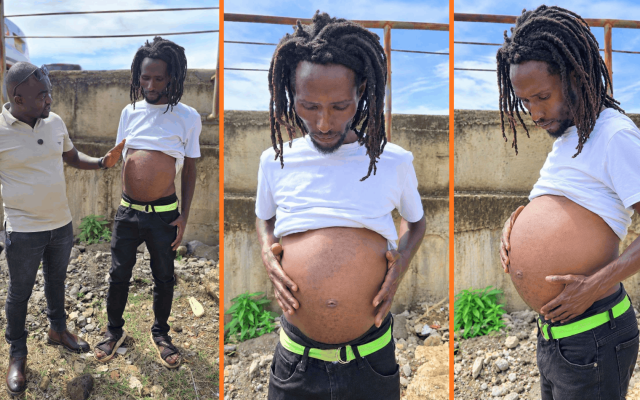
Kenyan content creator Baba Talisha has cautioned Kenyans against washing their eyes with tap water after revealing his battle with a rare infection that has affected his eyesight.
The digital personality disclosed that he has been diagnosed with Acanthamoeba keratitis (AK), a potentially sight-threatening infection caused by a microscopic parasite.
In November 2026, Baba Talisha revealed that he had silently struggled with the condition for approximately two months.
His revelation sparked concern after he shared videos showing the worrying condition of his eyes. He also used the experience to warn Kenyans about the dangers of exposing their eyes to potentially contaminated water.
According to his wife, Miss Wanjey, the infection has caused vision loss in his left eye. The couple revealed that identifying the condition proved challenging, forcing doctors to conduct more than 14 medical tests.

Baba Talisha’s Eye Infection Proves Difficult to Diagnose
Acanthamoeba keratitis is a rare infection that affects the cornea, the transparent outer covering of the eye. It develops when a microscopic organism known as Acanthamoeba enters the cornea. The parasite naturally occurs in water, soil, and dust.
According to health experts, contact lens users face a particularly high risk of infection. This risk increases when people rinse their contact lenses with tap water or wear them while swimming and showering.
However, people who do not wear contact lenses can also contract the infection. Common symptoms include severe eye pain, redness, blurred vision, excessive tearing, and sensitivity to light.
Some patients also experience a persistent sensation of having something trapped inside their eyes. Without prompt treatment, the infection can cause permanent damage to eyesight.
Treatment Challenges Raise Concern Over Baba Talisha’s Recovery
Baba Talisha’s diagnosis has also exposed the challenges associated with accessing specialised treatment. Information shared about his condition indicates that doctors require specialised antiseptic eye drops to eliminate the infection.
However, the medication is reportedly unavailable locally, complicating his treatment journey. Acanthamoeba keratitis requires specialised medical attention and prolonged treatment.
Doctors commonly prescribe specific antimicrobial eye drops, which patients may need for several months. In severe cases, the infection can cause extensive corneal damage.
Doctors may consequently consider a corneal transplant when medication fails to control the condition or restore corneal function.
Why Kenyans Should Avoid Washing Their Eyes With Tap Water
Following his diagnosis, Baba Talisha urged Kenyans to take greater precautions when handling their eyes. His warning highlights the importance of avoiding potentially contaminated water, particularly among contact lens users.
The Centers for Disease Control and Prevention (CDC) recommends several precautions to reduce the risk of Acanthamoeba keratitis.
These include:
- Never rinse or store contact lenses using tap water.
- Remove contact lenses before swimming or showering.
- Use recommended sterile contact lens solutions.
- Wash and dry your hands before handling contact lenses.
- Avoid exposing injured or irritated eyes to untreated water.
- Seek medical attention immediately when experiencing persistent eye pain or blurred vision.
Health experts also advise against using homemade solutions to clean contact lenses.
Fans Rally Behind Baba Talisha
Baba Talisha’s revelation has sparked conversations about eye health and the importance of seeking medical attention early.
Many followers have expressed concern about his condition while wishing him a successful recovery. His decision to share the experience has also brought attention to a rare infection that can have serious consequences when doctors fail to identify it early.
As he continues his treatment journey, his warning serves as an important reminder about protecting eyesight. For now, Kenyans are being encouraged to practise proper eye hygiene and seek professional help whenever unusual symptoms develop.