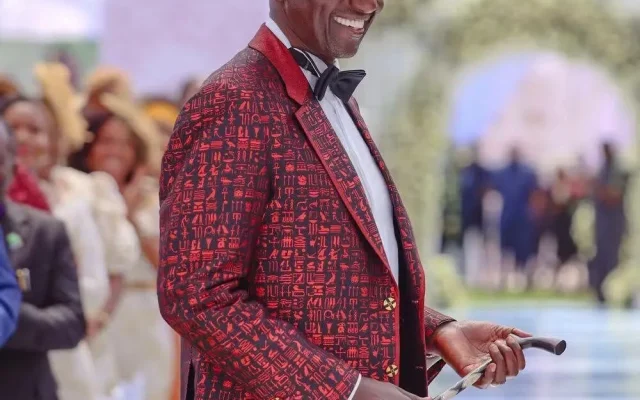
President William Ruto challenged opposition leaders over railway procurement claims during remarks in Narok.
President William Ruto says opposition leaders are selectively citing a World Bank report that flags procurement weaknesses and inflated railway costs.
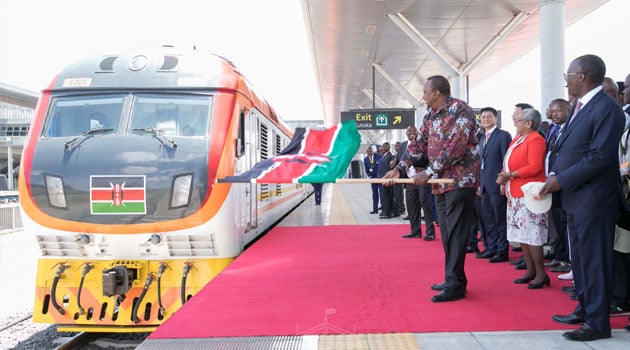
President William Ruto has challenged opposition leaders over SGR corruption claims, accusing them of selectively citing World Bank findings. Speaking in Narok, he said a previous administration oversaw construction of the Standard Gauge Railway.
Ruto also questioned whether proceeds from railway tenders could be financing some opposition politicians’ campaigns. He urged his critics to consider the full report rather than highlight selected findings.
His remarks follow the World Bank’s November 2026 Kenya Economic Update, which examines weaknesses in public procurement. The report cites the SGR as an example of how contracting choices and questionable land compensation can raise infrastructure costs.

SGR corruption claims put railway costs under scrutiny
The World Bank estimates that Kenya could have saved up to US$900 million, or Sh117 billion, in initial construction costs. That comparison assumes the Mombasa-Nairobi railway matched the cost per kilometre of Tanzania’s Dar es Salaam-Dodoma line.
The report attributes at least 30 percent of those potential savings to governance challenges. These include direct contracting instead of competitive tendering, land speculation and alleged fraud in titling, valuation and compensation.
Kenya’s railway cost approximately Sh988 million per kilometre, the World Bank estimates. By comparison, Tanzania’s electrified railway cost Sh741 million per kilometre, while the Djibouti-Addis Ababa line cost Sh689 million.
The findings have also drawn criticism from Nairobi Senator Edwin Sifuna. He argued that they reinforce longstanding concerns about opaque government transactions and weak accountability in public spending.
Procurement disclosure draws further criticism
Sifuna also questioned the limited publication of government procurement information. He noted that public procurement accounts for approximately 10 percent of Kenya’s gross domestic product.
However, published procurement information covered only Sh410 billion in the 2024/25 financial year. The World Bank found that more detailed disclosures, including contract amounts and successful bidders, covered only Sh186 billion during that period.
The disclosure gap raises concerns about public oversight because procurement channels a significant share of public resources. Sifuna therefore called for stronger institutions and accountability mechanisms, rather than an exclusive focus on infrastructure development.
Meanwhile, the government is pursuing procurement reforms, including the rollout of an electronic government procurement system. The system aims to improve transparency, competition and oversight in public contracting.