

Humanoid War Robots Tested in Ukraine as Phantom MK-1 Enters Frontline
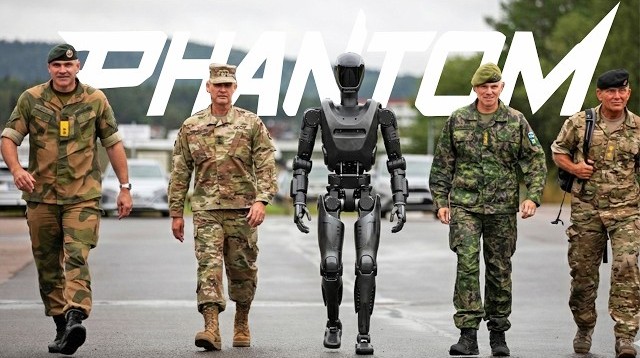
In February 2026, the American startup Foundation delivered two Phantom MK-1 humanoid robots to Ukraine. Consequently, they are now undergoing real-world combat testing to evaluate operational effectiveness.
The robots aim to perform high-risk tasks that would otherwise endanger human soldiers. Therefore, military analysts are closely monitoring their performance and adaptability.
Current Testing and Military Capabilities
The Phantom MK-1 is engineered as a frontline support robot. Initially, testing focuses on reconnaissance missions in high-risk zones.
Unlike many robotics firms, Foundation allows weaponized use. The robots can operate standard firearms, including pistols, shotguns, and M-16 rifles.
Moreover, they are effective where drones struggle. For instance, the robots can clear bunkers, indoor shelters, and fortified positions.
Additionally, they assist with logistics. They can carry equipment and resupply frontline troops during operations.
Technical Specifications
- Height: 5 feet 9 inches (175 cm)
- Weight: 175 pounds (79 kg)
- Speed: Nearly 4 miles per hour
- Payload: Up to 44 pounds (20 kg)
- Control: Remotely operated with human oversight
These features enable flexible deployment in urban and rugged terrains. Still, some limitations have emerged during field tests.
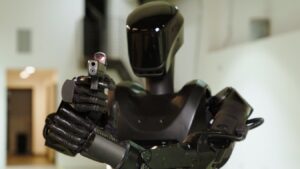
An image of Phantom MK- 1 Robot in testing. Photo/ CNN
READ ALSO: “It Was a Death Trap”: Kiambu Man Escapes Russia–Ukraine War
Challenges and Future Improvements
Field trials have revealed balance issues, with robots occasionally falling. Frequent recharging is also required for continuous operations.
Experts warn of vulnerabilities, including cybersecurity risks. AI “hallucinations” may cause operational malfunctions if not carefully managed. To address these issues, Foundation plans the Phantom MK-2.
The upgraded model, set for April 2026, will include waterproofing, a larger battery, and an increased payload capacity of 80 kg.
Pentagon Interest and Strategic Implications
Foundation currently holds $24 million in U.S. military research contracts. These include funding from the Army, Navy, and Air Force.
Therefore, Pentagon interest in Phantom field tests in Ukraine is strong. The data gathered could shape the future of autonomous combat operations.
Overall, the Phantom MK-1 marks a significant step toward integrating humanoid robots into modern warfare, balancing innovation with operational risks.