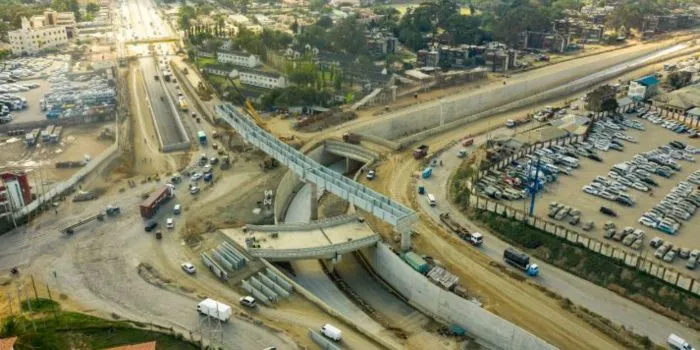
KeNHA plans 815 kilometres of road construction and rehabilitation across eight counties.
KeNHA plans five road sections across eight counties, alongside fibre-optic links and trade facilities under a proposed Ksh129 billion programme.
The KeNHA road project covering 815 kilometres will target eight counties, with the government seeking World Bank financing. The Kenya National Highways Authority estimates the construction and rehabilitation programme will cost Ksh129 billion.
KeNHA says the government intends to apply for $1 billion for the Lake Victoria Basin Connectivity and Development Project. The authority will implement the programme across Western, Nyanza and Rift Valley.
The targeted counties are Migori, Homa Bay, Kisumu, Siaya, Busia, Vihiga, Nandi and Uasin Gishu. Alongside road improvements, the programme includes digital infrastructure and facilities to support domestic and regional trade.

KeNHA road project covers five sections
The planned works include the 176-kilometre Muhuru Bay–Sori–Nyagweth route, connecting Migori and Homa Bay counties. Another section, Nyagweth–Mbita–Homa Bay, will cover 174 kilometres.
Meanwhile, the 188-kilometre Awasi–Katito–Otonglo–Asembo route will link Kisumu and Siaya counties. The Asembo–Nyamonye–Port Victoria–Mulwanda section will run for 177 kilometres, connecting Siaya and Busia.
The fifth route will cover 100 kilometres from Chavakali through Kapsabet in Nandi County to Eldoret in Uasin Gishu. Together, the five sections account for the programme’s planned 815 kilometres.
KeNHA Director General Luka Kimeli said the authority plans to divide the sections into about 12 contracts. However, that number could change during procurement. The highways are expected to improve market access and connections between rural and urban centres.
Fibre links, trade facilities and contractor briefing
Beyond the highways, KeNHA plans to install about 815 kilometres of fibre-optic cable along the selected routes. It also intends to develop rest stops, truck parking facilities, export aggregation hubs and logistics support infrastructure.
These facilities aim to help move agricultural produce and other goods to domestic and regional markets. In addition, selected locations along the corridor will host one-stop border facilities to support cross-border trade.
KeNHA has invited contractors, suppliers, engineers and consultants to a briefing on Wednesday, November 18, 2026. The meeting will take place at Barabara Plaza, Jomo Kenyatta International Airport, Nairobi.
Before procurement begins, the authority will present preliminary information and assess potential contractors’ capacity. It will also seek feedback on construction requirements, implementation challenges and delivery risks.
KeNHA says notices for contracts requiring international competitive procurement will appear on the World Bank’s external website as they become available.