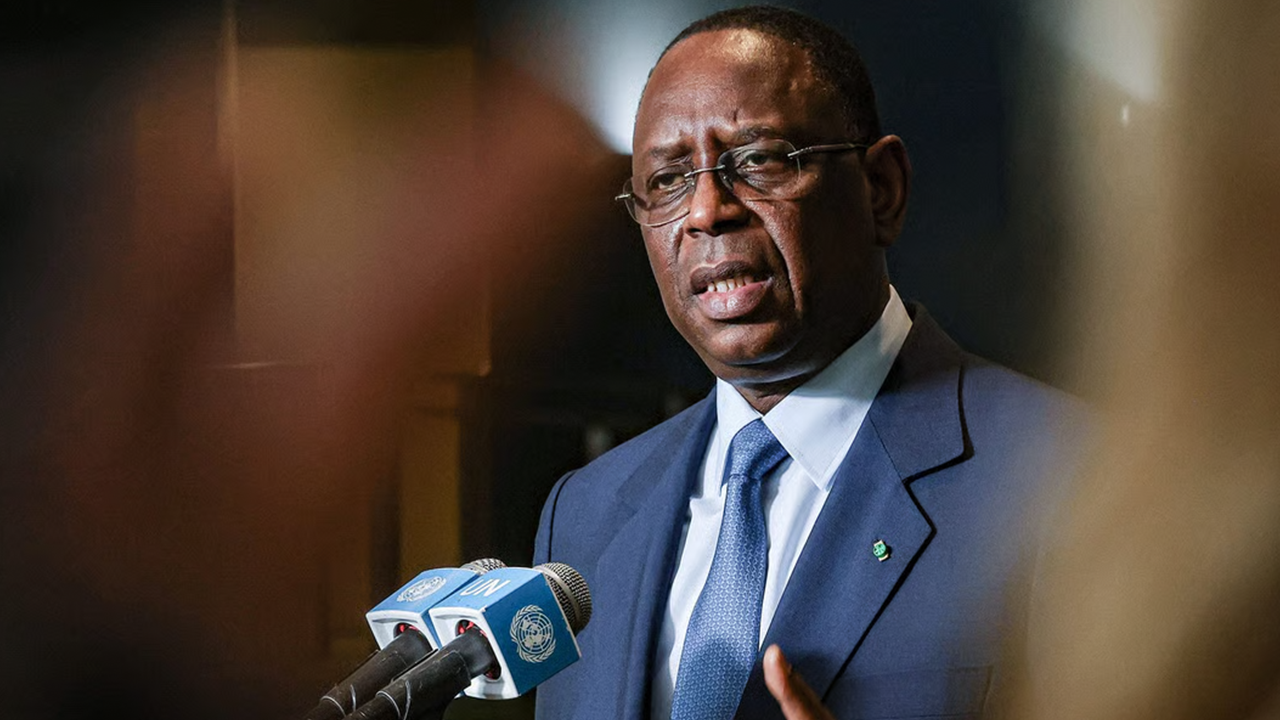
Former Senegalese president Macky Sall has ended his bid to lead the United Nations.
The former Senegalese president says his exit could help the Security Council agree on a consensus candidate.
Macky Sall withdraws from the race to become the next United Nations secretary-general, following an informal Security Council ballot. The former Senegalese president announced his decision in a statement dated October 17.
His announcement followed the council’s October 16 vote and consultations involving Burundi President Évariste Ndayishimiye and Senegalese President Bassirou Diomaye Faye.
Sall said a sense of responsibility guided his decision. He also expressed hope that his departure would help the council settle on a consensus candidate.

Macky Sall withdraws as race points towards Latin America
Sall said the informal ballot indicated support for a candidate from Latin America and the Caribbean, potentially a woman. However, no contender secured the backing of all five permanent Security Council members.
China, France, Russia, the United Kingdom and the United States hold veto power over the council’s recommendation for secretary-general.
Costa Rica’s Rebeca Grynspan emerged as a leading contender in the ballot. However, she also faced opposition from permanent members.
The next UN chief will succeed António Guterres, whose second term ends on December 31, 2026.
African leaders supported Sall’s bid
Ndayishimiye, who chairs the African Union, sponsored Sall’s candidacy. Faye, the chairperson of the Economic Community of West African States, also supported the bid.
Sall led Senegal from 2012 to 2024. He said his candidacy reflected a desire to put nearly four decades of public service at the UN’s disposal.
In his statement, he thanked the leaders and Security Council members who supported him. He also acknowledged his campaign team and the Senegalese people.
Calls for UN reform continue
Despite ending his campaign, Sall reaffirmed his commitment to peace, security, economic and social development. He also pledged continued support for international cooperation and dialogue among nations.
Sall argued that the UN needs far-reaching changes to its working methods and operations. He cited conflicts, geopolitical rivalries and economic challenges as reasons for reform.
Meanwhile, he urged Africa to keep pressing for a stronger voice in global governance.