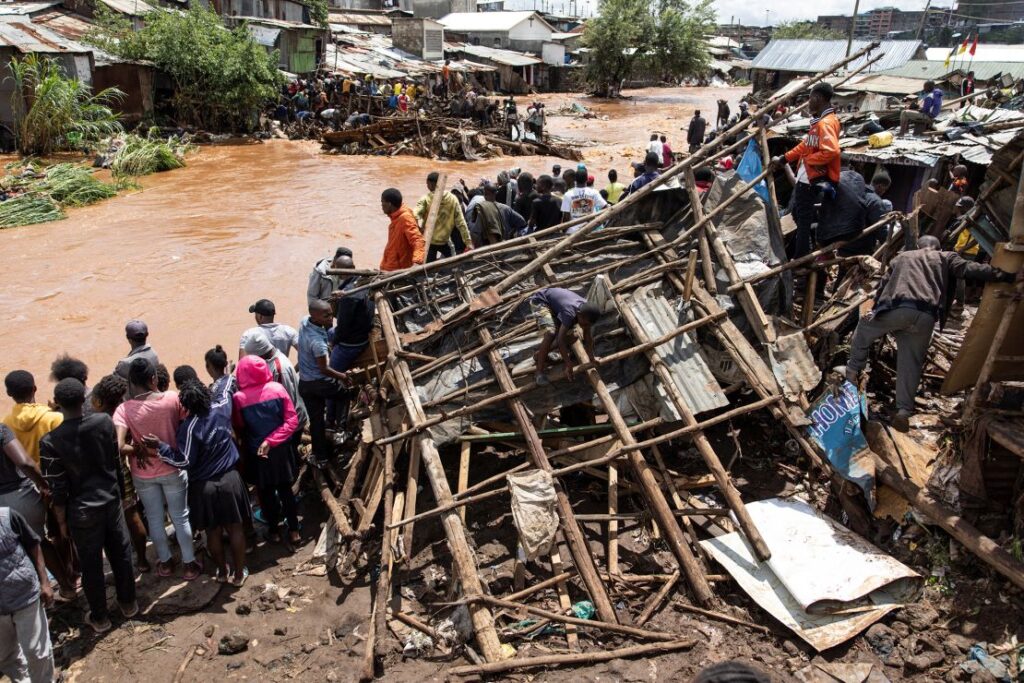

Sakaja Blames Outdated Infrastructure as Nairobi Floods Kill 42

Nairobi faces a severe humanitarian crisis after deadly flash floods swept through the city. As of March 9, 2026, authorities confirmed at least 42 deaths nationwide.
Tragically, 42 fatalities occurred within the capital alone. Additionally, floods displaced thousands of residents across affected neighborhoods.
In response, Johnson Sakaja blamed the disaster on a “generational infrastructure deficit.” He argued that outdated drainage systems cannot handle modern rainfall patterns.
Meanwhile, emergency teams continue rescue operations in several flooded areas.
Governor Sakaja Defends City Infrastructure
Governor Sakaja insists Nairobi’s drainage system was designed decades ago. At that time, the city’s population stood at around 500,000 people.
Today, however, Nairobi hosts more than five million residents. Therefore, existing infrastructure struggles to manage heavy rainfall. Speaking during an interview on Citizen Sunday Live, Sakaja outlined major structural challenges.
- First, the drainage network was designed for lighter seasonal rains. However, climate change now produces intense storms and flash floods.
- Second, he highlighted major funding gaps affecting the county government.
According to Sakaja, Nairobi requires about Ksh60 billion annually for essential services. Yet, the county receives funding similar to smaller counties.
READ ALSO: Nairobi Flash Floods Kill 42 as Heavy Rains Devastate City
– Mud, Floods, and Farewell: Harsh Roads Disrupt Johana Ng’eno’s Burial in Narok
– Nairobi Drowns: 2026 Floods Bring Chaos
– Is Super Metro a Cult? Viral Video of Nairobi Commuters Queuing in Heavy Rain Sparks Debate
National Government Partnership for Solutions
To address the crisis, Nairobi County signed a cooperation agreement with the national government.
The partnership allocates approximately Ksh80 billion for infrastructure improvements. Officials approved the plan through the Nairobi County Assembly on March 3, 2026.
The project will upgrade drainage systems, sewer networks, and water treatment facilities. Furthermore, authorities expect implementation to begin within the next 24 months.
Critics Blame Leadership Failures
Despite these explanations, critics continue to blame the county government. Edwin Sifuna and Babu Owino accused the administration of poor planning. They argued that leadership failures worsened the flood disaster.
For example, critics noted that blocked drainage channels remained uncleared before the rains. Additionally, some leaders raised concerns about construction on riparian land. Moses Kuria also called for accountability from the county leadership.
Severe Impact on Informal Settlements
The floods hit informal settlements hardest across the city. Areas such as Mathare, Mukuru, and Kibra suffered significant destruction.
Authorities reported that floodwaters swept away at least 172 vehicles overnight. Meanwhile, health officials warned about rising risks of disease outbreaks.
Experts fear infections like Cholera and Typhoid could spread in flooded areas.
City Faces Long-Term Infrastructure Challenge
Despite mounting pressure, Governor Sakaja rejected calls for resignation. Instead, he emphasized the need for long-term infrastructure reforms.
According to the Kenya Meteorological Department, rainfall intensity may reduce after March 10. However, experts warn that Nairobi must upgrade drainage systems urgently. Otherwise, similar flood disasters could continue threatening the growing city.