

PTDI is seeking Kenyan partners for aircraft supply, local maintenance and technical skills development.
The aircraft manufacturer wants to restart talks with a Nairobi operator and build local maintenance capacity as it pursues wider African expansion.
Indonesia’s state-owned aircraft manufacturer, PT Dirgantara Indonesia (PTDI), is seeking to revive commercial discussions in Kenya, offering aircraft alongside technical training and support for local maintenance facilities.
The company views Kenya as a potential entry point for further expansion across Africa. Its proposal targets passenger charter, cargo and humanitarian operations, with the CN235 among the aircraft it is promoting.
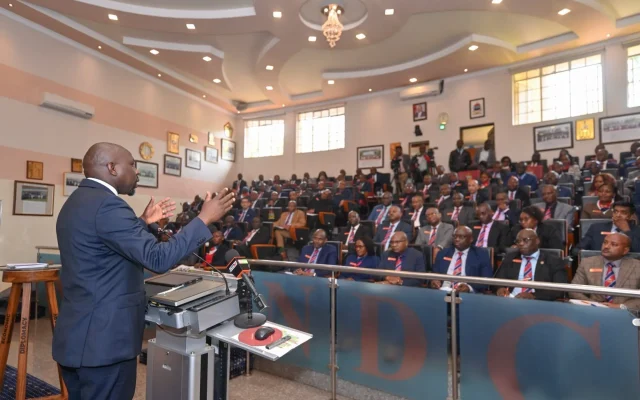
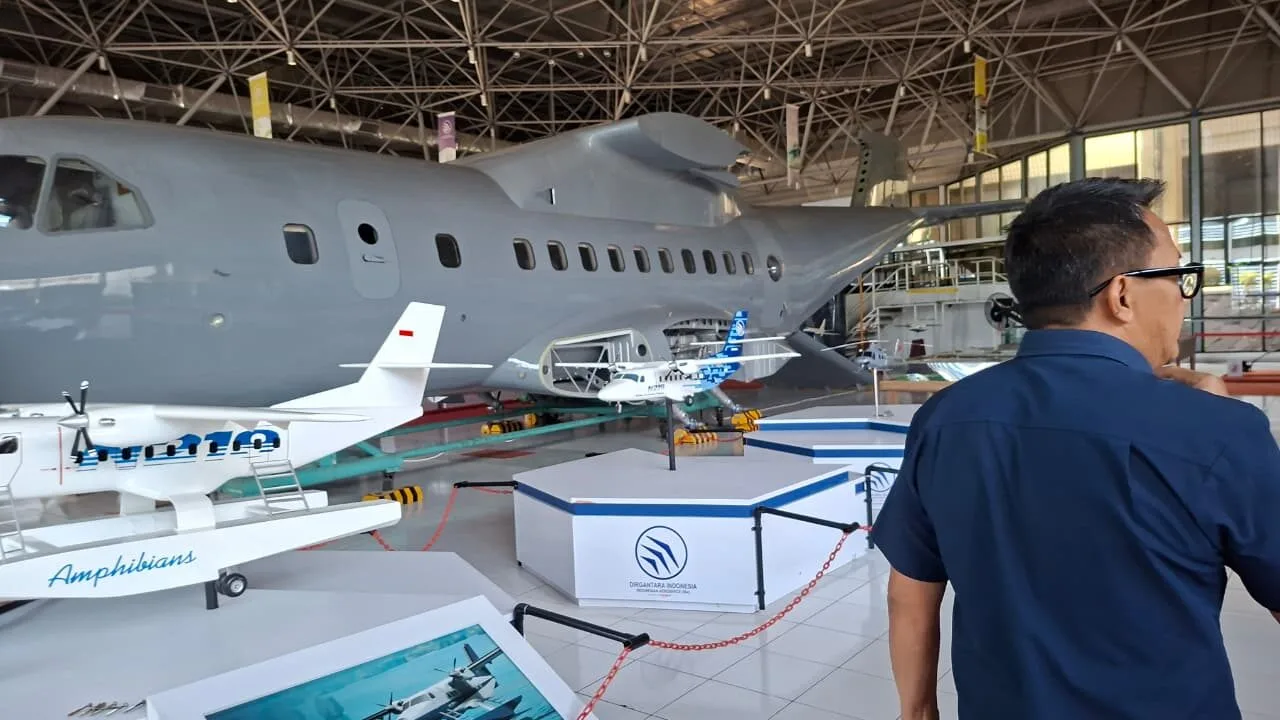
Mohamad Arif Faisal, PTDI’s Director of Business and Development, outlined the plans during a meeting with Kenyan journalists at the company’s headquarters in Bandung. He said the manufacturer hopes to secure Kenya as another African market for its aircraft.
Talks with Kenyan operator stalled
PTDI’s earlier engagement in Kenya involved Kasas Limited, a charter and contract operator based at Nairobi’s Wilson Airport. Established in 2006, Kasas specialises in mission-critical aviation and humanitarian operations requiring short takeoff and landing capabilities across Africa.
The discussions explored the use of PTDI aircraft for passenger charter and cargo services. Faisal acknowledged that the engagement had not advanced since initial contacts in December 2025 and said the company needed to follow up with Kasas.
The proposed cooperation remains at the discussion stage. PTDI’s immediate task is to turn those contacts into a commercial partnership as it seeks a Kenyan operator for its products.
The manufacturer produces the CN235, NC212 and N219, and also provides engineering and aircraft maintenance services.
Local maintenance and skills transfer
PTDI says its offer goes beyond supplying aircraft. It wants to cooperate with local maintenance, repair and overhaul businesses to develop capabilities that would reduce the need to send aircraft to Indonesia for routine servicing.
Under the proposed approach, Kenyan engineers, mechanics and pilots could receive training, with routine maintenance handled locally and more complex work supported through cooperation between PTDI and Kenyan companies.
Faisal said returning aircraft to Indonesia for minor maintenance would add costs and logistical demands. Building local expertise, he argued, would help operators manage those requirements closer to their bases.
The company said it has pursued similar partnerships with maintenance businesses in Malaysia, the United Arab Emirates and the Philippines, sharing technical knowledge and helping develop local capabilities.
Aircraft pitched for short runways
PTDI is presenting the CN235 as an option for routes and missions where airport infrastructure is limited. Faisal said the aircraft can take off and land on runways shorter than one kilometre, while its rear ramp supports cargo and troop operations.
He also highlighted the short-runway capabilities of the NC212. The company says its aircraft could offer lower operating and maintenance costs, with local servicing arrangements intended to reduce the burden of overseas maintenance.
These capabilities are central to PTDI’s pitch for passenger, freight and humanitarian work in Kenya, although the company has yet to turn its earlier engagement into an aircraft supply agreement.
Kenya in wider African expansion plan
PTDI says it has supplied about seven aircraft to African countries, including Senegal, Burkina Faso and Tanzania. It also said it signed an agreement with an African company in 2024 for five aircraft.
Faisal identified distance from African markets as a challenge and said Indonesian diplomatic missions could help the manufacturer understand national regulations, particularly for defence-related business.
The company’s broader strategy includes exploring opportunities for local firms in engineering, component manufacturing and aerospace supply chains. PTDI cited Indonesia’s own experience with technology-transfer requirements and partnerships with international manufacturers as a model for developing domestic expertise.
Established in 1976, PTDI says government backing and industrial cooperation helped it build its capabilities over time. Its Kenya proposal now centres on combining aircraft sales with skills development, but further talks will be needed to establish the scope of any local partnership.