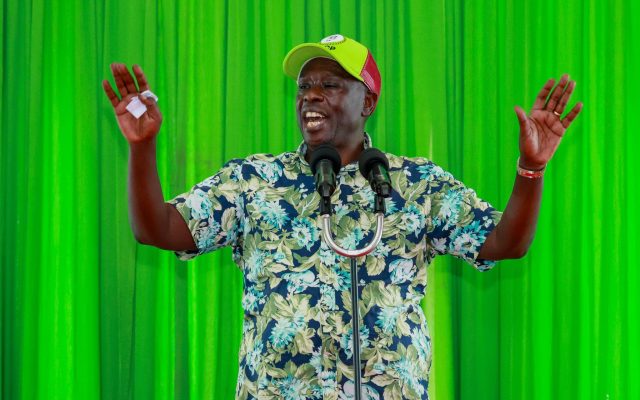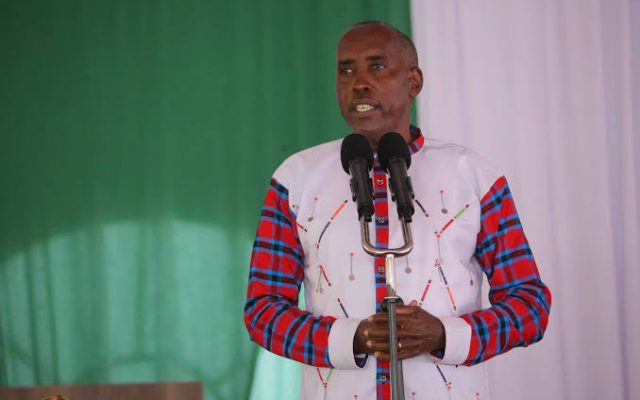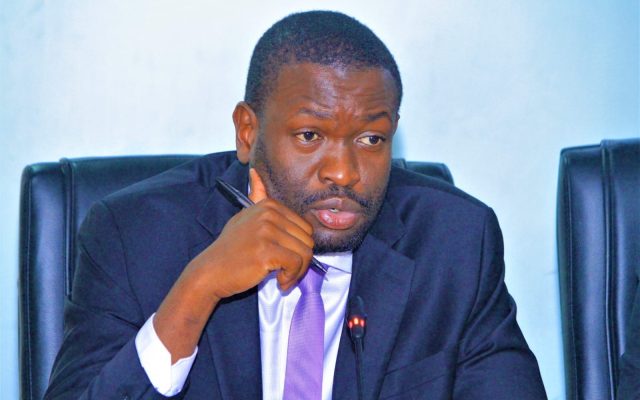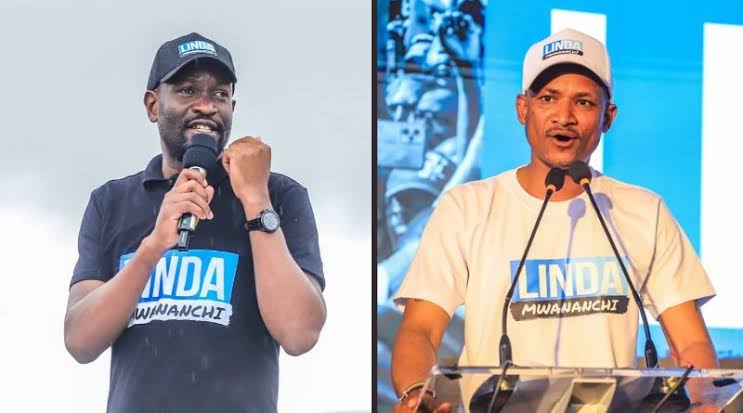
Edwin Sifuna and Babu Owino amid growing divisions within Kenya’s Opposition ahead of the 2027 General Election.
Kenya’s Opposition is facing an early test of unity following an escalating fallout between Nairobi Senator Edwin Sifuna and Embakasi East MP Babu Owino.
The disagreement has exposed deep divisions within the Linda Mwananchi Movement (LMM), raising questions about trust, leadership and political ambitions ahead of the August 2027 General Election.
What initially appeared to be a promising platform for youthful political mobilisation has turned into a public dispute. Both leaders have presented conflicting accounts of their original power-sharing agreement.
At the centre of the disagreement is who should control the political vehicle and lead its 2027 ambitions. Babu maintains that Sifuna was expected to pursue the presidency while he assumed the party leadership role. However, Sifuna has disputed that account, insisting their agreement focused on building a united political movement.

The public exchange threatens to undermine the credibility of an Opposition seeking to present itself as a credible alternative to President William Ruto.
Party Rivalries Threaten Opposition Unity
The fallout has also exposed growing divisions over political parties and leadership positions.
Babu has moved to establish his political footing through the Mwananchi Party. Meanwhile, Siaya Governor James Orengo has gravitated towards the Liberal Democratic Party (LDP).
Saboti MP Caleb Amisi has also pursued a separate political vehicle through the People’s Renaissance Party (PRP).
These developments point to a growing fragmentation within a camp that previously promised to consolidate its support under one political umbrella.
Although individual parties offer politicians greater control over nominations, competing political vehicles could weaken collective bargaining. They could also divide votes across constituencies.
Nairobi Could Become a Major Battleground
The disagreement carries particular significance for Nairobi, where both politicians command considerable political influence.
Babu has openly expressed interest in succeeding Governor Johnson Sakaja in 2027. However, Sifuna’s broader political ambitions could complicate negotiations over the city’s gubernatorial ticket.
Should their camps support rival candidates, the Opposition risks splitting its support in one of Kenya’s most politically influential counties.
Consequently, Kenya Kwanza could benefit from divisions within the opposing camp.
Youthful Supporters Risk Losing Confidence
Beyond party politics, the fallout threatens the enthusiasm that powered Linda Mwananchi rallies.
Both politicians have built significant followings among young and urban voters. Their public disagreements could therefore undermine a movement that promised political change.
Furthermore, disappointed supporters may gradually withdraw from political mobilisation rather than support another faction.
The divisions also reflect wider tensions involving Opposition figures, including Rigathi Gachagua, Justin Muturi, Fred Matiang’i and Ndindi Nyoro.
Opposition Faces a Defining Test
Ultimately, the Sifuna–Babu fallout presents the Opposition with a difficult challenge.
Political disagreements are inevitable in coalition building. However, unresolved leadership disputes could derail preparations for 2027.
The Opposition must establish transparent nomination rules, credible power-sharing arrangements and a common political agenda.
Without these safeguards, competing ambitions could weaken its electoral prospects.
For President Ruto’s political camp, continued Opposition fragmentation could prove advantageous.
With the 2027 election approaching, the biggest threat to the Opposition may not come from its political rivals, but from divisions within its own ranks.