The Penalty explores a fictional football hero’s legacy and his sons’ conflicting memories.
Simiyu Barasa’s family drama brings estranged brothers together to confront their father’s reputation, alleged wrongdoing and emotional absence.
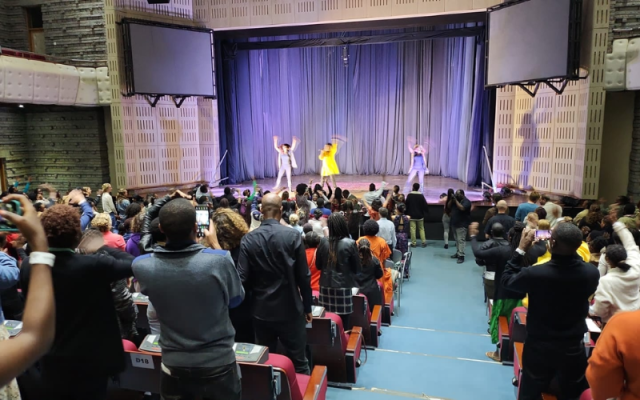
The Penalty will take audiences inside a football hero’s divided family at the Kenya National Theatre on November 8. The drama explores the distance between public acclaim and the memories that a sporting legend leaves his children.
Simiyu Barasa wrote the play, while Esther Kahuha serves as producer. Astar Productions and KITFEST 2026 present the production, which combines family conflict, magical realism and memory theatre.
The Penalty puts a sporting legacy on trial
At the centre of the fictional story is Musa Baba Muthee, a celebrated former footballer played by Justin Mirichii. A planned renaming of Kasarani Stadium will honour his achievements, but his sons remember more than a national icon.

On the ceremony night, estranged brothers Tom and Johnnie meet in a stadium locker room. Their reunion brings years of resentment into a confrontation over their father’s reputation.
Johnnie, an investigative journalist played by Charlie Gachanja, arrives with evidence of an alleged match-fixing scandal. He believes Musa deliberately missed a decisive penalty that could have secured Kenya’s first World Cup appearance.
Meanwhile, rumours about match-fixing and allegations of unpaid players complicate the family’s account of Musa’s career. The sporting controversy belongs to the play’s fictional narrative.
Tom, played by Nick Ndeda, offers a different view of their father. As the older son, he has devoted much of his life to handling Musa’s affairs and defending his name.
Rather than seeing corruption, Tom sees a provider navigating a football system that did not reward him adequately. However, Musa’s appearance as a ghost forces both brothers to confront choices beyond their competing memories.
Fathers, sons and the cost of silence
The brothers must decide whether to reveal their father’s alleged wrongdoing or preserve his reputation. They also face a harder question: whether they can understand his legacy without ignoring his failings.
For Musa, sacrifice and financial provision express his love for his family. His sons, however, question the emotional distance that came with those efforts.
As Tom nears 40, he starts to recognise aspects of his father in himself. Johnnie, meanwhile, wants to break years of silence, even at the expense of the family’s carefully protected image.
The story also connects Musa’s parenting to his colonial-era upbringing. He passes its discipline and emotional restraint to his children, sometimes without recognising the consequences.
Former teammate Coach Mulee, played by Arthur Sanya, adds another perspective on Musa. So does Mark, a young academy player portrayed by Sky Kahuha, who retains his faith in sporting greatness.
Barasa draws on athletes’ private sacrifices
Barasa says his interest in sport helped shape the idea. His nieces and nephews introduced him to football, alongside his enthusiasm for marathons, distance running and rugby.
Through conversations with marathon runners, he gained an appreciation of elite athletes’ discipline and personal sacrifices. He also became interested in the contrast between public admiration and family experience.
Kahuha later asked him to write about fathers and sons. In developing the drama, Barasa also considered Kenyan footballers who achieve national success without earning enough to live comfortably.
The resulting story questions the expectation that sporting excellence should make a hero infallible. At its heart, two sons must reconcile the celebrated national figure with the complicated father they knew.