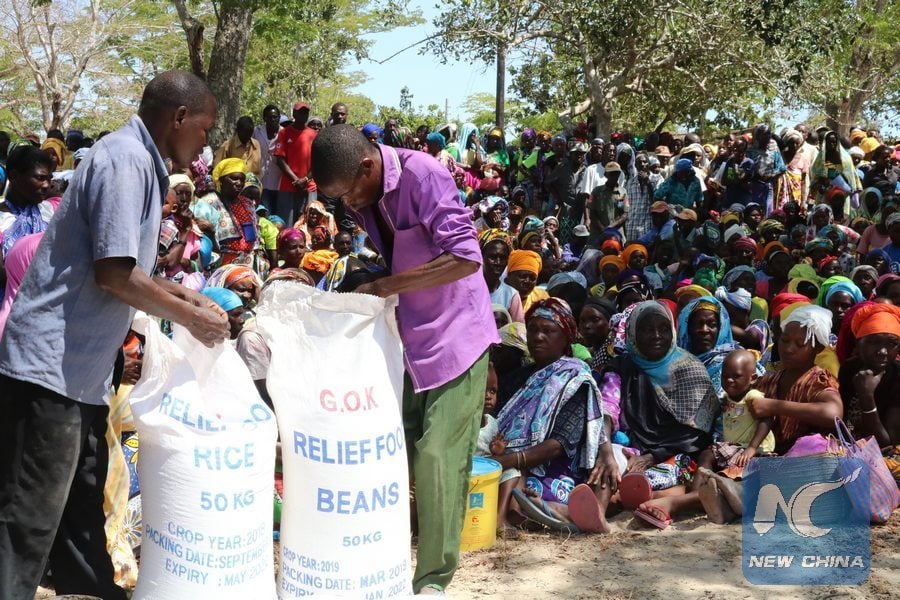
Action Against Hunger warns that shrinking aid budgets threaten emergency food assistance as conflict and displacement deepen global food crises.
Acute hunger has doubled worldwide over the past decade, affecting 266 million people across 47 countries and territories. Action Against Hunger warns that sharp funding cuts now threaten assistance for those facing worsening food crises.
The organisation released its report, The 10 Largest Global Food Crises, ahead of World Food Day. It found that humanitarian food aid funding in crisis-hit countries fell 59 per cent between 2022 and 2025.
That decline returned funding to levels last recorded in 2016 and 2017. Meanwhile, official development assistance dropped 23 per cent in 2025, adding pressure to efforts addressing food insecurity.
Acute hunger concentrates in major crisis zones
Nigeria, the Democratic Republic of the Congo (DRC) and Sudan account for 82.9 million people facing acute hunger. Together, they represent roughly a third of the global total.

Across the 10 countries with the largest food crises, the number reaches 177 million. The other countries are Yemen, Afghanistan, Myanmar, Bangladesh, Pakistan, South Sudan and Syria.
South Sudan also entered the top 10 for the first time. More than half its population faces severe food insecurity.
Conflict and displacement continue to disrupt livelihoods, separating families from farmland, jobs and markets. The report recorded the sharpest hunger increases in Myanmar, the DRC, Afghanistan and Yemen, where conflict compounded humanitarian needs.
In addition, the report notes confirmed famine in parts of Gaza and Sudan in 2025. This marked the first year with confirmations in two locations since the Global Report on Food Crises began in 2017.
Children face malnutrition and reduced access to care
Nearly 30 million children under five suffered acute malnutrition in the 10 hardest-hit countries in 2025. Of those, 7.82 million experienced severe acute malnutrition, a life-threatening condition requiring urgent treatment.
Poor access to clean water and disease outbreaks are also worsening conditions. In Sudan, more than 60 per cent of water treatment plants are out of service.
Meanwhile, the DRC faces its worst cholera epidemic in 25 years, the report says. Humanitarian agencies also struggle to reach communities because of insecurity, administrative restrictions and funding shortages.
In South Sudan, funding losses forced Action Against Hunger to cut its workforce by more than 60 per cent. Consequently, many women and children walk between four and eight hours to reach health and nutrition services.
Dr Charles Owubah, the organisation’s chief executive, said funding cuts immediately affect vulnerable people. He explained that budgets determine where teams operate, how many children receive treatment and which communities lose support.
Aid cuts weaken monitoring and early intervention
Beyond emergency services, declining assistance is weakening systems that track hunger and identify urgent needs, the organisation warned. Data gaps kept some countries out of the analysis, while funding cuts further reduced information-gathering capacity.
The findings draw on the 2026 Global Report on Food Crises and FAO-WFP Hunger Hotspots reports. They also incorporate evidence from Action Against Hunger’s operations in more than 50 countries.
However, Owubah said the organisation is developing more efficient data collection and methods to predict hunger hotspots. Earlier intervention could prevent conditions from deteriorating and save lives, he said, urging donors to maintain support.
Action Against Hunger also urged governments and donors to protect civilians and humanitarian workers and provide flexible, multi-year funding. Its recommendations include stronger local food systems, climate adaptation and early warning systems.
Owubah said coordinated support for nutrition, healthcare, clean water and livelihoods could prevent hunger on the current scale. Together, these measures help communities withstand shocks and recover, he added.