

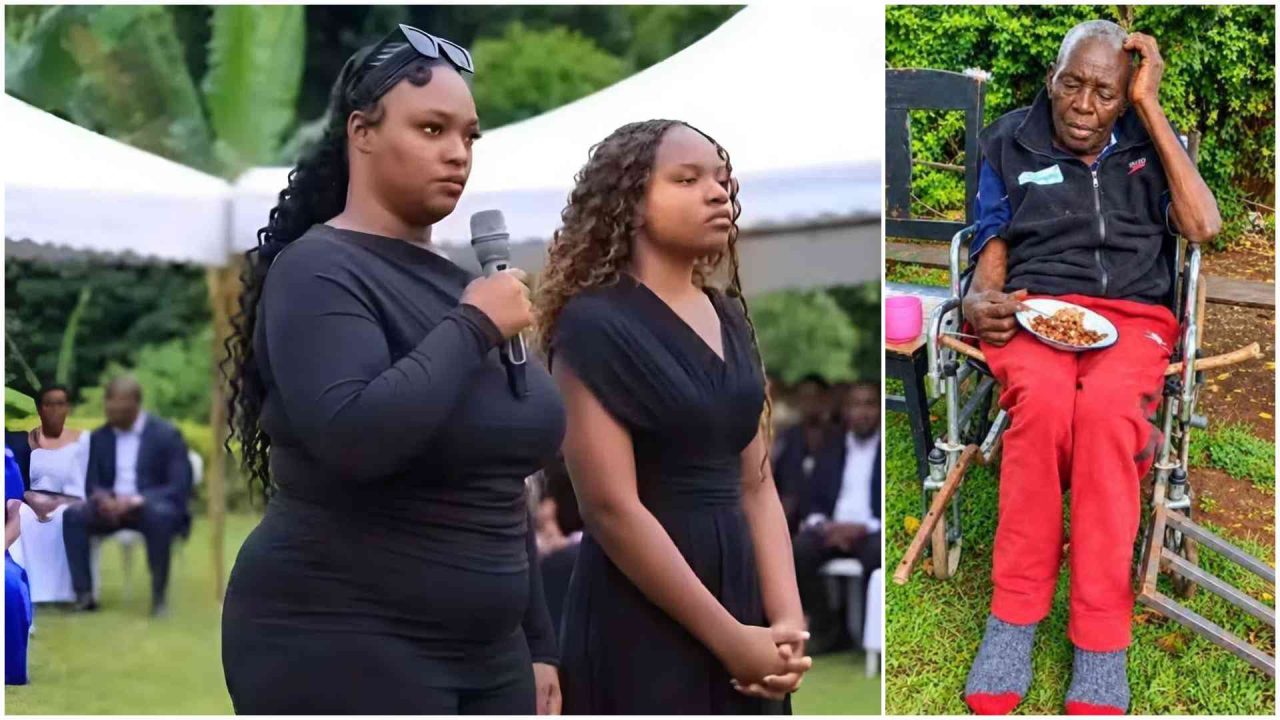
Bosco Kebati’s burial in Mwabosire, Nyamira, became the focus of a public dispute between his two households.
Lyndah Kebati accused her father’s first family of excluding her household from funeral arrangements, while relatives disputed her account and defended their role in his care.
A dispute between the two households of retired Kenya Power engineer Bosco Kebati spilled into public view at his burial in Mwabosire, Nyamira, exposing conflicting accounts of his final years and funeral arrangements.
His daughter Lyndah Kebati, also known as The Lovechild, accused her father’s first family of sidelining her mother, Angelica Akinyi, and their children during preparations for the send-off. Members of the first household rejected that account, saying they had carried the responsibility of caring for him during his illness.
The confrontation, followed by competing claims on social media, brought a private family disagreement before a wider audience. At its centre were questions about inclusion, financial support and who had been present when Kebati needed care.
Lyndah alleges exclusion from funeral plans
Addressing mourners, Lyndah said her household had not been consulted on key burial arrangements. She also said no one from the first family had contacted them after her father’s death.
She described a wider pattern of separation from family activities, saying she did not know her father’s baptismal name because her side had been kept away from such gatherings.
In a clip that circulated widely online, Lyndah said she did not intend to maintain relationships with those relatives following her father’s death. Her remarks made clear that the disagreement extended beyond the organisation of the funeral.
First family disputes her account
Relatives from the first household said Lyndah’s family had been informed about Kebati’s deteriorating health and hospitalisation but had not visited him. They maintained that his first wife and her children had met his medical and daily living costs.
A nephew also alleged that Kebati’s resources, including land and money, had been depleted during his time with the second household before he returned to his first home in poor health. That allegation remains part of the family’s disputed account, rather than an established finding.
Other relatives alleged that Angelica had arranged for Kebati to travel back to his first wife when he became unwell. Their account described a period of three years in which the first household supported him before his death.
Kebati’s son from the first marriage subsequently shared hospital footage of his father’s final moments. He questioned Angelica’s absence and maintained that the first family had cared for Kebati until the end.
Competing claims over care and belonging
Both sides acknowledge that Kebati had two households, but their public accounts differ sharply over responsibility and exclusion. Lyndah’s complaint focused on her family’s place in the funeral, while the first household’s response centred on the burden of care during his illness.
The dispute also raises wider questions about communication and expectations within families with multiple households. Marriage counsellor and leadership coach Walter Bulimi urged couples to be clear about what they want from marriage and to honour their commitments to avoid emotional harm.
Bulimi said polygamy had historically developed around cultural and economic circumstances, including childbearing and household labour. In Kebati’s case, the competing accounts leave unresolved disagreements about how his two families shared his life, supported him through illness and said their final farewells.