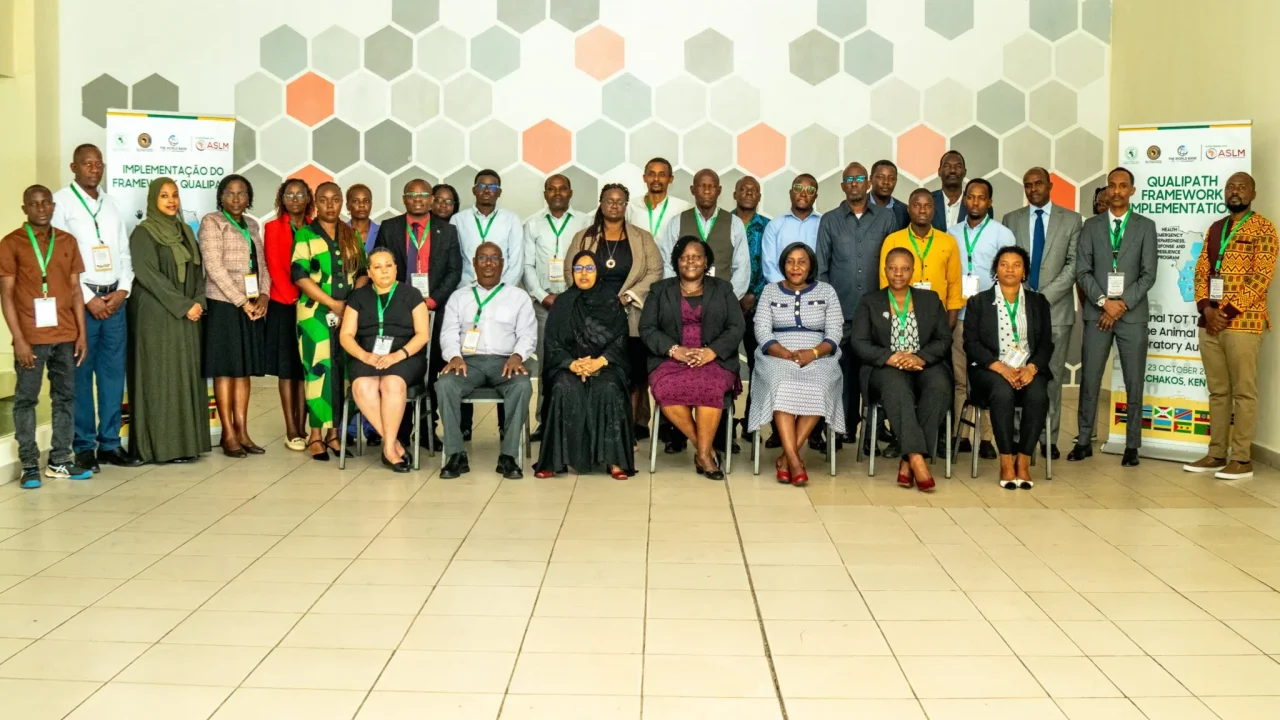
The regional programme aims to strengthen veterinary laboratory assessments and disease surveillance.
IGAD and regional partners are strengthening veterinary laboratories across 11 countries to detect disease threats earlier and improve outbreak preparedness.
The IGAD One Health initiative aims to detect animal disease outbreaks before they reach humans by strengthening veterinary laboratories. The programme covers 11 African countries and also seeks to improve cross-border health surveillance.
With World Bank support, IGAD and the East, Central and Southern Africa Health Community (ECSA-HC) are implementing the initiative. It falls under the Health Emergency Preparedness and Response Programme.
The partners aim to build a network of laboratory auditors and mentors to improve diagnostic standards. These specialists will identify gaps in veterinary facilities and support their progress towards accreditation.

IGAD One Health drive links surveillance systems
A training-of-trainers workshop in Kenya has brought together representatives from nine participating countries. Participants are developing skills to assess animal health laboratories, train staff and support national and subnational facilities.
IGAD Senior Medical Epidemiologist Waqo Gufu Boru said stronger animal surveillance could help countries detect threats earlier. As a result, human health authorities would have more time to prepare for possible outbreaks.
He cited Ebola, mpox and influenza when explaining the need for closer animal and human health collaboration. Environmental surveillance also forms part of the approach, helping authorities identify other potential disease threats.
Boru said IGAD was helping countries strengthen coordination between institutions responsible for human health, animal health and the environment. These mechanisms would enable them to share information and coordinate emergency responses.
Meanwhile, IGAD Head of Health Unit Dr Mohamed Elduma stressed the importance of tackling threats at their source. He said treating human infections alone might not resolve the underlying problem.
Laboratory assessments to begin in November 2026
The programme will use QualiPATH, a framework that helps animal health laboratories improve quality management in stages. It supports facilities as they work towards accreditation.
Boru said baseline assessments would start in five countries in November 2026. Assessments in the remaining participating countries would then follow in 2027.
The findings will guide further training, technical assistance and mentorship. Trained specialists will also pass their knowledge to staff at subnational facilities, extending support beyond national laboratories.
Kenya seeks more auditors amid staffing gaps
Kenya’s Deputy of Veterinary Services Romona Ndanyi said the country had nine qualified laboratory auditors. However, that number cannot adequately support existing government veterinary laboratories and growing demand from county-level facilities.
Kenya began pursuing animal health laboratory accreditation in 2017. By 2022, three laboratories under the Directorate of Veterinary Services had secured accreditation.
Ndanyi said those facilities had maintained their ISO/IEC 17025:2017 accreditation. However, inadequate funding, staff shortages and difficulties maintaining specialised equipment continued to affect laboratory services.
Retirements and staff departures have also reduced the pool of auditors available to assess and mentor facilities. Three Kenyan participants are therefore training under the programme to help expand that capacity and train others.
The workshop includes Kenya, Ethiopia, Rwanda, Burundi and the Democratic Republic of Congo. Malawi, Mozambique, Zimbabwe and Sao Tome and Principe also have representatives attending.
IGAD handles multisectoral coordination, including connections with veterinary, agricultural and environmental institutions. ECSA-HC, meanwhile, supports the health-sector component of the regional programme.