

Japan Struck by Massive 7.7 Earthquake, Tsunami Alerts Issued
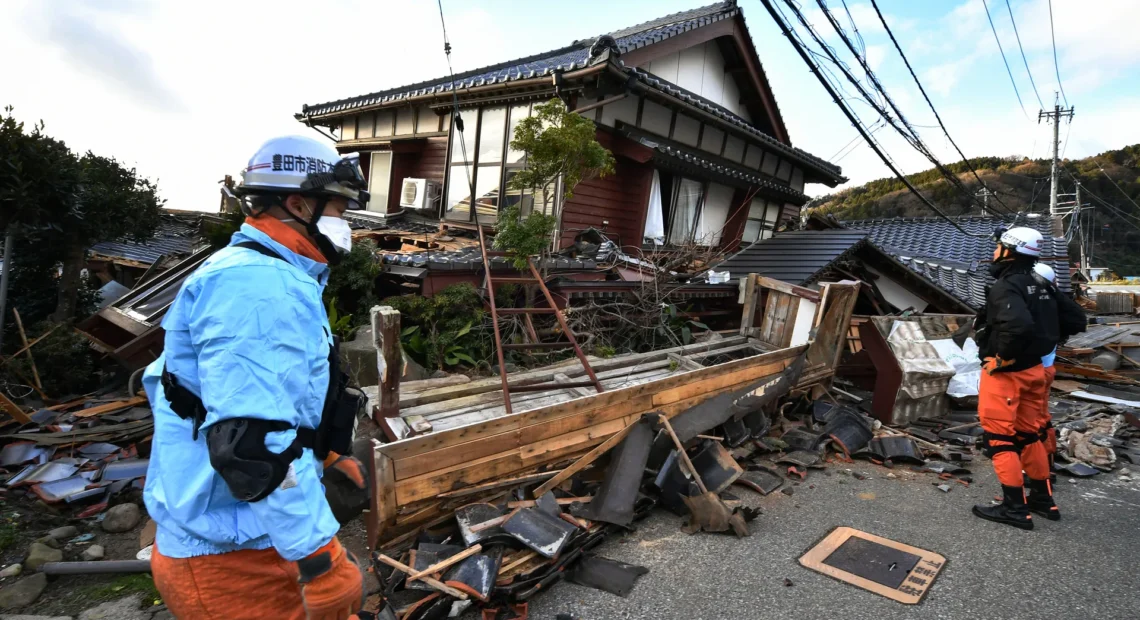
A strong magnitude 7.7 earthquake struck off northeastern Japan. Authorities recorded the quake on Monday, April 20, 2026.
It hit at 4:53 p.m. JST in the Pacific Ocean. The epicenter lay near Iwate Prefecture.
Therefore, emergency responses activated immediately across the region.
Tsunami Warning and Mass Evacuations Issued
The Japan Meteorological Agency issued tsunami warnings quickly. They alerted Iwate, Aomori, and Hokkaido prefectures.
Additionally, officials forecast waves reaching three meters high. Early waves already reached multiple coastal ports.
For example, Kuji Port recorded 80 centimeters. Meanwhile, Miyako Port recorded 40 centimeters.
Consequently, authorities warned of stronger incoming waves. They urged residents to move to higher ground immediately.
Large-Scale Evacuation Measures Underway
Officials ordered evacuations for approximately 170,000 residents. Communities along the coast moved rapidly inland.
In particular, Otsuchi and Kamaishi faced urgent evacuation orders. These towns previously suffered severe damage in 2011.
Therefore, authorities prioritized rapid and organized evacuation efforts.
READ ALSO: Japan-Dubai Luxury Cars Dock at Lamu Port due to Middle East Conflict
Casualties and Early Impact Reports
Emergency teams confirmed at least three people injured. Fire departments continue assessing damage across affected areas.
However, officials reported no nuclear plant abnormalities. They continue monitoring infrastructure for potential risks.
Thus far, critical systems remain stable.
Aftershocks Continue Across the Region
Seismologists recorded multiple aftershocks following the main quake. A magnitude 4.9 tremor struck at 7:44 p.m. JST.
Additionally, more aftershocks remain highly likely. Experts urge residents to stay alert and prepared.
Consequently, authorities maintain emergency readiness across the region.
Ongoing Monitoring and Safety Advisory
Rescue teams continue surveillance along the coastline. They assess tsunami activity and structural damage continuously.
Meanwhile, residents follow evacuation instructions strictly. Officials emphasize caution due to unpredictable aftershocks. Therefore, safety remains the top priority nationwide.
Ultimately, Japan continues managing a developing natural disaster situation.