Kenya’s signing commits the government to putting children at the centre of climate action.
Kenya becomes the 80th signatory to a global pledge promoting children’s rights, resilient essential services and youth participation in climate decisions.
Kenya has signed a global climate declaration, becoming the 80th country to commit to child-centred climate action. The pledge places children’s and young people’s rights, needs and voices at the heart of national responses.
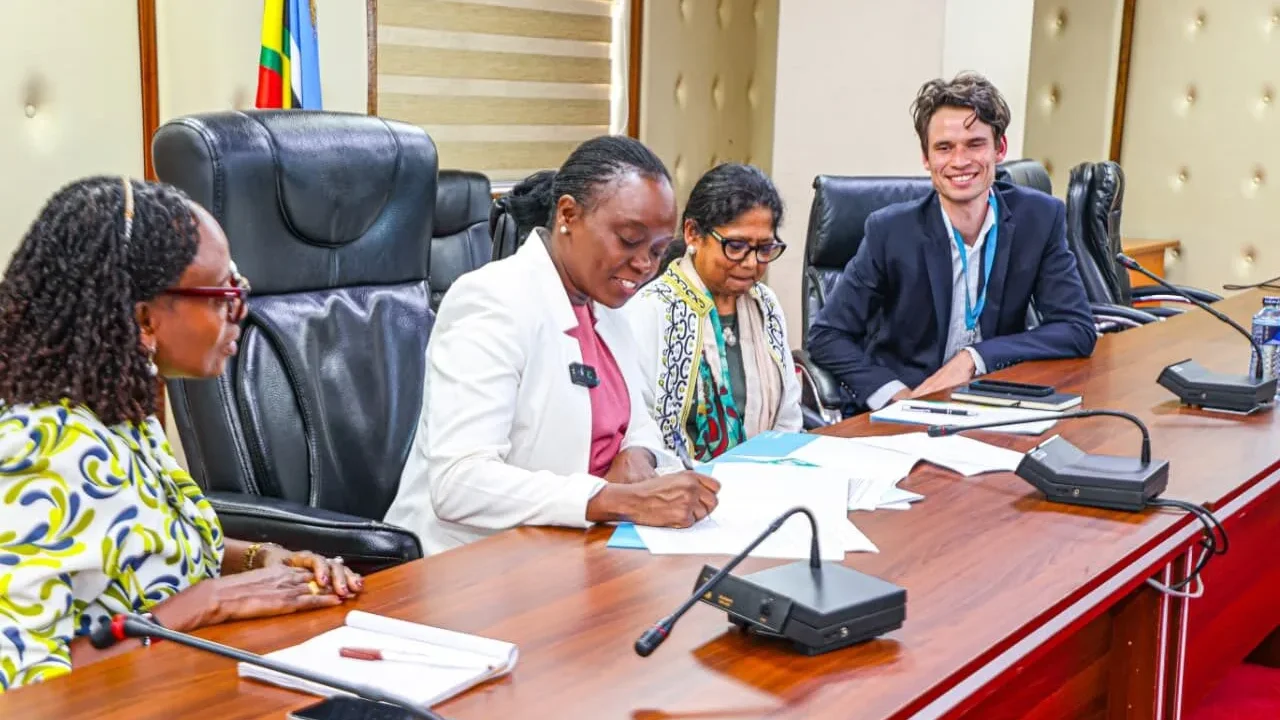
Environment, Climate Change and Forestry Cabinet Secretary Deborah Barasa signed the declaration on November 5 for the government. UNICEF Representative to Kenya Shaheen Nilofer attended the signing.
The commitment comes as climate change and disasters threaten millions of Kenyan children. Figures in the announcement put about 12 million of Kenya’s 24.6 million children at moderate to very high risk.

Climate declaration targets risks to children
Among those children, 2.4 million live in seven counties classified as highly vulnerable to climate change. The declaration highlights how floods and droughts disrupt access to water, sanitation, healthcare, nutrition and education.
It also identifies heightened risks for girls and children with disabilities. Nilofer said climate change disrupts schooling, threatens children’s health and nutrition, and displaces families. It also limits access to safe water and other essential services.
She added that Kenya’s commitment affirms the importance of children’s rights in climate policy, financing and action.
The Intergovernmental Declaration on Children, Youth and Climate Action dates to COP25, the 2019 UN climate conference. It calls on governments to integrate children’s rights and climate protection into national policies, plans and investments. Signatories also pledge to give children and young people meaningful roles in climate decisions.
Kenya outlines investment and monitoring plans
Kenya will implement the commitment through existing climate policies, better planning and investment, the government said. The pledge also builds on the National Climate Change Action Plan 2023–2027, which prioritises children and youth. Kenya’s Nationally Determined Contribution under the Paris Agreement provides another policy foundation.
Barasa said the government would invest in essential services that can withstand climate shocks. It would also mobilise accessible, inclusive climate finance and strengthen vulnerable communities. She described children and young people as active partners in developing climate solutions, rather than only beneficiaries.
To track progress, Kenya will use child-focused climate-risk evidence and indicators measuring essential services’ resilience. Monitoring will also cover funding for those services and young people’s participation in policymaking.
Kenya plans to advance these priorities at COP31 in Antalya, Türkiye, scheduled for November 9–20, 2026. Its agenda will include children’s rights, needs and voices in global climate policy, funding and action.