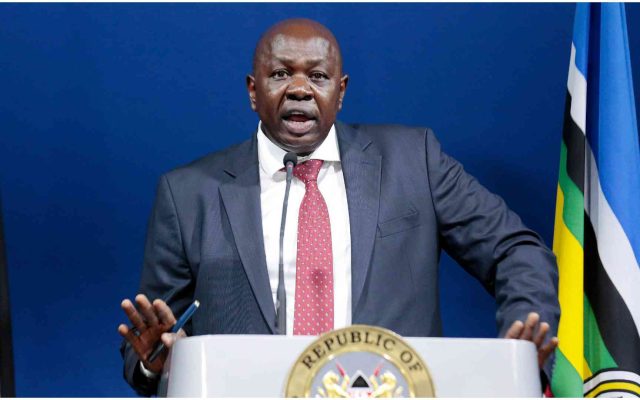



LSK President Charles Kanjama addressed journalists in Kisumu on the continuing targeted court boycott.
The lawyers’ body says the boycott affects about 15 judicial officers and will remain in place pending progress on accountability measures agreed with the JSC.
The Law Society of Kenya (LSK) has maintained its targeted boycott of selected courts, saying lawyers should continue avoiding appearances before the affected judicial officers until progress is made on judicial accountability and integrity reforms.
Speaking to journalists in Kisumu on Friday, September 26, LSK President Charles Kanjama said the directive remained active following the end of the judicial recess. He was accompanied by council members and representatives of the society’s West Kenya branch.
LSK said the boycott covers about 15 judicial officers, including six Supreme Court judges. It did not name the specific judges affected. Members have been instructed to observe the targeted action until the society issues further guidance.
LSK presses JSC on outstanding reforms
The society linked its decision to what it described as delays in implementing commitments reached at a joint meeting with the Judicial Service Commission (JSC) in late July.
Among the outstanding measures are an electronic system for tracking complaints, the establishment of court station integrity committees and mechanisms for reporting on judicial performance. LSK said implementation had either been delayed or was progressing slowly.
The society considers these measures important to improving transparency and accountability within the Judiciary, while strengthening public confidence in the institution. Its position is that the targeted boycott should continue while the agreed reforms remain unresolved.
LSK said it would keep engaging the JSC and monitoring the implementation of the commitments. The society did not announce an end date for the boycott, instead tying its continuation to developments in the accountability process.
Boycott does not establish wrongdoing
Kanjama said the action also concerns judges who have secured court orders preventing the JSC or the Ethics and Anti-Corruption Commission (EACC) from investigating their conduct.
He stressed that the boycott should not be treated as a finding of guilt or liability against the affected judicial officers. Rather, he urged them to respond to the matters concerning their conduct before the JSC.
The society said the scope of the boycott could change as the accountability process develops. Kanjama indicated that the number of affected officers would depend on compliance and progress by the relevant institutions.
The directive therefore remains targeted at identified officers, with any changes subject to further communication from LSK.
Warning over unlawful legal practice
Separately, LSK raised concerns about individuals allegedly providing legal services without the necessary qualifications or valid practising certificates.
Kanjama said the society was concerned about non-lawyers posing as advocates, as well as lawyers practising without the required certificates. He warned that action would be taken against those unlawfully offering legal services.
LSK said it was working with its branch leadership, the Judiciary and other stakeholders to identify such individuals and take action. The society described the effort as necessary to protect the public from unqualified practitioners and uphold professional standards in the legal sector.