

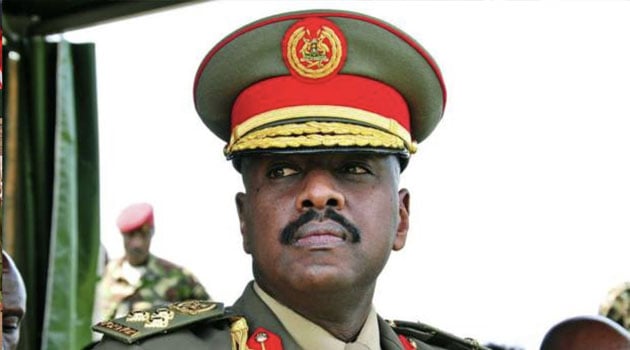
Gen Muhoozi Kainerugaba has directed Uganda’s ministers to obtain his approval before travelling abroad.
Uganda’s military chief threatens a UGX30 million fine for unauthorised trips, although the legal basis for his directive remains unclear.
Uganda’s Chief of Defence Forces, Gen Muhoozi Kainerugaba, has ordered government ministers to seek his clearance before travelling abroad, threatening a fine of 30 million Ugandan shillings for anyone who leaves without his permission.
Muhoozi announced the requirement on Saturday, September 27, after challenging a visit to Türkiye by Haruna Kyeyune Kasolo, the Minister of State for Foreign Affairs responsible for Regional Affairs.
He said ministers’ overseas trips would be reviewed monthly and instructed the Finance Ministry to seek his approval. He also directed the ministry to begin enforcing the proposed penalty immediately, saying the proceeds would fund road construction.
However, his announcement did not establish the legal authority for either the clearance requirement or the fine. It also remained unclear whether the Finance Ministry had formally adopted the measure.
Kasolo pledges to comply
The directive followed a now-deleted social media post in which Muhoozi said he had not authorised Kasolo’s trip to Türkiye and demanded an explanation from the minister.
Kasolo had travelled for official engagements. In his response, he acknowledged Muhoozi’s instruction and pledged to seek his guidance and authority before making future foreign trips.
Muhoozi insisted that every minister must notify him before leaving Uganda. He singled out Foreign Affairs Minister Adonia Ayebare for praise, describing him as disciplined and saying that Ayebare already sought his permission before travelling.
The announcement placed the military chief’s demand for personal approval alongside an existing government process that assigns ministerial travel clearance to the Prime Minister.
Existing rules place clearance with the Prime Minister
Under a Cabinet decision made in 2017, ministers, ministers of state, the Head of Public Service and Permanent Secretaries are required to obtain the Prime Minister’s clearance before travelling outside Uganda.
Officials below the rank of Permanent Secretary are expected to seek approval from the ministers responsible for their respective offices.
Uganda’s Constitution vests executive authority in the President, who serves as Head of State, Head of Government and Commander-in-Chief of the Uganda People’s Defence Forces.
The constitutional framework also gives the Prime Minister responsibility for coordinating and implementing government policy across ministries, departments and other public institutions. Ministers answer individually to the President for the running of their ministries and share collective responsibility for Cabinet decisions.
Muhoozi did not identify a formal legal or administrative instrument changing those arrangements. Whether his announcement amounts to an official revision of the foreign-travel clearance process therefore remains unresolved.
Directive follows tensions with Türkiye
The dispute over Kasolo’s trip comes during a period of strained relations between Uganda and Türkiye, particularly around defence cooperation and the case of Türkiye-based Ugandan activist Fred Kajubi Lumbuye.
On September 19, the Uganda People’s Defence Forces announced an immediate suspension of defence and military cooperation with Türkiye. The military said cooperation would remain suspended until outstanding bilateral defence issues were settled, but did not publicly detail those issues.
A day earlier, members of the Patriotic League of Uganda had demonstrated outside the Turkish Embassy in Kampala, calling for Lumbuye’s extradition.
The military’s suspension statement did not explicitly connect its decision to either Lumbuye’s case or the demonstration. Despite the defence tensions, Uganda’s broader diplomatic and commercial engagement with Türkiye has continued, including the official engagements undertaken during Kasolo’s visit.