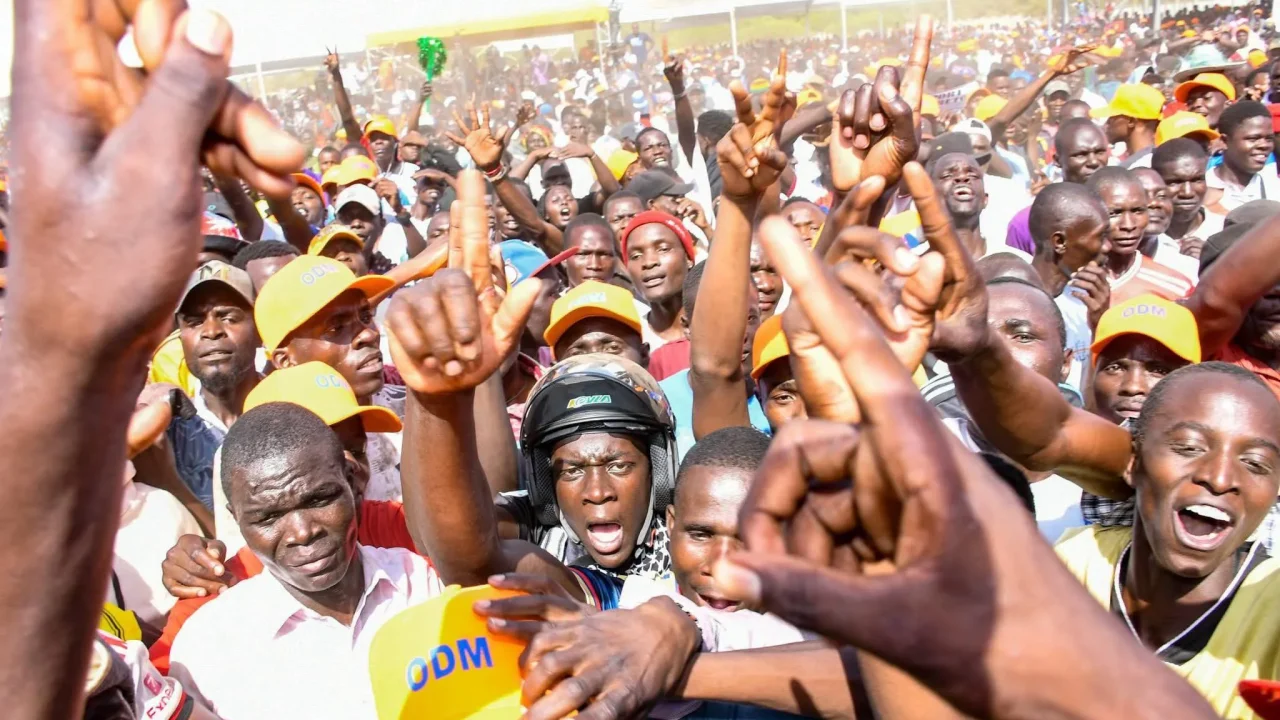
Raila Odinga’s first anniversary memorial in Bondo brought competing political positions into focus.
Leaders clash over cooperation with President William Ruto as they invoke Raila Odinga’s legacy at his first anniversary memorial.
The ODM–Linda Mwananchi rivalry took centre stage at Raila Odinga’s first anniversary memorial in Bondo on October 15. Leaders differed over cooperation with President William Ruto’s administration and the future of opposition politics.
ODM Deputy Party Leader Simba Arati urged members to stay and rebuild the party. Energy Cabinet Secretary Opiyo Wandayi also defended its relationship with Ruto’s government, predicting strong presidential support in Siaya in 2027.
However, Siaya Governor James Orengo called for an independent opposition that can hold the government accountable. Embakasi East MP Babu Owino and Nairobi Senator Edwin Sifuna meanwhile emphasised justice, public welfare and persuasion in political leadership.

ODM–Linda Mwananchi rivalry exposes divisions over Ruto
Arati appealed to members not to abandon the political home associated with Raila. He also suggested that external financiers were influencing some interests behind moves to leave the party.
While encouraging members to remain, Arati said those accepting a sponsor’s money could depart with that sponsor. He also thanked Ruto for showing respect.
Wandayi took a firmer position on the party’s cooperation with the administration. He described ODM as firmly rooted in Ruto’s government and dismissed efforts to remove the President from power.
Looking ahead to the 2027 General Election, Wandayi predicted that Ruto would receive all votes cast in Siaya County. His remarks presented a confident defence of the relationship that divided speakers at the memorial.
Orengo urges protection of opposition oversight
In contrast, Orengo argued that Raila’s legacy demanded a commitment to democratic principles rather than political convenience. The governor, a prominent voice in the Linda Mwananchi response, warned against arrangements that weaken opposition oversight.
He urged leaders to reject deals that silence dissent, weaken accountability or undermine democratic gains. His remarks placed the opposition’s watchdog role at the centre of the debate over cooperation with government.
Owino also drew on Raila’s legacy, but focused on the qualities that should define leadership. He said power, titles and personal standing mattered less than the courage to defend justice and deliver services.
Sifuna calls for persuasion, not intimidation
Meanwhile, Sifuna pledged to preserve Raila’s emphasis on citizens’ welfare when making political decisions. Referring to efforts to seek the presidency, he said he would not forget the public or those lessons.
The Nairobi senator also argued that political engagement should rely on patience and persuasion. He contrasted that approach with intimidation and attempts to force people into political positions.
Sifuna criticised some leaders at the gathering for what he described as coercive conduct. Across the speeches, Raila’s legacy remained a shared reference point, even as leaders offered different political directions.