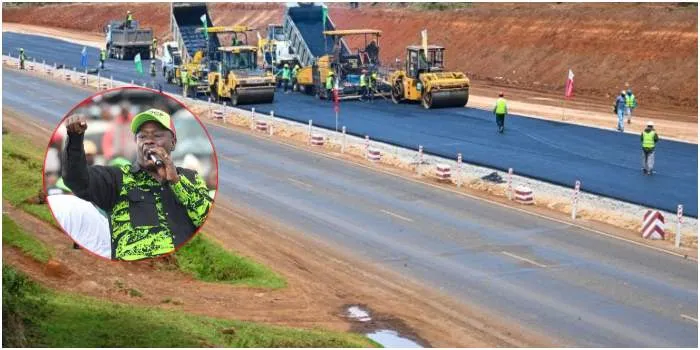
DCP leader Rigathi Gachagua has challenged the government’s explanation for the highway delays.
The DCP leader disputes Transport CS Davis Chirchir’s explanation that bitumen shortages have delayed the highway expansion.
DCP leader Rigathi Gachagua has alleged that a funding dispute threatens to halt the Ksh200 billion Rironi-Mau road expansion. He claims Chinese officials have withheld funds over concerns about political risk ahead of next year’s election.
Speaking at a church service in Kikuyu, Kiambu County, on Sunday, November 1, the former deputy president challenged the government’s explanation. Transport Cabinet Secretary Davis Chirchir has attributed delays to shortages of bitumen, a key road-building material.
Gachagua challenges Rironi-Mau road funding
Gachagua said people with knowledge of the project had told him contractors lacked money to continue construction. He also alleged that Chinese officials considered the highway expansion a political project and viewed financing it as too risky.

On that basis, he disputed Chirchir’s account of what was holding back work. Gachagua claimed the Chinese firm handling construction had received word that no money was available to resume the expansion.
The DCP leader also demanded that two Chinese companies return the money by October next year. He tied that demand to his expectation that a new administration would take office. His allegations put financing, rather than construction supplies, at the centre of his criticism.
Chirchir sets December opening target
Meanwhile, Chirchir has moved the planned opening of a 60-kilometre section of the highway to early December 2026. Appearing before a Senate committee on Friday, October 30, he revised the earlier October 30 target amid criticism of the delays.
During an inspection tour on Saturday, Chirchir said geopolitical tensions and supply chain disruptions had affected bitumen availability for two months. He said those difficulties had caused setbacks and unexpected delays in construction.
However, the CS said the government had secured enough bitumen for the first stretch of the road. He added that the contractor would lay about four kilometres daily to accelerate work, presenting improved material supplies as the route to faster progress.