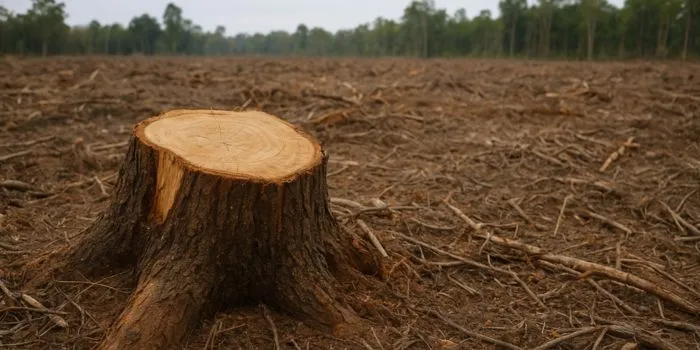
Public concern over forest logging has prompted debate about commercial tree harvesting.
Charity Munyasya defends harvesting commercial tree species amid public concern over logging in gazetted forests.
Tree harvesting helps prevent mature commercial trees from rotting, Forest Society of Kenya president Charity Munyasya has said. She defended the practice amid public anger over logging in gazetted government forests.
Speaking during a KBC interview, Munyasya said exotic trees face internal decay when they exceed their harvesting cycle. She placed that cycle at between 25 and 40 years.
The condition, known as heart rot, causes trees to decay from the inside out, she explained. As a result, growers risk losing the money and effort they invested in planting them.

Tree harvesting targets commercial plantations
Munyasya described harvesting as a planned, scientific process rather than indiscriminate forest destruction. She said it applies to exotic species, including eucalyptus, cypress and pine, planted specifically for commercial use.
Her explanation follows public concern over tree cutting in Aberdare, Ngong and Imenti forests. Social media footage showing trucks carrying logs and large cleared areas also fuelled anger over the activity.
However, Munyasya said plantation forestry occupies only six per cent of gazetted government forests. Indigenous forests account for the remaining 94 per cent and remain protected, she added.
She maintained that harvesting does not extend to indigenous trees. Instead, forest rangers treat anyone who cuts those trees as a thief, she said.
Tree cover and forest cover differ
Meanwhile, Munyasya urged the public to distinguish between tree cover and forest cover when discussing conservation. She explained that forest cover encompasses forests and plantations, while tree cover accounts for individual trees.
She also said Kenya had already exceeded the constitutional minimum of 10 per cent tree cover. Citing 2021 figures, she put national tree cover at 12.13 per cent.
Forest cover, however, stood lower at 8.83 per cent in the same year, she said. Munyasya noted that people often confuse the two measures during discussions about forests and conservation.