Somalia enters a new phase of its partnership with the United Nations after UNTMIS ends operations.
Somali institutions and UN partners take over key political functions as the country confronts continuing security and governance challenges.
The UNTMIS closure has shifted key state-building responsibilities to Somali institutions and UN partners after decades of political engagement. The United Nations Transitional Assistance Mission in Somalia ended operations on October 31.
The closure followed a two-year transition agreed with Somalia’s Federal Government and endorsed by the UN Security Council. National institutions, UN agencies and the United Nations Support Office for Somalia now take on its functions.
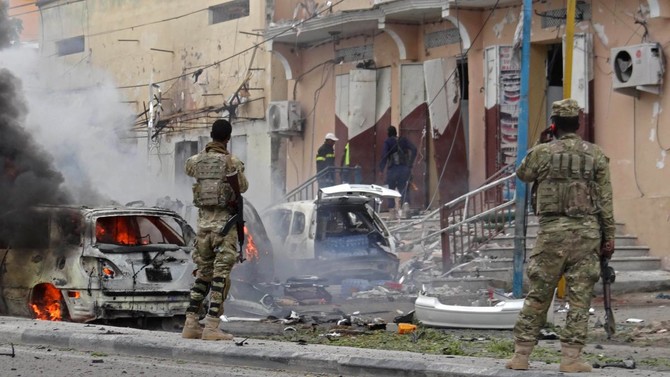
However, Somalia still faces political, security and institutional challenges as it works to sustain its recovery. Al-Shabaab continues to threaten stability while the country advances its security transition.

UNTMIS closure ushers in new partnership phase
Raisedon Zenenga, the mission’s Officer-in-Charge and UN Deputy Special Representative for Somalia, described the transition as a new partnership phase. He said international support would continue beyond the political mission’s departure.
The transition began after Somalia’s government requested an end to the UN Assistance Mission in Somalia’s mandate. In November 2024, the Security Council transformed that mission, known as UNSOM, into UNTMIS.
Resolution 2753 established a two-year roadmap for transferring responsibilities to Somali institutions and the UN Country Team. Resolution 2809 of 2025 also formed part of the transition framework.
Those responsibilities include governance, constitutional review, reconciliation and electoral support, alongside human rights and the rule of law. The handover therefore places more responsibility for political and state-building work with Somali institutions.
UN support continues amid security challenges
The UN’s dedicated political engagement began in 1995 with the establishment of the UN Political Office for Somalia. UNSOM succeeded it in 2013, supporting Somali-led peacebuilding and the rebuilding of state institutions.
Over that period, the UN worked with federal authorities, Federal Member States, civil society and international partners. Its support covered reconciliation, constitutional reforms, elections and governance institutions.
Zenenga said Somalia had rebuilt institutions and widened political inclusion, allowing greater national decision-making. However, he stressed that continuing challenges would require both national action and international support.
Meanwhile, successive African Union peace support operations have helped create space for political processes and efforts to extend state authority.
UN agencies, funds and programmes will also continue humanitarian, development and human rights work in Somalia. Resident Coordinator George Conway reaffirmed the UN’s commitment to Somali-led peace, stability and sustainable development.