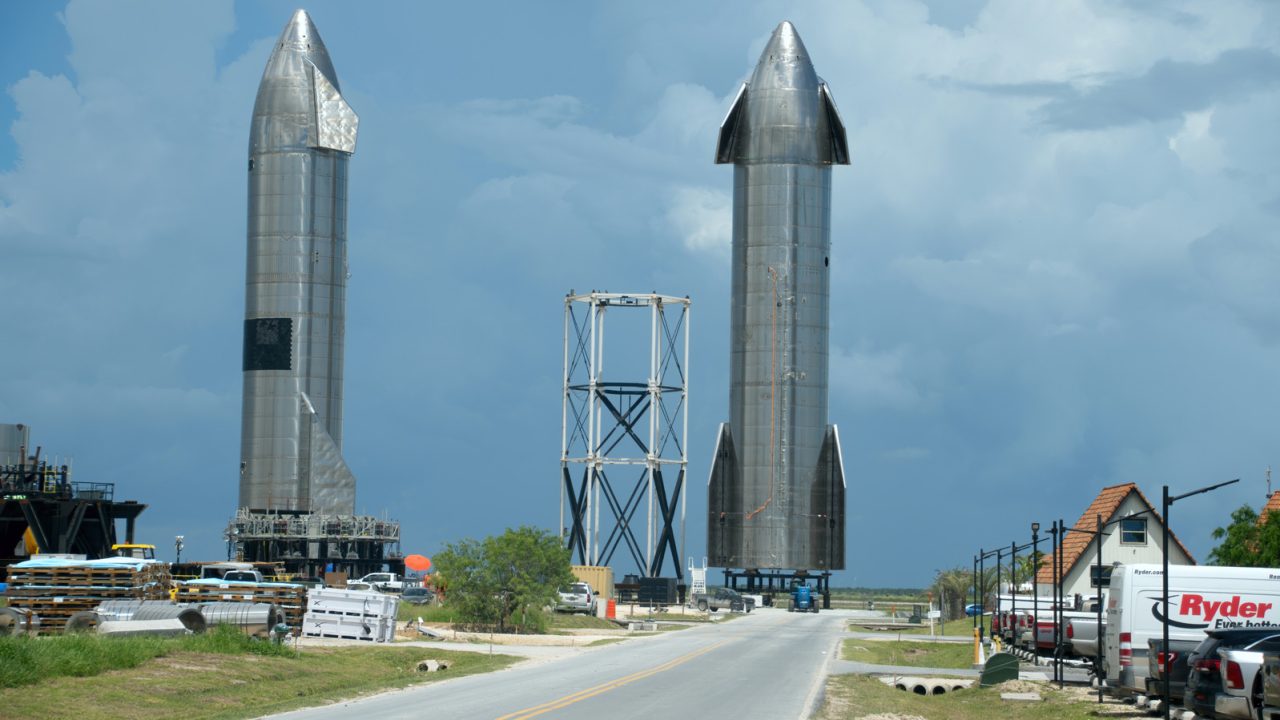
SpaceX’s Starship system combines the Super Heavy booster with an upper-stage spacecraft.
SpaceX designed its two-stage rocket to lift huge payloads, but planned lunar missions will also require refuelling in Earth orbit.
The SpaceX Starship rocket stands 407 feet tall when fully stacked and generates 18.1 million pounds-force of liftoff thrust. It is the tallest rocket ever flown and the most powerful.
The complete vehicle combines the Super Heavy booster with the Starship spacecraft above it. Together, they stand roughly one-third taller than the Statue of Liberty, including its pedestal.
However, size alone does not define the system’s ambitions. SpaceX designed it to transport huge payloads and eventually carry people and cargo beyond Earth orbit.

What powers the SpaceX Starship rocket?
Super Heavy measures 236.2 feet tall and provides the initial push from the launch pad. Its 33 Raptor engines burn liquid methane and liquid oxygen, producing the vehicle’s record liftoff thrust.
By comparison, NASA’s Space Launch System produces between 8.8 million and 9.4 million pounds of maximum thrust. Starship’s booster therefore generates roughly twice that amount.
After the booster separates, the 170.6-foot spacecraft continues with six engines. These comprise three regular Raptors and three Raptor Vacuum engines designed for operation in space. SpaceX lists their combined thrust at about 3.5 million pounds-force, separate from the liftoff figure.
The engines must also lift an enormous propellant load. Super Heavy has capacity for 3,650 metric tons, while the upper stage holds another 1,600 metric tons. That brings total propellant capacity to 5,250 metric tons.
SpaceX also intends to recover and reuse both stages. Despite its exceptional power, the system still relies on staging, efficient engines and careful launch preparation.
Why lunar missions need orbital refuelling
For NASA’s planned lunar-landing missions, Starship’s fuel requirements extend beyond what it carries at launch. The lunar lander consumes a substantial share of its propellant simply reaching Earth orbit, so it must refuel there.
SpaceX and NASA’s plan involves several specialised vehicles. First, a propellant depot launches into orbit. Tanker Starships then deliver fuel before the lunar lander arrives and docks with the depot to replenish its supply.
The wider Artemis mission also involves astronauts travelling aboard NASA’s Orion spacecraft. The Starship lander would carry two crew members to the Moon’s surface and return them to lunar orbit.
However, transferring and storing extremely cold propellants in space presents a major technical challenge. Orbital refuelling therefore remains central to the planned lunar mission architecture.