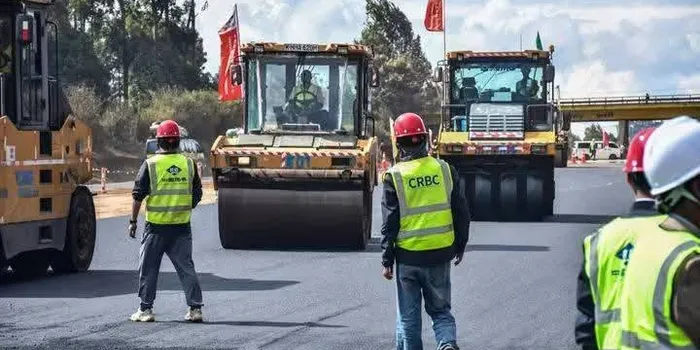
Kenya imports all its road-building bitumen, a vital binder that holds road surfaces together and helps protect them against water damage.
Bitumen shortages have delayed the planned opening of the Rironi-Naivasha section of the Rironi-Mau Summit Highway. The section had an opening target of the end of October 2026.
The disruption highlights the importance of a material that Kenya now relies entirely on imports to obtain. Bitumen binds road-building materials together, helping create firm surfaces that can withstand moving traffic.
Why bitumen shortages affect road construction
Bitumen is a black, sticky substance that serves as the binding agent in paved roads. It acts like glue, holding crushed stone, gravel and sand together to form a strong surface.
Although people sometimes use bitumen and asphalt interchangeably, the terms describe different things in road construction. Bitumen is the binder, while asphalt is the mixture of that binder and the other materials.

As bitumen cools, it hardens and secures the aggregates in place. Together, these materials create a road surface capable of carrying the weight and movement of vehicles.
The binder also helps make the surface water-resistant, limiting water penetration into the pavement. This protection reduces the amount of water that can reach and weaken the road’s underlying layers.
Chemically, bitumen consists mainly of complex hydrocarbons containing carbon and hydrogen. It also contains smaller quantities of sulphur, oxygen and nitrogen, alongside trace metals.
Where Kenya gets its bitumen
Most bitumen used in modern road construction comes from crude oil refining. Refineries separate lighter products, including petrol, diesel and kerosene, at different temperatures during the process.
Meanwhile, heavier residue remains at the bottom of the distillation process. Further processing turns this residue into bitumen that meets the specifications of different road projects.
Kenya previously produced the material at its refinery in Mombasa. However, the refinery stopped processing crude oil in 2013, and Kenya now imports all its road-construction bitumen.
The country sources supplies mainly from the Middle East and Asia. Leading suppliers include the United Arab Emirates, Iran, Oman, China, Kuwait, Iraq and India.