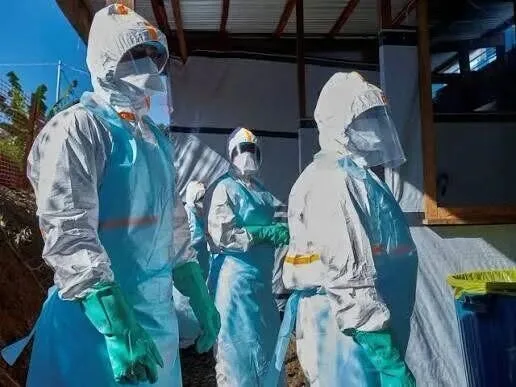
Health authorities followed strict safety protocols for the woman’s burial while accommodating Muslim traditions.
Health authorities followed infection-prevention protocols while accommodating Muslim traditions after Kenya recorded its second Ebola-related death.
Health authorities followed strict safety measures during the Ebola burial of a 65-year-old woman who died in Nairobi. They also sought to respect her family’s Muslim burial traditions while protecting mourners and the public.
The woman died on Friday while receiving treatment for Bundibugyo Ebola virus disease at an infectious disease unit. She was Kenya’s third confirmed case and its second Ebola-related death.
A close relative of Kenya’s first confirmed patient, she had been under quarantine as a known contact. The Ministry of Health said she developed symptoms on October 13 and entered the treatment unit that day.

Medical teams provided supportive care, but her condition worsened and she died despite efforts to save her.
Ebola burial protocols protect mourners
The burial followed public health procedures intended to reduce transmission risks while accommodating religious and cultural needs. However, those practices must remain within safety limits because direct contact with an infected body can spread Ebola.
The virus can pass through contact with infected blood or other bodily fluids, including after death. Safe handling of bodies therefore forms a critical part of outbreak control.
Health authorities require trained burial teams to use protective equipment and follow infection-prevention procedures. Family members and other mourners must also avoid direct contact with the body.
For Muslim families, officials and relatives coordinate religious practices that they can carry out safely. This approach aims to protect the public while preserving the deceased’s dignity and respecting family beliefs.
Nine confirmed cases within known contacts
At the time of the ministry’s announcement, Kenya had recorded nine confirmed cases, including the two deaths. Meanwhile, the remaining seven patients continued receiving treatment at two isolation facilities.
The first patient was a Kenyan man who had lived in the Democratic Republic of Congo. He died earlier in October after travelling to Nairobi through Uganda.
Health authorities said all confirmed cases remained within a cluster of known contacts. The ministry’s update reported no evidence of community transmission, while surveillance and contact tracing continued.
Ministry urges early reporting
The ministry urged Kenyans to remain calm, follow official guidance and avoid handling suspected or confirmed Ebola victims’ bodies. It also advised prompt medical attention for symptoms, particularly after possible exposure to a confirmed case.
Symptoms can include fever, weakness, muscle pain, vomiting, diarrhoea and unexplained bleeding. For information and guidance, members of the public can call the ministry’s toll-free hotline, 719.