The Motorists Association of Kenya wants EPRA to disclose its pricing calculations and the government to demonstrate the oil import deal’s benefits.
The Motorists Association of Kenya (MAK) has demanded an independent fuel price audit following the latest pump price increases. It also wants scrutiny of the government-to-government petroleum import arrangement and its benefits to consumers.
In its October 14 statement, the association warned that higher fuel costs would deepen pressure on households and businesses. Motorists and transport operators would also face a heavier financial burden, it said.
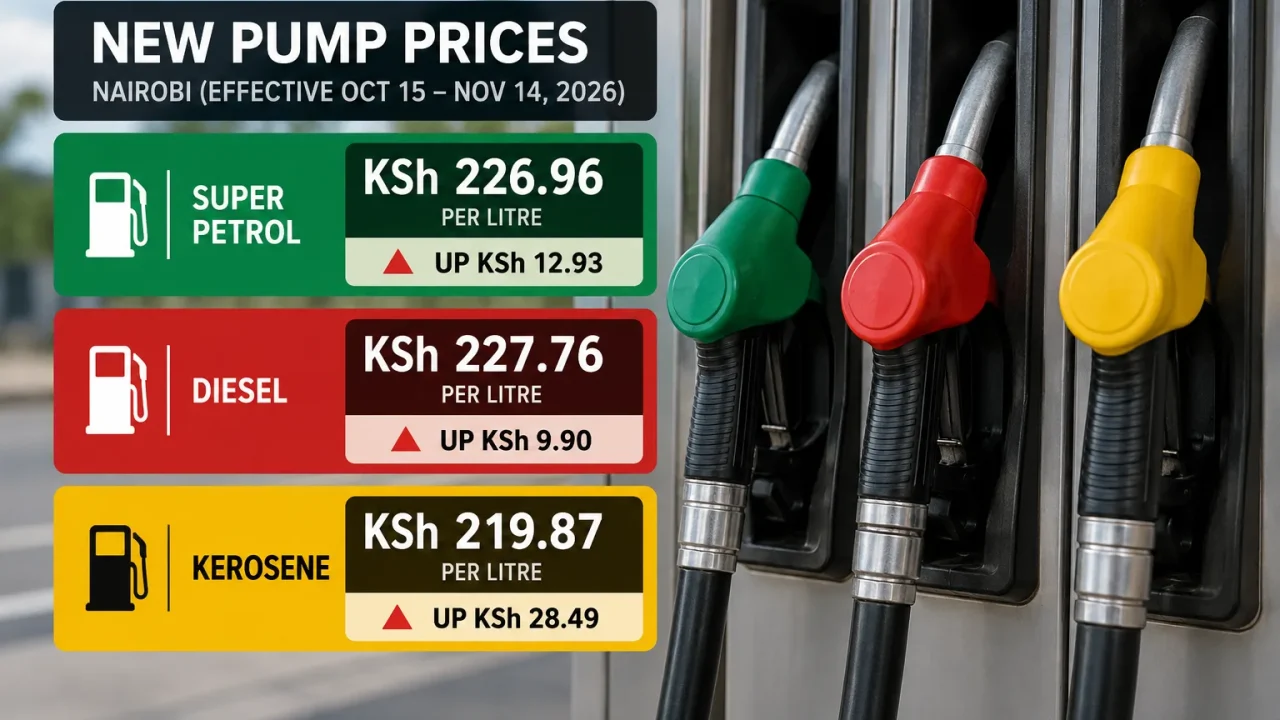
The new prices apply from October 15 to November 14. In Nairobi, petrol costs Sh226.96 per litre, diesel Sh227.76 and kerosene Sh219.87.
Petrol rose by Sh12.93 per litre, while diesel increased by Sh9.90. Kerosene recorded the largest increase, at Sh28.49 per litre.

Fuel price audit sought over kerosene increase
MAK questioned why kerosene recorded the steepest percentage pump price increase despite the smallest reported rise in landed costs.
The association cited landed cost increases of 11.81 per cent for petrol and 11.32 per cent for diesel. Kerosene’s landed cost rose by 9.41 per cent.
However, the corresponding pump price increases stood at 6.04 per cent, 4.54 per cent and 14.89 per cent respectively.
MAK acknowledged that these differences alone did not prove an arithmetic error. Pump prices also include taxes, levies, margins, transport costs and possible stabilisation adjustments.
Nevertheless, it urged the Energy and Petroleum Regulatory Authority (EPRA) to publish the complete calculations behind the review.
The association also challenged the reported rationale for narrowing the price gap between kerosene and automotive fuels. That explanation linked the adjustment partly to efforts to discourage fuel adulteration.
Instead, MAK argued that authorities should strengthen surveillance, fuel quality testing and prosecution of offending dealers. It said households using kerosene for cooking and lighting should not bear the cost of weak enforcement.
Motorists seek evidence of G-to-G savings
MAK also demanded an independent audit comparing the government-to-government import arrangement with competitive petroleum procurement.
The association questioned whether the arrangement had delivered its promised market stability and reduced pressure on foreign exchange. Three years into the deal, it said, motorists deserved evidence of those benefits.
To support that assessment, MAK wants the government to disclose any actual savings alongside supplier premiums and financing costs. It also requested freight charges, foreign exchange exposure and their effects on pump prices.
The association argued that continued protection from competition needed evidence that the arrangement offered more competitive petroleum purchases.
Meanwhile, it urged the government to publish the Petroleum Development Levy Fund’s receipts and disbursements. It also sought details of stabilisation balances and allocations for each fuel product.
Calls for pricing disclosures and oversight
MAK wants EPRA to release pricing worksheets for each product, covering international benchmarks, landed costs and exchange rates. These should also detail freight, insurance, taxes, levies, margins and applicable adjustments.
In addition, it asked Parliament, the Auditor-General and the Competition Authority of Kenya to examine procurement and pricing arrangements.
The association said clear disclosures would help consumers distinguish international market pressures from domestic policy choices. It also renewed its call for competitive, transparent and market-led procurement.
However, MAK acknowledged that deregulation alone would neither remove global price shocks nor guarantee cheaper fuel.
The association warned that transport operators with existing freight contracts would face pressure from higher costs. Those increases could subsequently affect fares and goods prices.
If its concerns remain unanswered, MAK said it would consult members and stakeholders on further lawful civic action, including peaceful demonstrations.