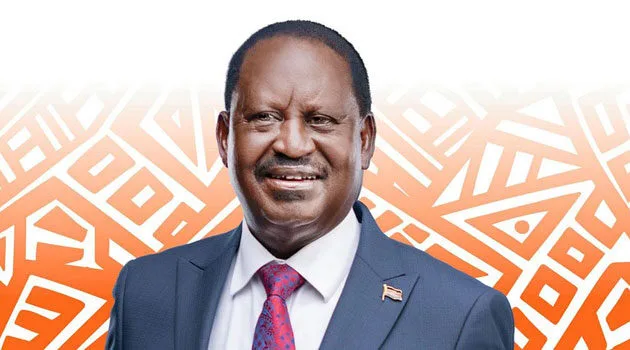
A year after Raila Odinga’s death, ODM leaders disagree over backing President William Ruto or fielding their own presidential candidate.
ODM leadership divisions over President William Ruto’s alliance and the 2027 election are testing the party a year after Raila Odinga’s death. The party retains significant support, but its leaders disagree on how to use that strength.
Raila’s elder brother, Oburu Oginga, now leads ODM and has defended cooperation with Ruto’s administration. However, other leaders question whether that partnership should cost the party its own presidential bid.
Ruto is expected to lead national commemorations marking the first anniversary of Raila’s death. Meanwhile, disagreements over the former prime minister’s legacy have sharpened the debate about ODM’s future.
ODM leadership divisions cloud presidential plans
In July 2026, Oburu announced that ODM would support Ruto’s re-election rather than field a presidential candidate. Speaking at a Homa Bay fundraiser, he argued that cooperation would strengthen ODM’s position in government.

He also said the partnership would help secure development projects for the party’s traditional strongholds. However, Oburu indicated in September that ODM could still enter the presidential race, reopening the debate.
Rarieda MP Otiende Amollo has challenged calls for ODM to stay out of the contest. He warned that abandoning a presidential bid threatened Raila’s vision for the party.
By contrast, Energy Cabinet Secretary Opiyo Wandayi has strongly defended the partnership. He said ODM would continue working with Ruto both now and beyond the 2027 election.
Ruto ties cooperation to Raila’s legacy
Ruto has presented the partnership as a continuation of the political arrangement he reached with Raila. At a Kisumu church service on September 13, he acknowledged that no leader could replace Raila.
However, the President argued that cooperation and development could preserve the late leader’s legacy. He also described ODM and his United Democratic Alliance as partners rather than political competitors.
Ruto has urged Nyanza residents to remain within the broad-based government arrangement. He maintains that the cooperation formed part of his agreement with Raila before the former premier’s death.
Meanwhile, members of Raila’s family have cautioned against using his memory to justify political decisions. His daughter, East African Legislative Assembly member Winnie Odinga, criticised claims about which choices he would have supported.
Raila’s sister, Kisumu Woman Representative Ruth Odinga, has also urged leaders to prioritise citizens over political positions.
Polls and by-elections show continuing support
Despite the internal disputes, two surveys released in July 2026 placed ODM among Kenya’s leading political parties. However, they differed on whether it ranked above UDA.
TIFA Research’s June fieldwork put ODM at 20 per cent and UDA at 17 per cent. That represented an ODM recovery from 13 per cent in August 2025.
By comparison, Infotrak placed UDA at 22 per cent and ODM at 21 per cent. Its findings showed ODM declining from 38 per cent in September 2024 to 21 per cent in June 2026.
ODM also won parliamentary by-elections in Ugunja, Kasipul and Magarini in November 2025. Boyd Were secured Kasipul with 16,819 votes, while Moses Omondi won Ugunja with 9,447 votes.
At the Coast, Harrison Kombe took Magarini with 17,909 votes. Those victories showed continued voter mobilisation, although by-elections differ from a national presidential contest.
Moreover, Ugunja and Kasipul lie within ODM’s traditional strongholds, where the party maintains established support networks.
Sifuna fallout adds to succession tensions
Nairobi Senator Edwin Sifuna’s fallout with ODM has further exposed the leadership challenge. He lost both the secretary-general position and his Senate leadership role before unveiling the Linda Mwananchi movement.
Sifuna, who has presidential ambitions for 2027, said he did not want to destroy the party Raila left behind. He also said the party rejected his request for arbitration under its constitution.
ODM’s national structures and recent electoral victories give its leaders a political base to preserve. However, they still face unresolved decisions about their presidential candidate, cooperation with Ruto and internal disagreements.
Those choices will test whether the party can maintain unity without the personal authority Raila exercised for decades.