India and the UAE are exploring expanded oil storage cooperation.
India and the UAE are exploring reciprocal oil storage arrangements to strengthen energy security and reduce exposure to shipping disruptions.
An India-UAE oil storage proposal would allow New Delhi to hold emergency crude stocks in Fujairah. It could also give Abu Dhabi National Oil Company (ADNOC) space for up to 30 million barrels in India.
The two countries announced the proposal during a May 2026 visit. They aim to strengthen energy security while reducing exposure to disruptions along the Strait of Hormuz.
The plan would expand a partnership covering crude supplies, oil production investments and long-term gas contracts. It also includes possible cooperation on liquefied natural gas (LNG) and liquefied petroleum gas (LPG) storage.

India-UAE oil storage plan offers alternative route
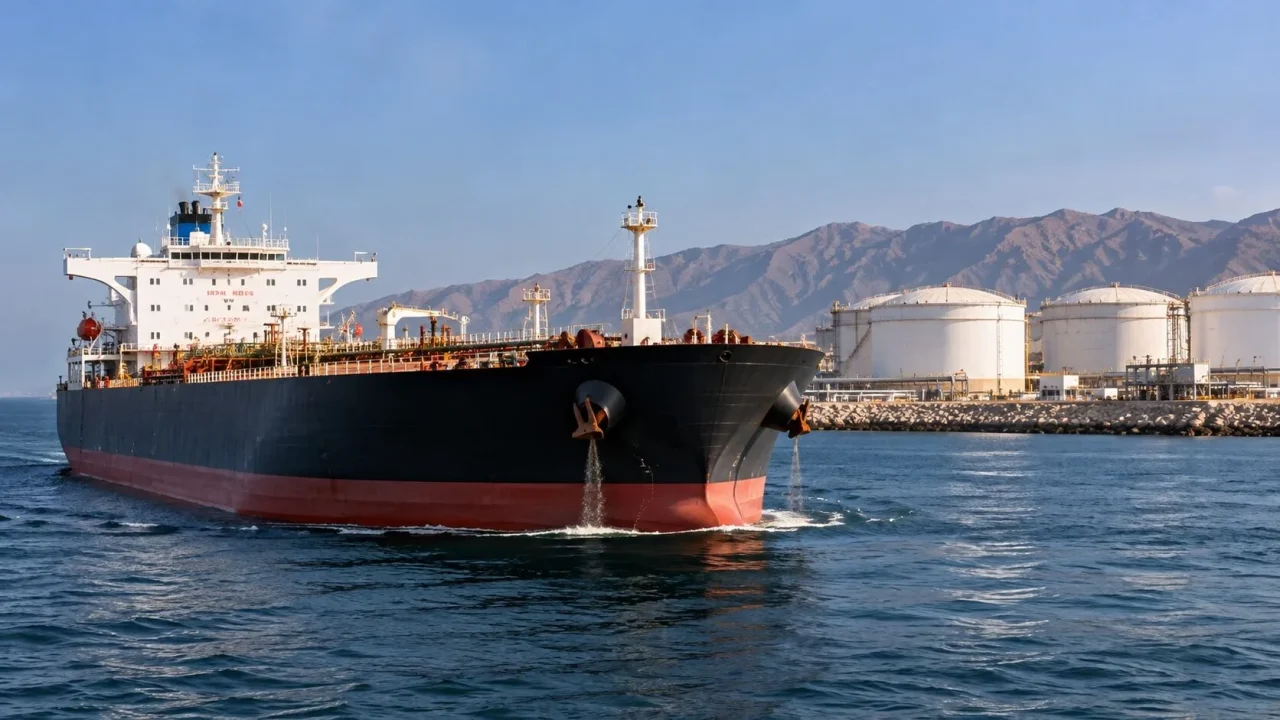
Fujairah sits outside the Strait of Hormuz, allowing tankers to load crude without passing through the waterway. A 406-kilometre pipeline connects the port to Abu Dhabi’s onshore oilfields, providing access to the Gulf of Oman.
That route has gained importance following Gulf shipping disruptions linked to the regional conflict in 2026. Meanwhile, ADNOC is developing another route to Fujairah through its West-East Pipeline project.
The company expects the pipeline to begin operating in 2027 and double its export capacity through the port. In India, the proposed storage expansion could use existing facilities in Visakhapatnam, Andhra Pradesh, and new infrastructure in Chandikol, Odisha.
Energy partnership builds on earlier investments
The storage partnership began in May 2018, when MT Inspiration delivered two million barrels of Abu Dhabi crude to Mangalore. That agreement allowed ADNOC to store up to 5.86 million barrels at its own expense while retaining commercial selling rights.
Indian companies also invested in Abu Dhabi’s oil production that year. ONGC Videsh, Indian Oil Corporation and Bharat PetroResources jointly bought a 10 per cent Lower Zakum offshore concession stake for $600 million.
India’s oil imports rose from fewer than one million barrels daily in the 1990s to around 4.4 million by 2018. By 2026, the UAE ranked fourth among India’s crude suppliers and second for both LNG and LPG.
Gas agreements deepen supply ties
During the May visit, ADNOC and Indian Oil also agreed to explore long-term LPG supply arrangements. Their discussions include opportunities for commercial purchases and sales.
The companies already have an August 2025 agreement for LNG deliveries, primarily from ADNOC’s Ruwais project. That 15-year contract covers supplies of up to one million tonnes annually.
ADNOC expects Indian Oil’s purchases under long-term agreements to reach 2.2 million tonnes annually from 2029. This would make Indian Oil its largest LNG customer.
Separately, ADNOC Gas signed a 10-year LNG supply agreement with Hindustan Petroleum Corporation in January 2026. The contract carries a value of between $2.5 billion and $3 billion.