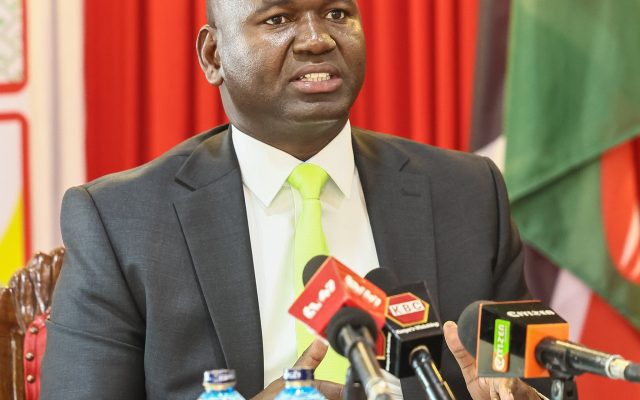
Israeli diplomats vote at the embassy in Nairobi ahead of the October 27 parliamentary election.
Israeli diplomats vote in Nairobi as Ambassador Gideon Behar explains how parliamentary coalitions determine the country’s next prime minister.
Israeli diplomats in Nairobi are casting ballots ahead of the Israel parliamentary elections scheduled for October 27, 2026. The vote highlights a key difference with Kenya: Israelis choose parties, rather than directly electing their head of government.
Israeli Ambassador to Kenya Gideon Behar explained the process on Thursday as diplomats voted at the embassy. He said 38 parties were competing, with security, the economy and citizens’ welfare among voters’ main concerns.
Unlike Kenya’s presidential contest, Israel’s election determines the balance of power in parliament. Parties then negotiate over which coalition can form the next government and provide its prime minister.

How Israel parliamentary elections shape the government
Israel uses proportional representation, with voters choosing party lists for the 120-member Knesset. Each qualifying party receives seats based on its share of the national vote.
After the results, parties seek a coalition commanding at least 61 seats, the minimum parliamentary majority. The Israeli president assigns a Knesset member the task of forming a government.
Generally, the president chooses the candidate most likely to gather enough support in parliament. However, the proposed government must also win the Knesset’s confidence before it can take office.
As a result, winning the most votes does not automatically give a party the premiership. Smaller parties can also prove decisive when their seats help a coalition reach the majority threshold.
Behar explained that citizens choose parties and lawmakers, who then work together to form a governing coalition. That coalition, rather than a separate direct public vote, determines who becomes prime minister.
Kenya gives voters a direct presidential choice
In Kenya, voters directly elect the president in a contest separate from parliamentary elections. A candidate must meet two constitutional thresholds to win in the first round.
First, the candidate needs more than half of all votes cast. They must also secure at least 25 per cent of votes in more than half of Kenya’s 47 counties.
If no candidate meets both conditions, the Constitution requires a fresh election. Kenyan parties also build political alliances, but voters still make a direct choice for president.
In Israel, by contrast, parliamentary numbers provide the basis for negotiations to form a government. The central question is which parties can assemble enough lawmakers to support a governing coalition.
Coalition talks also influence policy
Negotiations cover more than the identity of the next prime minister. Parties also seek agreements on government appointments and priorities, including security and economic policy.
Those discussions therefore help shape the programme that a coalition intends to pursue in office. Behar identified security concerns, citizens’ well-being and the economy as key issues in the election.
He also said the outcome would reflect Israeli voters’ wishes. The October 27 vote will select the 26th Knesset, setting the stage for talks over Israel’s next government.