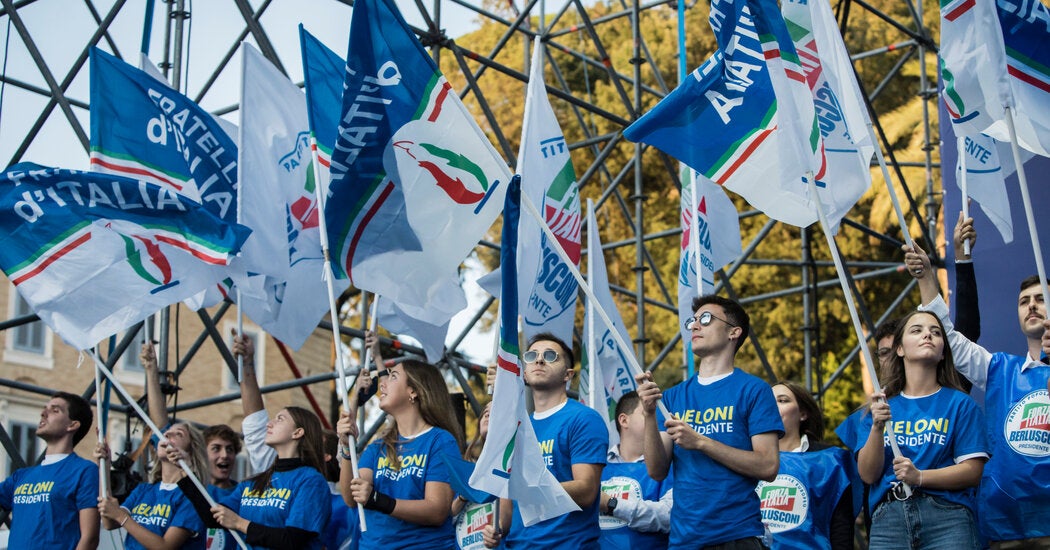
Italy’s political trajectory frames a wider discussion of change across Europe.
Writer Jason Horowitz argues that fragmented coalitions and the far right’s growing acceptance reflect changes Italy experienced earlier.
The Italian political model offers a preview of changes spreading across Europe, writer Jason Horowitz argues. He identifies fragmented coalitions, frustrated voters and the far right’s entry into mainstream politics as shared trends.
Drawing on more than 25 years of observing European politics, Horowitz describes a continent increasingly resembling Italy. His assessment appears in his book, The Italian Job: A Memoir of an American Reporter in Rome.
Italian political model and the far right
Horowitz points to Britain, France and Germany as countries where the far right has entered the political mainstream. In his assessment, that acceptance represents the clearest parallel with Italy’s earlier political trajectory.

He also highlights coalitions made up of small parties, linking that fragmentation to political instability. Alongside those divisions, he describes dissatisfied voters searching for new leaders who promise a different direction.
His reflections begin in Rome around the turn of the century, when media mogul Silvio Berlusconi dominated political discussion. At first, however, Horowitz focused on the city’s older traditions rather than the changes unfolding around him.
Looking back, he instead sees that period as an early glimpse of Europe’s political future.