

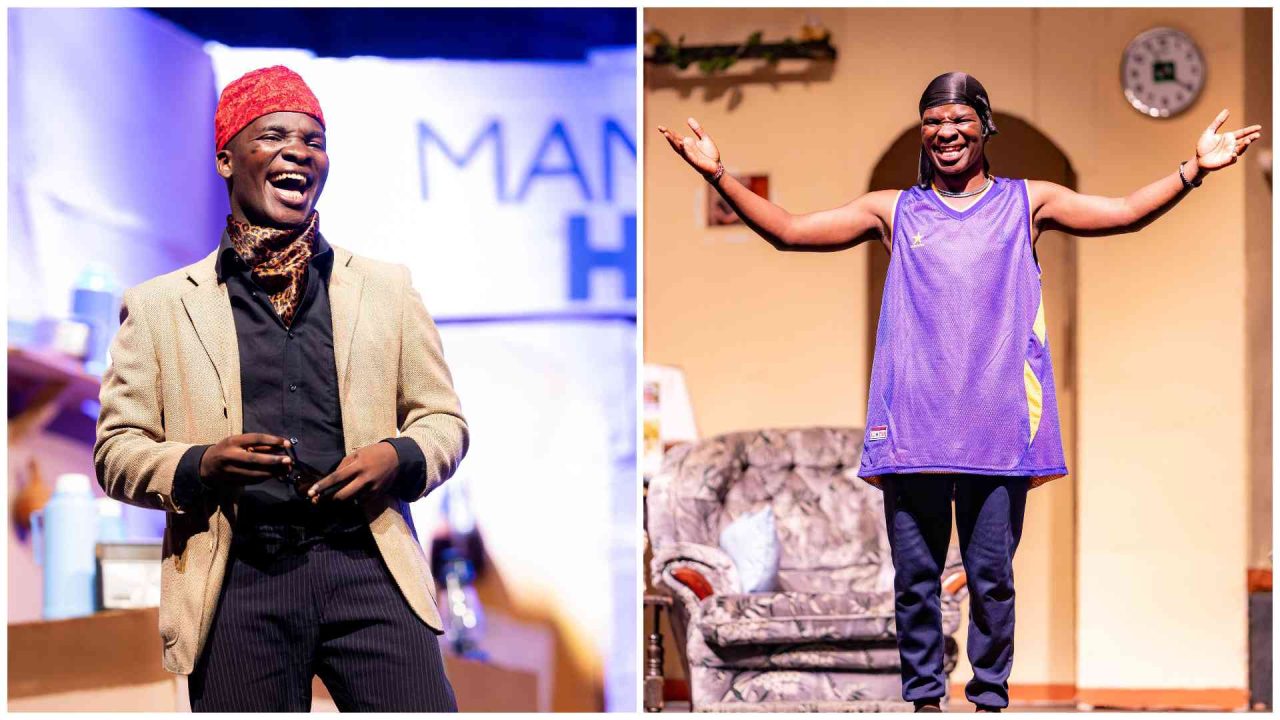
The actor reflects on his journey from campus rehearsals to theatre, saying financial pressures leave Kenyan creatives choosing between their craft and earning a living.
Actor Jeff Obonyo is calling for sustained government and private-sector investment in Kenya’s arts industry, saying financial pressures are limiting the freedom creatives need to develop their work.
For Obonyo, the challenge goes beyond securing the next role. He says actors, musicians and other artists need space to experiment, make mistakes and grow, yet everyday expenses can force them to prioritise income over creative development.
He argues that creative work should be recognised as legitimate labour rather than treated as a luxury or secondary pursuit. Without fair compensation to match its social value, he says, talented people will continue facing difficult choices between artistic ambition and financial survival.
Finding his voice at Strathmore
Obonyo’s creative journey took shape during his time at Strathmore University, where he earned a Bachelor of Arts in Communication. He remembers campus as a period of independence and self-discovery, with questions about his future that did not always have immediate answers.
Much of his time outside class was spent rehearsing for dance or acting. Before acting became a central part of his creative life, he wrote poetry and later developed a blog, using it to learn how to express himself.
Among his most meaningful university experiences was community service at Kwetu Home of Peace, a rehabilitation centre for street boys. He considers the lessons from those hours more significant than what a syllabus alone could offer.
His studies also influenced how he understood relationships. A public relations class taught by Dr Wairimu Njeru encouraged him to consider the different reasons people enter academic, professional and personal relationships, and how those motivations change over time.
Building characters through their circumstances
Obonyo’s work includes the role of Ondiek in LICH: The General Returns, written and directed by Mike Ndeda, produced by Brian Aseli, with music direction by Andrew Kakai.
Ondiek, the elder brother of the late General Okello, occupies a complicated position between family responsibility, tradition and personal ambition. Obonyo describes him as someone who believes in an elder’s cultural duties but also uses those expectations to justify his desires and retain authority over the family.
Rather than approaching Ondiek simply as a villain, Obonyo focused on the character’s circumstances: what he wants, the obstacles he faces and how he responds when an approach fails.
Drawing on Uta Hagen’s acting approach, he allows emotion to emerge from the situation instead of deciding in advance that a scene must communicate anger or intimidation.
His recent work also includes a radio play reading of John Sibi-Okumu’s A Dinner at Her Excellency’s, alongside readings of Francis Imbuga’s Betrayal in the City and Bertolt Brecht’s The Caucasian Chalk Circle. He credits Play Reading KE and his fellow performers for those opportunities.
Theatre as a space for reflection
Obonyo sees theatre as more than entertainment. In his view, performance can hold society up to scrutiny and open conversations about difficult political, historical and family issues.
He points to his involvement in Flight 1963, by playwright Martin Abuya, which examined a nation’s stalled progress. Such stories, he believes, can encourage audiences to reflect on their circumstances and potentially act on what they recognise.
While he admires Denzel Washington’s work, Obonyo says honesty matters more to him than a prospective collaborator’s profile. He also values the local talent he has already worked alongside.
For young Kenyans hoping to become professional actors, his advice centres on curiosity, openness and consistent effort. An unpredictable industry, he suggests, makes it especially important to keep showing up for the work and the future they want to build.